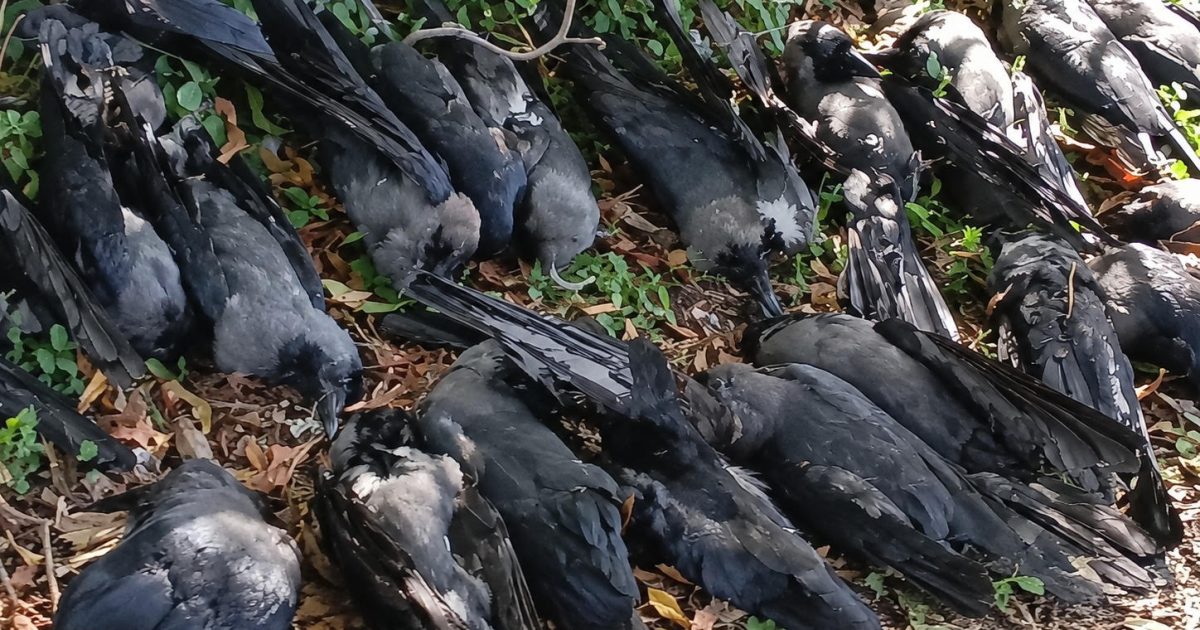
The Coast tourism and hospitality sector is grappling with a growing invasion of the Indian house crow, a species blamed for disrupting food chains, damaging property and threatening public health along the Coast.
Dr Sam Ikwaye, Chairman of the Mombasa Tourism Council and CEO of the Association of Hotel Owners and Service Providers, said the bird, known locally as kunguru, was introduced to the Kenyan coast from India through Zanzibar around 1891, arriving aboard ships docking at the port.
Dr Ikwaye said the species, distinct from the native pied crow found elsewhere in the country, has since multiplied into the millions along the coastline, driven largely by urban development, poor solid waste management and easy access to food at markets, fish landing sites and hotels.
He said the crows have become a nuisance to the tourism, agriculture and fishing sectors, scavenging freely at open-air food markets, hotel kitchens and fish landing sites, and have been documented preying on poultry, crops and even small livestock in farming areas.
“This bird is found at nearly every level of the food chain. There is no large animal it doesn’t feed on, nor a small one,” Ikwaye said, noting the bird’s diet spans nearly every level of the food chain, from scavenged waste to smaller animals.
According to Ikwaye, the birds have adapted their behaviour around human activity, timing their movements to coincide with waste collection schedules by county governments and the arrival of fishing boats, then retreating to roosting sites in the evening.
He said hotels and tourism stakeholders in Mombasa, Kwale, Kilifi and other coastal counties have partnered with conservation groups including Nature Kenya and A Rocha Kenya, working alongside the Kenya Wildlife Service (KWS), to run a coordinated control campaign.
“This exercise is overseen by the KWS. Control of wild animals is KWS’s mandate,” Ikwaye said, referring to the agency’s oversight of the poison used in the campaign.
The campaign uses a KWS-approved poison known as Starlicide, administered through a scientific “conditioning” process in which crows are fed meat at fixed times and locations over several days to build trust before the treated bait is introduced, ensuring the poison targets only crows and avoids the secondary environmental harm caused by an earlier chemical, Fenthion.
“That earlier poison had very significant environmental effects because it had secondary effects. The carcass of a bird killed by that poison could kill other animals that fed on the carcass,” he said.
He explained that mapping and population monitoring are supported by researchers and student volunteers from A Rocha Kenya. It is carried out to track roosting and feeding patterns before any control exercise begins.
Ikwaye called for stronger collaboration between the tourism sector, county governments and conservation agencies on solid waste management, saying uncollected garbage remained one of the biggest drivers of the crow population explosion along the coast.
by Joan Kinuthia