Kaimosi Friends University Vice Chancellor Professor Peter Mwita has highlighted some of the institution’s contributions to environmental conservation efforts around the county, working together with the county government in the implementation of various strategic plans for environmental sustainability.
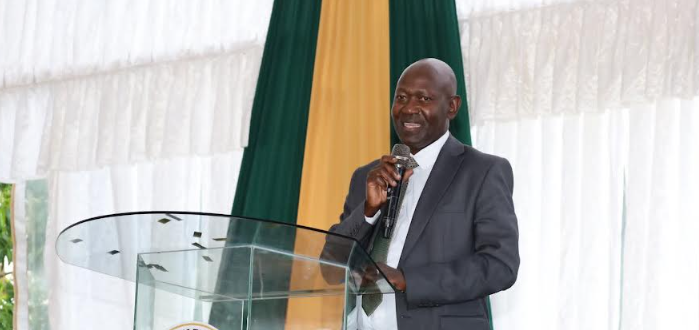
Speaking during the event marking World Environment Day at Kaimosi Friends University grounds, Mwita said that climate change was no longer a distant threat but was here with us, with evidence of it in Vihiga County ranging from changing rainfall patterns, declining water sources, biodiversity loss, and increased vulnerability of our communities.
“These realities demand a coordinated science-driven response, hence the launch of the Centre of Excellence in Climate Action and Research (CECARE), which signals our determination in transforming challenges into opportunities through research, innovation, policy engagement, and community action,” said Mwita.
“Some of the progress that we have actualized within this financial year towards environmental sustainability include having planted over 130 indigenous and exotic tree seedlings in Kaimosi forest and its surroundings; supporting reforestation efforts in Maragoli Hills working closely with Vihiga County government, Kenya Forest Service, and local community; and issuing financial and material support,” highlighted Mwita.
He added that other efforts included prioritized indigenous spaces to protect water catchment areas and enhanced biodiversity while being grateful to the National Environment Management Authority (NEMA), who had donated the Kaimosi Wetlands area to KAFU for conservation, having planted around 62,000 trees this year against their usual target of 70,000 trees.
He further said that they have continued to engage the community through the citizen science program, a science project led by physicists where technology meets the environment in continued efforts in achieving environmental sustainability.
Professor Mwita revealed that they, as an institution, had been working closely with traditional leaders on environmental conservation issues, where they give them ideas as they engage with the community.
“The KAFU citizen service programme has shifted conservation from it being a purely academic science to a community-owned movement, hence transforming the Kaimosi ecosystem into a living laboratory through conducting research to inform community solutions in water conservation, forest restoration, and climate-smart agriculture,” reiterated Mwita.
Mwita stated that environmental stewardship is becoming part of Kaimosi’s identity and urged building resilient communities to restore our environment and secure a sustainable future for generations to come.
By Yvonne Misango and Florence Oteng’o