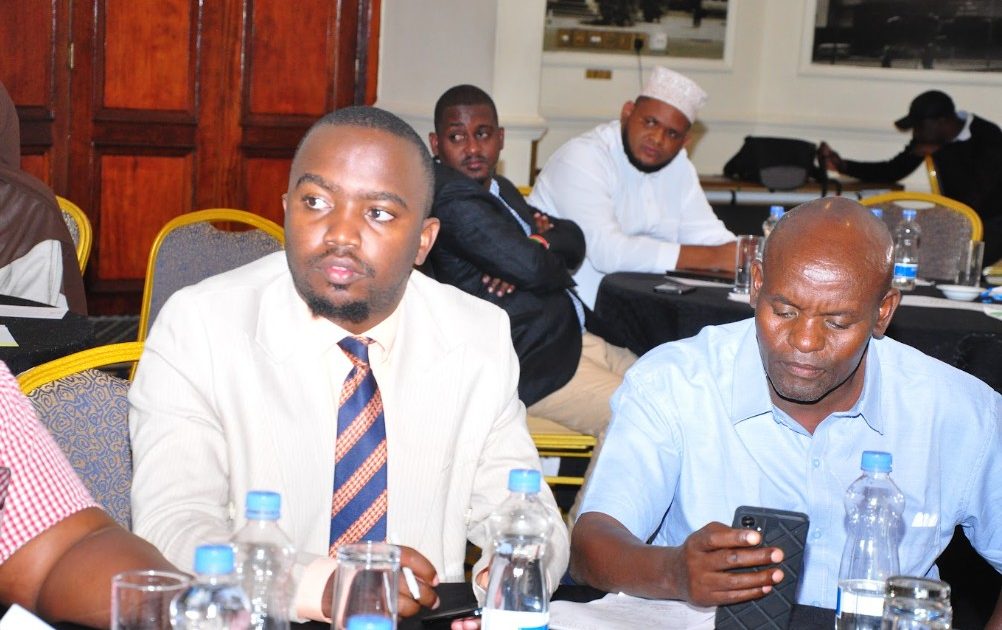
The Government has assured religious groups and civil society organisations of continued support in safeguarding freedom of religion and belief amid growing concerns over the proposed Religious Organisations Bill 2024.
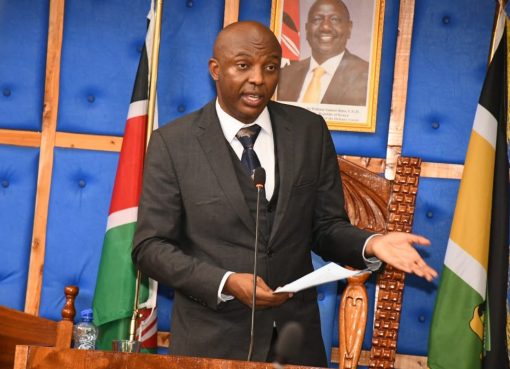
Speaking during a Coalition Government Dialogue on Freedom of Religion or Belief (FoRB) forum at a Nairobi hotel, County Commissioner, Nairobi North Sub-county, Simon Osumba said the government remains committed to working with all stakeholders to protect constitutional freedoms while ensuring religious activities are conducted within the law.
“The government can’t do everything alone. The government must work with all partners and the people,” Osumba said.
He added: “I’m just here to give an assurance that we’ll continue supporting what all of you are doing.”
His remarks came after civil society organisations and religious rights advocates, led by Search for Common Ground in partnership with KESHO Alliance, Muslims for Human Rights (MUHURI) and Kenya Community Support Centre (KECOSCE), called for immediate constitutional review of the proposed Religious Organisations Bill 2024, saying Law could introduce restrictive regulations, duplicate existing legal frameworks and exclude minority faith communities.
Osumba assured that freedom of religion will not be interfered with by the state, as guaranteed under the Constitution, but it will be protected at all times.
“We know that freedom of religion is enshrined in our Constitution; we must at all times strive to make sure that it is not interfered with whatsoever,” he said.
However, he noted that religious activities should be conducted in a safe and lawful environment to prevent exploitation and radicalisation among young people.
“The only way to make sure that freedom is protected is to ensure that religious activities are undertaken in a conducive environment,” he said.
He added that the government remains committed to protecting fundamental rights under the 2010 Constitution while ensuring cases involving violations are properly investigated and prosecuted.
“There are cases where there have been violations and we have agencies mandated to ensure such violations are properly investigated and prosecuted before a court of law,” Osumba said.
He further stated that compensation and justice mechanisms should be implemented in cases where communities or individuals feel their rights have been infringed upon.
East African Legislative Assembly (EALA) Member of Parliament, Maina Karobia, underscored the importance of cooperation between religion and government, noting that both institutions play a central role in organising society.
“The government and religion must work together… they are clients, actually,” he said, adding that religion and the state function as complementary pillars in society.
He argued that religion has historically played a key role in the development of civilisation and social organisation, noting that churches, mosques, temples, and synagogues all contribute to structuring communities.
“In fact, there is no civilisation without religion. The growth of religion is the growth of civilisation,” he said.
At the same time, the Legislator warned that lack of regulation in the religious space could expose citizens to manipulation and abuse, urging stronger legal frameworks to govern religious institutions.
“We must put stricter measures, rules, and laws in that space so that people do not take advantage of others,” he said, citing cases where congregants may be misled by influential religious figures.
He emphasized that regulation should help prevent exploitation and ensure accountability while maintaining freedom of worship.
“We need a common ground that is in the best interest of our country and our people,” he said.
Commissioner Osumba used the platform to encourage Kenyans to support national cohesion and democratic processes ahead of the next election cycle, calling on religious organisations, NGOs and citizens to support the Independent Electoral and Boundaries Commission (IEBC).
“Let us support IEBC so that it delivers on its mandate,” he said.
He encouraged young people to register as voters, noting that continuous voter registration is ongoing at IEBC offices across the country.
The proposed Religious Organisations Bill 2024 had sparked debate among stakeholders, with critics arguing that some provisions could undermine Article 32 of the Constitution, which guarantees freedom of conscience, religion, belief and opinion.
They argued that proposed new regulatory structures, including a Religious Organisations Commission, would overlap with the Registrar of Societies and increase public expenditure unnecessarily.
Stakeholders also raised concerns over strict registration requirements, such as academic qualifications and endorsement by umbrella bodies, saying they could discriminate against Indigenous and minority belief systems.
They further noted that existing laws already address issues like extremism and misuse of religion, calling for stronger enforcement instead of new parallel frameworks.
Participants added that the bill lacks clear victim protection measures and contains vague definitions that could lead to selective enforcement.
The groups urged the government to review the Bill to ensure inclusivity, protect constitutional freedoms, and safeguard places of worship.
By Ian Chepkuto