Environmentalists have raised concern over increased mangrove destruction and marine pollution along Kenya’s coast.
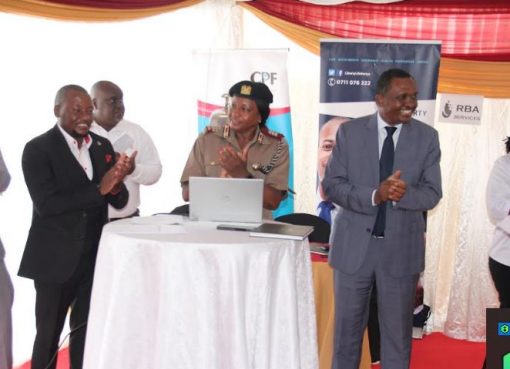
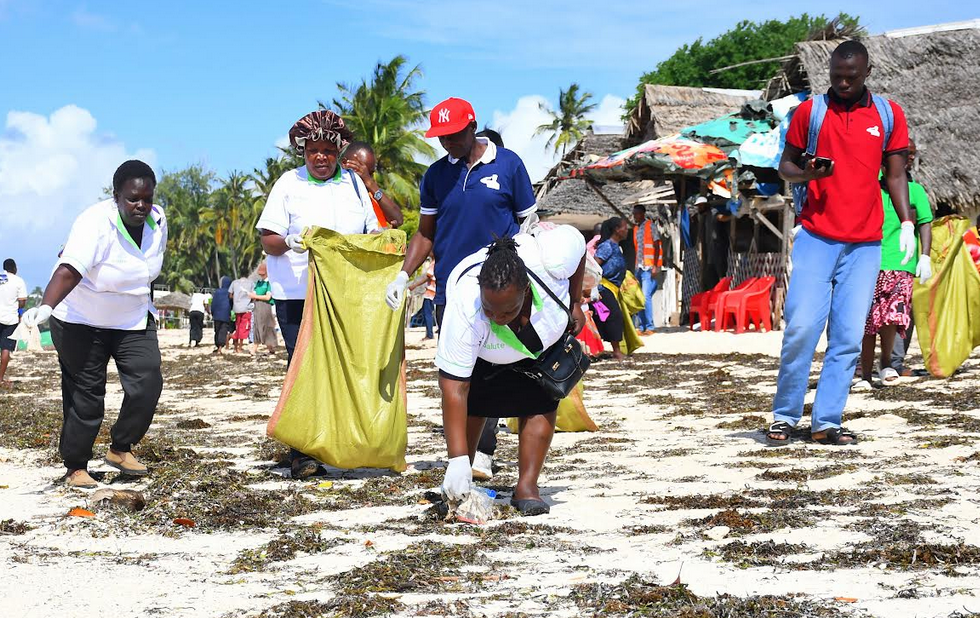
Community groups, judicial officers and elected leaders converged at Shelly Beach in Likoni, Mombasa Friday to mark the World Environment Day with a coastal clean-up and tree planting exercise.
Justice Anthony Ombwayo of the Environment and Land Court, warned that receding ocean shorelines and expanding inland water bodies were visible indicators of climate change, attributing the crisis largely to unchecked deforestation.
“Deforestation is a primary driver of this problem. Many people fell trees without replacing them,” he said, adding that Kenya currently has only about three active climate change-related cases before its courts, a figure he described as worryingly low.
He noted that penalties for pollution include up to one year imprisonment or a fine of Sh1 million, but he noted these were rarely applied.
Likoni Member of Parliament (MP), Mishi Mboko, said her office had already allocated two percent of NG-CDF funds to environmental initiatives, including tree planting in schools and mangrove restoration zones.
She announced a partnership with Equity Bank to plant fruit trees; mangoes, oranges, passion fruit and pawpaw in constituency schools, and called on the county government to support formal land-use planning frameworks.
The MP recalled how her home village of Midodoni had lost every one of its once-abundant mango trees to human activity.
“Sustained community action and awareness are not optional, they are urgent. By keeping the environment clean, sea animals, and all of us are safe with climate change, we must answer with action,” Mboko said.
Mombasa County Executive Committee Member for Blue Economy, Ibrahim Khamisi, acknowledged resource constraints, but insisted environmental responsibility was a shared obligation.
He flagged the discharge of industrial chemicals into the sea, particularly in the Tudor area as a serious recurring concern, and noted that a major international ocean conference, the first of its kind in Africa, was due in Mombasa on June 15.
Human rights defender and civil society network Chairperson, Zedekiah Adika, called for accountability, arguing that environmental gains would remain fragile without rule of law.
He cited the Owino Uhuru case as an example of court orders never enforced, and demanded the national government raise natural resource revenue sharing with Coast counties from two percent to at least 20 percent.
“Kilifi has salt, Kwale has minerals, yet the people there lack water and ownership of their own land. That is not equity,” Adika said.
Kishoka Youth Organization, represented by Kassim Ali Mwachombo, offered the most tangible example of community action, having spearheaded mangrove restoration at Dongokundu, an area heavily degraded during the construction of a Special Economic Zone.
“When we saw what was happening at Dongo Kundu, we knew as residents of Likoni we had an obligation to act. The mangroves were collapsing and with them the protection of our shoreline and the livelihoods of our fisherfolk,” Mwachombo said.
Working with Safisha Timbwani, Mtongwe Beach Management Unit, Together for Good CBO, and Manyata Youth Organization through NGCDF funding, Kishoka has planted 30,000 trees.
Mwachombo appealed to the MP to sustain the partnership. “Mangroves are not just trees, they are the lungs of our ocean, and we cannot afford to lose them,” he said.
By Ramadhan Nassib and Mary Mtawa