Small and medium-sized agribusinesses that have traditionally struggled to secure bank loans due to a lack of collateral are increasingly accessing credit through a technology-driven financing model that relies on transaction data rather than conventional security.
The innovation, developed by financial technology (fintech) company Avenews, uses artificial intelligence (AI) and machine learning to assess the creditworthiness of agribusinesses, enabling eligible enterprises to access working capital within a short period.
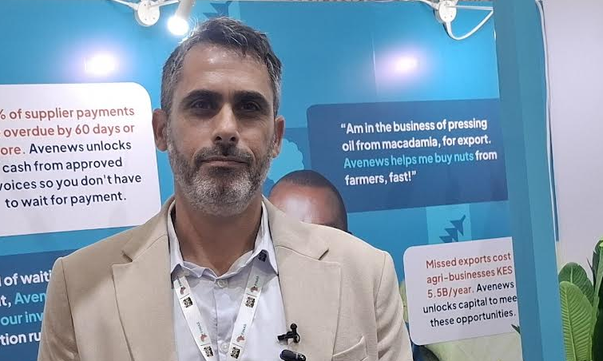
Speaking to KNA during the Financing Agri-Food Systems Sustainably (FINAS) 2026 Forum in Nairobi, Avenews Chief Executive Officer Jonathan Tseelon said the model addresses one of the biggest obstacles facing agricultural enterprises—limited access to affordable, timely and flexible financing.
Tseelon explained that unlike traditional financial institutions, which largely rely on collateral, lengthy credit histories and complex loan approval procedures, the Avenews platform analyses transaction records, sales patterns, seasonality and value chain performance to determine a business’s eligibility for financing.
“We base our credit decisions on transaction data rather than collateral. As long as a business demonstrates healthy transactions, we are able to assess the risk and provide financing quickly,” he said.
He noted that the financing is designed to bridge cash flow gaps experienced by agribusinesses involved in purchasing farm inputs, aggregating produce, storing agricultural commodities and supplying produce to processors and other off-takers.
According to Tseelon, many agribusinesses experience delayed payments from buyers, sometimes waiting between 30 and 60 days before receiving their money. Through the platform, businesses can access advance payments that enable them to continue operating without disrupting their supply chains.
He said the financing model also benefits farmers indirectly by ensuring agro-dealers maintain adequate stocks of seeds, fertilisers and other farm inputs, improving product availability and helping stabilise prices during planting seasons.
The company currently supports agribusinesses operating in dairy, horticulture, cereals, livestock, poultry and other agricultural value chains through partnerships with cooperatives, farmer organisations, aggregators and other market players.
Young entrepreneurs and emerging agribusinesses are among the key beneficiaries because the platform requires only three to six months of transaction history through M-Pesa, bank or SACCO statements, compared to the longer financial records typically demanded by conventional lenders.
Eligible businesses must be formally registered, operate within the agricultural sector and maintain a minimum annual turnover of Sh300,000.
Tseelon said Avenews currently operates across western Kenya, South Nyanza, the Rift Valley, the Mount Kenya region and Nairobi, where field officers work directly with businesses during onboarding, credit assessment and financial literacy training.
He noted that although artificial intelligence powers the lending process, physical engagement with clients remains an important component of the company’s operations.
“Technology helps us assess businesses efficiently, but we also invest heavily in field support because trust and close engagement are essential in serving rural enterprises,” he said.
According to Tseelon, hundreds of agribusinesses have already accessed financing through the platform, with many recording improved cash flow, increased trading volumes and business expansion after receiving working capital.
The financing attracts daily charges ranging from 0.15 to 0.3 per cent depending on the product, with customers paying only for the period they utilise the funds. Businesses are not charged for unused credit limits or for making early repayments.
The initiative comes at a time when stakeholders across the agricultural sector are calling for innovative financing solutions to unlock investment, improve productivity and strengthen food systems as Kenya pursues greater food security, value addition and economic growth.
Meanwhile, National Coordinator of the Biodiversity and Biosafety Association of Kenya (BIBA) Anne Maina said smallholder farmers continue to face significant barriers in accessing affordable credit due to high collateral requirements and limited financing options.
She emphasised that expanding access to affordable financing, farmer training and reliable markets would enable small-scale producers to increase productivity, strengthen climate resilience and build sustainable agribusinesses.
Maina said innovative financing models that recognise the realities of agricultural production are essential in supporting farmers who often operate without conventional assets that can be used as loan security.
Baringo County Executive Committee Member for Agriculture, Livestock, New Economy and Irrigation Risper Chepkonga said timely access to affordable financing enables farmers to undertake critical farming activities at the appropriate time, leading to improved yields and higher incomes.
She observed that farmers benefit significantly when they access credit before the onset of the rainy season, allowing them to take advantage of favourable soil conditions and complete essential land preparation and planting activities.
“This conference has provided valuable insights into the financing options available to farmers and the government’s efforts to improve access to agricultural credit,” she said.
Chepkonga added that one of the key lessons from the forum was the need to subsidise the cost of agricultural credit rather than agricultural commodities, making loans more affordable through lower interest rates while recognising the unique nature of farming, where returns often take longer to realise than in other sectors.
The Financing Agri-Food Systems Sustainably (FINAS) dialogue, now in its third year, has grown from a national initiative into a continental platform bringing together governments, financial institutions, development partners, private sector players and farmer organisations to identify practical solutions for agricultural financing.
This year’s forum focused on building a sustainable financial architecture that links capital flows with policy, trade and investment frameworks to strengthen Africa’s agri-food systems and accelerate inclusive agricultural transformation.
By Wangari Ndirangu