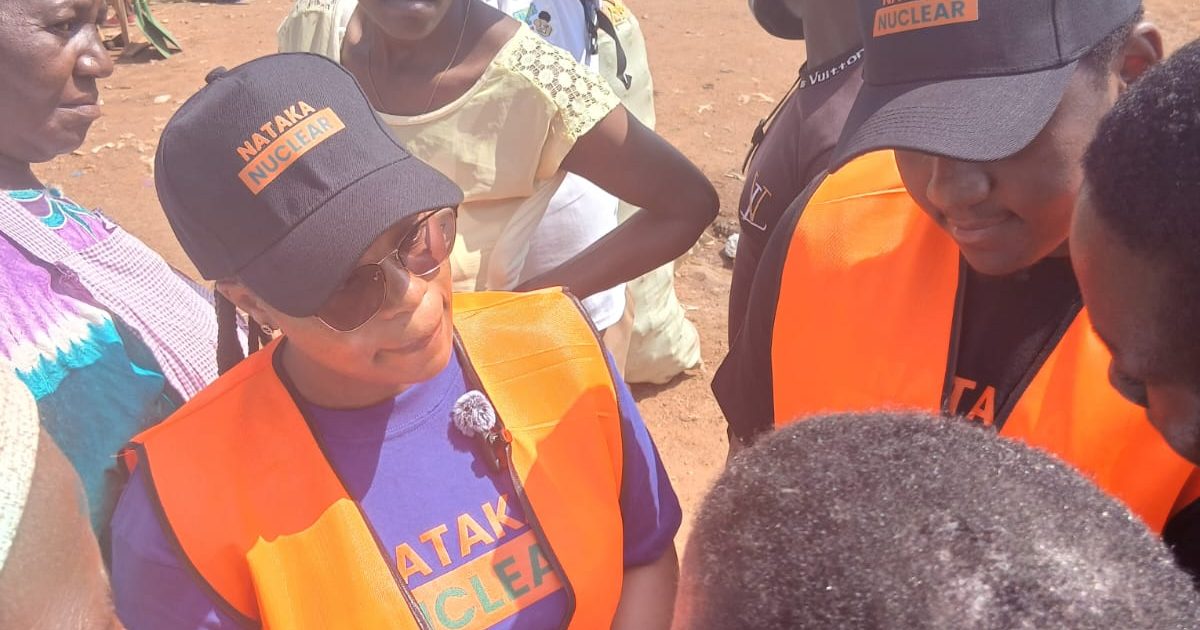
Stakeholders in the nuclear energy sector have been urged to join hands in public sensitisation and education on nuclear technology to enhance acceptance of Kenya’s first nuclear power plant in Siaya County.
Speaking during a nuclear technology sensitisation campaign, WePlanet Africa Programme Coordinator Peter Gichuki said only concerted efforts by stakeholders would unlock the current deadlock between locals opposed to the project and the government through the Nuclear Power and Energy Agency (NuPEA).
Gichuki noted that myths and misinformation surrounding nuclear technology, as well as fears of displacement from ancestral land, have fueled opposition to the multi-billion-shilling project, threatening its implementation.
“We have a number of players in this sector led by government agencies, NGOs, politicians and local leaders who should work together to demystify the myths and misconceptions and also give the right information about nuclear technology to get social license and acceptance,” said Gichuki.
The programme coordinator, who was flanked by the President of Kenya Young Generation in Nuclear, Linet Kerubo, assured residents of Central Sakwa that modern nuclear power plants are safe, adding that they are designed with advanced systems to prevent radiation leakage into the environment.
Kerubo urged the government to address concerns on displacement and compensation to ensure clarity and build public trust.
“Right now the entire population in the ward is living in fear of being displaced. With accurate information from the implementing agency, only a section of the population would be moved. Without this information, residents will continue to blanketly oppose the project,” she said.
Kerubo further emphasised the need for continuous multi-stakeholder public engagement, urging the government to establish information centres where members of the public can access accurate and updated information on nuclear technology.
She also called for the involvement of local leaders in community sensitisation, saying communication in local dialects would improve understanding and acceptance of the project.
“There is need for the government to set up information centres and encourage regular one-on-one engagement with the public to build trust within the local community,” she added.
Members of the public who attended the sensitisation forum expressed fears of eviction from their land and loss of livelihoods as their main reasons for opposing the proposed nuclear project.
They also noted that local political leaders had remained silent on the matter, leaving residents uninformed on the benefits, risks and mitigation measures associated with the project.
By Brian Ondeng