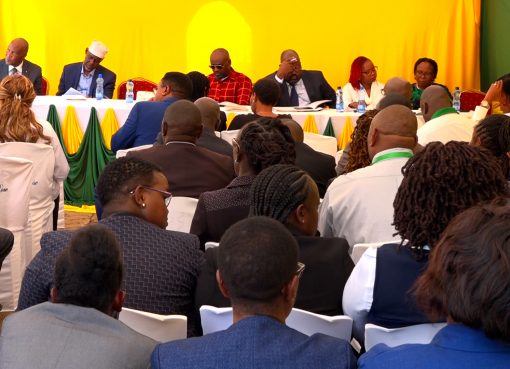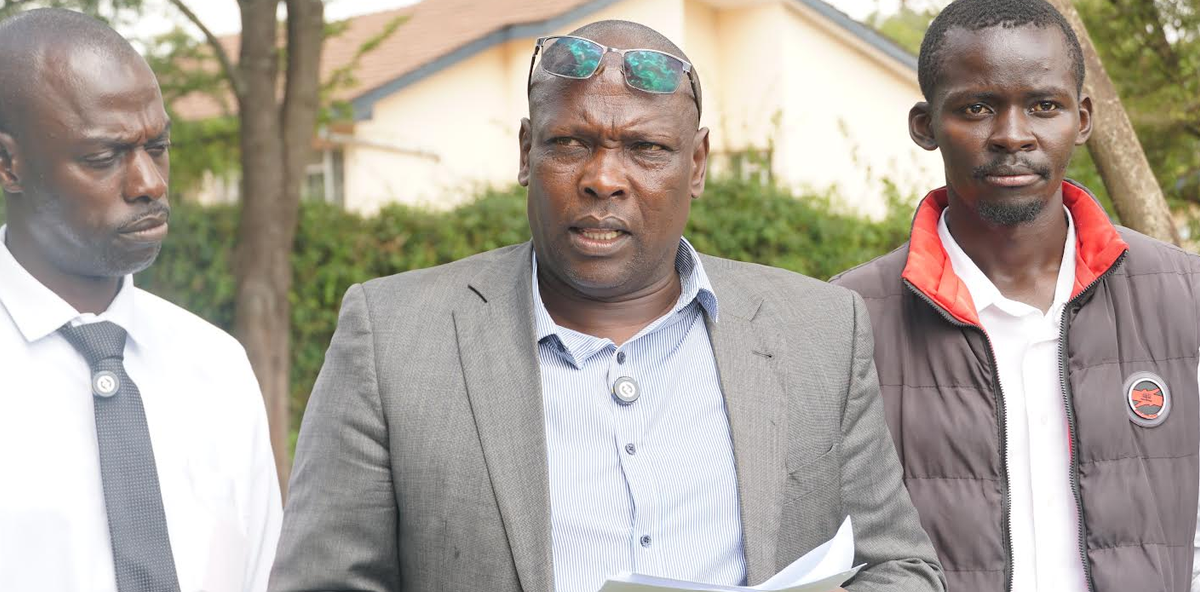
Human rights defenders and youth representatives from the North Rift region, have called on the National Assembly to delay debate on the controversial Water (Amendment) Bill 2026.
They argue that the proposed legislation requires more extensive public participation and stakeholder consultation before it is passed into law.
The Bill, sponsored by Majority Leader and Kikuyu MP Kimani Ichung’wah, proposes sweeping changes to the country’s water sector, most notably the merger of the National Water Harvesting and Storage Authority with the National Irrigation Authority.
If passed, the country’s irrigation and water harvesting functions would be consolidated under a single national authority.
Briefing the media in Eldoret City on Tuesday, human rights advocates led by Mr. Kimutai Kirui, Executive Director of the Centre Against Torture, stressed that the Bill’s implications must be fully understood by the public before any legislative action is taken.
“Any reforms in the water sector must be undertaken with the input of all stakeholders. It is crucial to ensure the interests of the farming community and the public are safeguarded before the bill is passed into law,” Kirui said.
Kirui called on the Senate and the Council of Governors to actively scrutinize the proposed law, noting that agriculture is a devolved function under the Constitution.
He emphasized that county governments play a substantial role in water infrastructure development and irrigation.
“We urge governors, senators, farmers’ organizations, and other stakeholders to pay close attention to this Bill during public participation forums. We must protect the interests of farmers and safeguard county-managed water infrastructure from unforeseen consequences arising from this proposed merger,” he added.
Kirui revealed the group had prepared a memorandum containing a raft of recommendations and concerns that will be submitted to Parliament for consideration before MPs debate and vote on the legislation.
In the memorandum, the defenders argue that the proposed merger would create an institution with an overly broad mandate, potentially diminishing irrigation as a strategic agricultural function by subsuming it under a wider water infrastructure framework.
The document also calls for reforms that uphold devolution, promote accountability, ensure equitable resource allocation, and strengthen stakeholder participation in decision-making.
Mr. Juma Akumu, another human rights defender, emphasized that the public participation process must go beyond a mere legal requirement and serve as a genuine platform for stakeholders to influence the final legislation.
“This Bill affects millions of Kenyans, particularly farmers who depend on irrigation for their livelihoods. Parliament must ensure an inclusive and meaningful public participation process so that every concern is considered before the Bill is enacted into law,” Akumu said.
Speaking at the same briefing, youth representative Brian Francis expressed concern that merging the two state agencies could lead to widespread job losses, particularly among young professionals employed in the water and irrigation sectors.
“We are apprehensive that the proposed merger is likely to lead to job redundancies, and it is the young people who will bear the greatest burden. We support reforms, but they should not come at the expense of employment or without consulting those who will be directly affected,” Francis said.
By Maurice Aluda