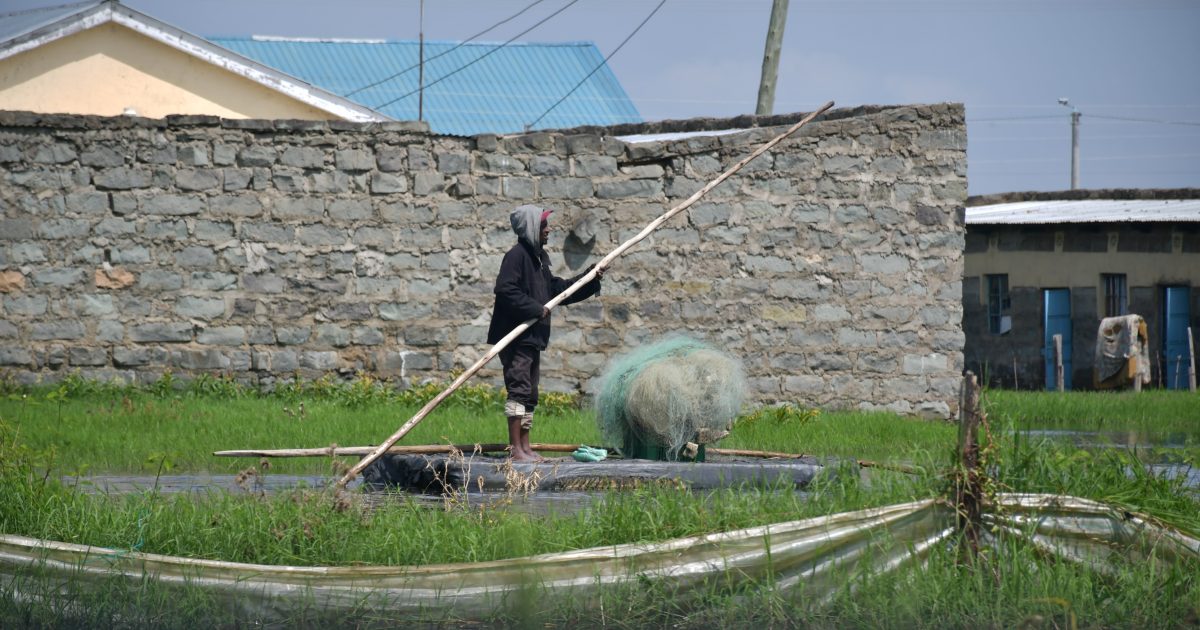
Residents of Kihoto estate in Naivasha have renewed calls for compensation, relocation and protection of their land rights, citing delayed execution of a landmark court ruling on the long-standing dispute.
For years, residents have faced forced displacement due to rising water levels in Lake Naivasha, a crisis that has shut down schools, churches, roads, and businesses and triggered a health emergency in the informal settlement while disrupting livelihoods dependent on tourism, fishing and small-scale trade.
The court noted that earlier parliamentary recommendations had warned of the humanitarian crisis but had largely gone unimplemented.
Amid the persistent flooding, the government had proposed evicting residents from demarcated lake riparian areas as a permanent solution to the decade-long problem.
The proposal prompted a court petition to halt the evictions, with landlords arguing they held genuine titles and development permits for the area.
Following months of hearings, the court ordered compensation for genuine landowners before any relocation to higher ground could proceed.
Landowners and affected residents have since protested the delayed implementation of the ruling, which found that the flooding and displacement were foreseeable and that the State had failed to safeguard their constitutional rights.
The judgment, delivered by Lady Justice Mary Oundo of the Environment and Land Court, directed national and county governments to implement recommendations from a parliamentary report on rising water levels in Rift Valley lakes.
It also ordered the establishment of a resettlement action plan, compensation for eligible landowners, remarking of the Lake Naivasha riparian boundary, creation of a permanent buffer zone, and regular progress reports to the court.
The court noted that it retained supervisory jurisdiction to ensure compliance with the orders.
Speaking during a public awareness forum at Naivasha Law Courts, National Land Commission Deputy Director and Head of Natural Resource Management Bernard Opaa said disputes over riparian land date back to the colonial period and continue to affect communities nationwide.
The forum, held to expound the ruling on the Lake Naivasha flooding crisis, brought together judicial officers, land experts, the Office of the Director of Public Prosecutions (ODPP), the National Land Commission (NLC), local leaders and residents.
Opaa said Lake Naivasha has legally established and registered boundaries that must be respected under the Constitution.
He cited Article 40, which protects property rights but does not extend to unlawfully acquired property, and Article 249, which guarantees the independence of constitutional commissions, including the NLC, in executing their mandates.
“The Constitution is clear that public land belongs to all Kenyans and must be protected, with government institutions mandated to uphold the constitutional rights of citizens affected by disasters and historical injustices,” Opaa said.
Justice Oundo used the forum to educate the public on land ownership, cautioning that only a registered title deed constitutes conclusive proof of ownership, while an allotment letter merely signifies an intention to allocate land.
She advised prospective land buyers to conduct official searches, valuations and verification of parcel files before purchase, and urged families to undertake lawful succession procedures following the death of a landowner.
The judge explained the legal doctrine of adverse possession, under which a person may acquire ownership rights after continuous, open occupation of land for the statutory period under prescribed conditions.
On compulsory acquisition, Justice Oundo said the Constitution requires the government to give adequate notice, publish acquisition notices in the Kenya Gazette, and engage affected communities before taking private land for public purposes.
She noted that landowners affected by lawful acquisition are entitled to prompt and just compensation under Article 40(3) where floods displace people living outside legally designated riparian land, the government bears a constitutional obligation to provide alternative settlement or appropriate compensation, depending on the circumstances.
She advised families with lost title deeds to seek reconstruction of parcel records through the courts and relevant land registries, and said exhumation of graves submerged by floodwater should only occur under the supervision of public health authorities.
ODPP representative Joseck Abwajo said nearly 80 per cent of matters handled by his office originate from land-related disputes.
He said the ODPP’s constitutional mandate under Article 157 includes instituting and undertaking criminal prosecutions, directing investigations where necessary, reviewing evidence, and ensuring criminal justice is administered independently and fairly.
Abwajo said unresolved land conflicts often escalate into criminal offences, including murder, assault, grievous harm and malicious destruction of property.
“If communities understand land laws better, many cases reaching our offices would be prevented before they occur,” he said.
Lakeview Ward MCA Alex Mbugua accused government agencies of neglecting Kihoto residents despite years of suffering caused by the rising lake waters.
Mbugua said many displaced families remain in uncertainty, with some told their title deeds are invalid while others have nowhere to relocate.
“The people of Kihoto have suffered for years and relocation must be treated as a serious option where necessary, while genuine landowners deserve fair compensation and justice delayed continues to deepen poverty, trauma and hopelessness,” Mbugua said.
Participants at the forum expressed optimism that sustained public education and strict implementation of the court’s structural orders would provide lasting solutions to the Kihoto crisis, while balancing environmental conservation with residents’ constitutional rights.
The Court directed government agencies to return periodically to account for progress on relocation, compensation, riparian boundary demarcation and environmental protection.
Kenya has experienced recurring flood emergencies in recent years, particularly around Rift Valley lakes, whose water levels have risen significantly since 2019, affecting thousands of households and critical infrastructure.
The United Nations estimates that climate-related disasters displace millions of people globally each year, with flooding accounting for the largest share of disaster-related displacement.
In Africa, rapidly growing informal settlements on wetlands, riverbanks and lake shores continue to expose vulnerable communities to rising flood risks linked to climate change and shifting rainfall patterns.
by Erastus Gichohi and Beatrice Wanjiku.