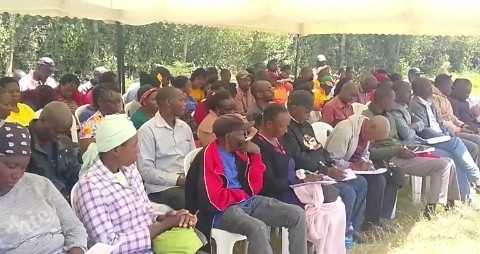
The Kenya Forest Service (KFS) has conducted a public participation forum on the proposed fencing of Oloolua Forest Reserve in Kajiado North.
This is part of the Environmental and Social Impact Assessment (ESIA) process ahead of the project’s implementation.
The project, being undertaken by the State Department for Forestry through KFS in partnership with the Green Connect Foundation, proposes the installation of a solar-powered electric perimeter fence around Oloolua Forest, which is managed under the Ngong Hills Forest Station.
Speaking during the meeting, KFS environmental expert Benedict Omondi said the fencing is intended to curb illegal logging, forest encroachment and other unlawful activities while protecting the forest’s ecological, recreational and cultural value for present and future generations.
“The purpose of the fence is to safeguard the forest, not to deny the local community access. Designated access gates will be established in consultation with residents,” said Omondi.
The proposed project will fence approximately 25 kilometres around the 618-hectare forest reserve, enclosing about 661.6 hectares.
Residents from Oloolua, Olkeri, Karen/Empakasi and Embul-Bul, as well as members of the Community Forest Association (CFA), welcomed the initiative, saying it would enhance security and improve conservation of the forest.
CFA Deputy Chairperson, Jane Wambui, said the forest has long been affected by illegal dumping, logging and criminal activities, with suspects often using it as a hideout.
Oloolua Officer Commanding Station (OCS), Munene Musau, said the project would significantly improve security in the area.
“The fencing will help eliminate cases where criminals use the forest as a hideout. It will make the area safer for residents and support law enforcement efforts,” he said.
Regional Forest Conservator for Nairobi, Joyce Thuku, urged residents to support the project, noting that the primary beneficiaries would be the surrounding communities through improved security and better conservation of the forest.
During the forum, residents sought clarification on whether they would be charged to access the forest after fencing.
KFS assured them that local residents would continue accessing the forest for approved activities such as grazing, collecting firewood and beekeeping, provided they are registered members of Community Forest Associations.
Concerns were also raised about possible disruption of wildlife movement, and KFS said it would work closely with the Kenya Wildlife Service (KWS) to identify wildlife corridors and ensure the fence does not interfere with animal migration routes.
The KFS further announced that forest rangers and scouts would be deployed to patrol and maintain the fence, with ranger housing to be constructed within the forest.
Residents pledged to support the project and welcomed KFS’s commitment to involve local youth in construction and related activities to create employment opportunities.
Implementation of the project will commence after the National Environment Management Authority (NEMA) approves the Environmental Impact Assessment (EIA) report and issues the necessary licences.
by Peter Muteti