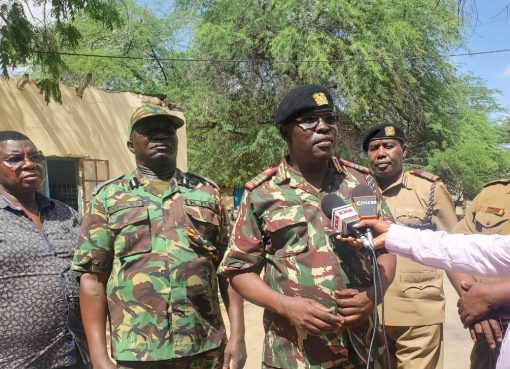
Environmental stakeholders have called on residents of Homa Bay County to embrace tree planting and protect forests to address growing effects of climate change.
Led by the County Forest and Ecosystem Conservator, Sharon Cheluget, they noted that restoring degraded ecosystems would secure the livelihoods of future generations.
The conservationists warned that continued destruction of forests through illegal logging and charcoal burning was threatening biodiversity, water catchment areas and exposing communities to prolonged drought and poor agricultural yields.
Speaking in an interview, Cheluget said forests are among the country’s most valuable natural resources and should be protected by everyone.
“Forests are essential for the survival of both people and wildlife. They regulate rainfall, protect water sources, improve air quality, prevent soil erosion and provide habitats for many species. Conserving forests is not an option; it is a responsibility that belongs to every Kenyan,” Cheluget said.
She noted that forest destruction continues to undermine efforts to combat climate change, adding that communities are already experiencing the consequences through erratic rainfall patterns, increasing temperatures and declining water levels in rivers and streams.
Chelugat emphasized that conserving forests is one of the most effective ways of restoring ecological balance and improving resilience against climate change.
She encouraged residents to actively participate in tree planting around homes, schools, farms, churches and public institutions while ensuring that planted seedlings are protected until they mature.
“Planting a tree is only the beginning. The greatest achievement is ensuring that the tree survives and grows into maturity. Every seedling requires care through watering, protection and proper management,” she added.
The Conservator also appealed to residents to avoid illegal logging, uncontrolled charcoal burning and encroachment into protected forests, noting that such practices continue to reduce forest cover in many parts of the county.
According to Chelugat, protecting indigenous forests is equally important because they conserve biodiversity and safeguard natural ecosystems that support both wildlife and human life.
She further urged young people to become champions of environmental conservation by participating in afforestation and reforestation programmes.
“The future of our environment lies in the hands of today’s generation. If we teach young people the importance of conserving forests, they will become responsible custodians of our natural resources,” she said.
Meanwhile, Nuhu Omollo Masoud, the Patron of Plant Trees for a Better Tomorrow Community-Based Organization (CBO), stressed that planting trees alone is not enough, saying communities should also take responsibility for protecting and nurturing them.
“Trees require continuous care after planting. They should be watered during dry seasons, protected from livestock and given enough time to grow. Planting without caring for them defeats the purpose of conservation,” Masoud said.
He explained that several factors continue to hinder the growth and survival of trees in many areas, including Homa Bay County.
According to him, prolonged drought remains one of the biggest challenges because many seedlings fail to survive due to inadequate rainfall.
He also cited deforestation as another major threat, saying indiscriminate cutting of trees for charcoal production, firewood and construction has significantly reduced forest cover.
Other factors affecting tree growth, he said, include uncontrolled bush fires, overgrazing, pests and diseases, poor land management practices and human encroachment into forested areas.
“If we continue cutting trees without replacing them, we are putting our environment and future generations at great risk. Every tree that is removed should be replaced by several others,” he said.
Masoud encouraged farmers to embrace agroforestry by integrating trees into farming systems.
He noted that agroforestry improves soil fertility, reduces erosion, conserves moisture, provides shade for crops and livestock and creates additional sources of income through fruits, timber, honey and medicinal plants.
He also challenged institutions, organizations and individual households to establish tree nurseries and support community initiatives aimed at increasing tree cover across the county.
“Environmental conservation should not be left to government agencies alone. Communities have a major role to play in protecting forests and ensuring that every planted tree survives,” he added.
On his part, Willis Omollo, Chairman of Alura Conservator under the Kenya Forest Service (KFS), said trees provide numerous environmental, social and economic benefits that make their conservation necessary.
“Trees are the foundation of a healthy environment. They provide oxygen, absorb carbon dioxide, regulate temperatures, conserve water and protect our soils from erosion. Without trees, communities become more vulnerable to climate-related disasters,” Omollo said.
He explained that forests contribute significantly to protecting rivers, wetlands and underground water sources that supply clean water to communities.
He added that trees also provide habitats for birds and wildlife while supporting biodiversity and maintaining ecological balance.
Omollo further noted that sustainable forest management creates employment opportunities through beekeeping, eco-tourism, tree nurseries and the sustainable harvesting of forest products.
“Protecting forests is not only about conserving nature. It is also about improving livelihoods, strengthening food security and creating a healthier environment for future generations,” he said.
He urged residents to stop illegal logging and instead support conservation initiatives by planting indigenous trees and protecting mature ones already growing in their communities.
According to Omollo, conserving existing forests is just as important as planting new trees because mature trees take many years to replace once destroyed.
“It takes only a few minutes to cut down a tree, but it can take decades for another one to reach the same stage of growth. That is why protecting existing forests must remain our priority,” he emphasized.
The conservationists agreed that addressing environmental degradation requires collective responsibility from government agencies, community-based organizations, educational institutions, religious organizations and individual citizens.
They noted that increasing tree cover across Homa Bay County will help restore degraded land, improve rainfall patterns, conserve water catchment areas, enhance agricultural productivity and reduce the effects of climate change.
They called on residents to make tree planting and forest conservation part of their daily lives by protecting natural forests, planting indigenous tree species and ensuring that every seedling planted is nurtured to maturity.
Their message was unanimous: safeguarding forests today is essential for securing clean water, fertile soils, fresh air and a sustainable future for the people of Homa Bay County and generations to come.