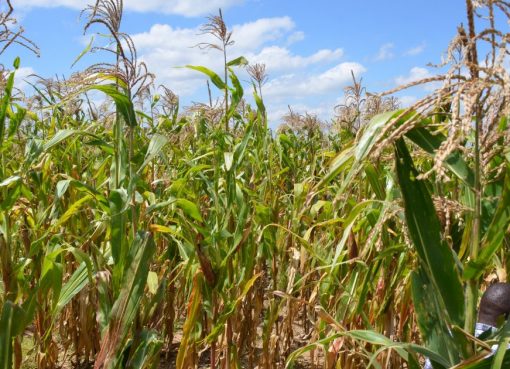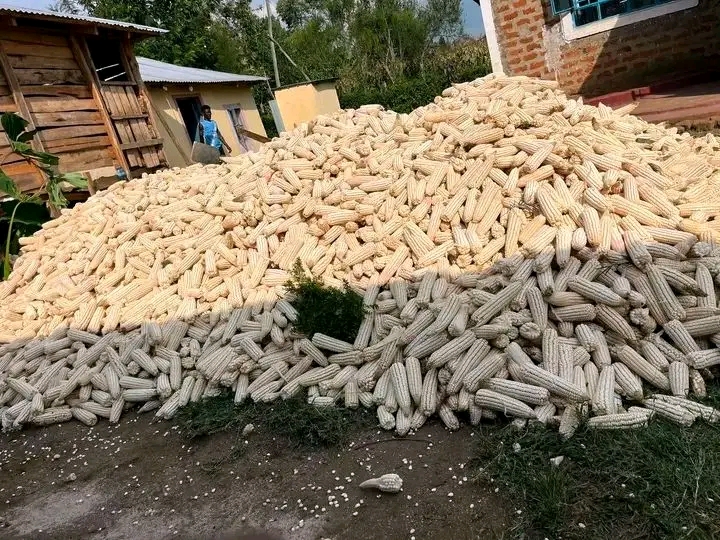
Farmers in Tinderet Sub County are facing the prospect of one of the poorest maize harvests in recent years after erratic rainfall disrupted crop development, raising concerns over food shortages, rising maize prices and declining household incomes.
Agricultural experts estimate that maize production in the sub-county could decline by between 30 and 40 per cent compared to a normal season, following prolonged dry spells experienced during critical stages of crop growth, particularly flowering and grain filling.
Tinderet Sub County normally produces between 90,000 and 100,000 bags of maize annually, but this season’s output is projected to drop to between 55,000 and 65,000 bags due to moisture stress affecting thousands of hectares under maize production.
Agronomist Peter Kiprono said inconsistent rainfall patterns had significantly reduced the yield potential of maize farms across the area.
“The rainfall distribution was highly unreliable. While some locations received heavy downpours, they were followed by prolonged dry spells that stressed the maize crop at the most critical growth stages. We expect yields to decline sharply across most parts of the sub-county,” he said.
According to the Ministry of Agriculture, maize is grown on nearly 18,000 hectares in Tinderet Sub County every year and contributes more than 60 per cent of household food requirements.
However, field assessments have shown that many farms have been affected by moisture stress, with farmers reporting stunted crops, poorly filled cobs and reduced yields.
In Songhor-Soba, Chemilil-Chemase and Kapchorua wards, farmers who expected to harvest between 20 and 25 bags of maize per acre now anticipate collecting only eight to 15 bags per acre.
Farmer John Keter from Meteitei said the poor harvest would negatively affect his family’s food security and income.
“We invested heavily in certified seeds and fertiliser, but the rains failed us. Instead of harvesting about 120 bags from my six-acre farm, I expect barely 60 bags. That means I will have to buy maize before the end of the year,” he said.
Agricultural economist Jane Chebet warned that climate variability had become a major threat to food production in the region, urging farmers to embrace climate-smart farming practices.
“The traditional rainfall seasons are becoming increasingly unpredictable. Farmers should adopt drought-tolerant maize varieties, water harvesting technologies and conservation agriculture to minimise production losses. Diversifying into crops such as beans, sorghum and millet will also improve resilience,” she said.
The expected decline in production is likely to affect maize prices, with consumers facing higher costs due to reduced supply. A 90-kilogramme bag currently retailing between Sh4,800 and Sh5,200 could rise to between Sh6,000 and Sh6,500 later in the year if production shortages persist.
Economists said reduced harvests would also affect household incomes because many farmers depend on maize sales to meet essential needs such as school fees, medical expenses and other family obligations.
With fewer bags available for sale, households are expected to experience reduced disposable incomes, affecting spending power and local economic activities.
Livestock farmers are also likely to feel the impact of the poor maize harvest as reduced availability of maize stalks could create shortages of animal feed during the dry season. This may force farmers to purchase supplementary feeds at higher costs.
Food security advocate Grace Jepkemboi called for urgent measures to support vulnerable households and strengthen resilience among farmers.
“Families that depend almost entirely on maize for food will be the hardest hit. We need greater investment in irrigation, climate-smart farming, timely weather information and crop diversification to safeguard food security,” she said.
Stakeholders said increased investment in irrigation, access to reliable weather forecasts, improved extension services and promotion of drought-resistant crops would help farmers cope with changing weather patterns.
Nationally, maize accounts for more than 65 per cent of Kenya’s staple food consumption, with the average Kenyan consuming about 98 kilogrammes annually. A significant decline in production from major maize-growing regions such as Tinderet could therefore contribute to supply shortages and increased prices across the country.
By Sammy Mwibanda