The National Government is stepping up efforts to attract private investment into Kenya’s coffee value chain as it seeks to triple national production from the current 50,000 metric tonnes to 150,000 metric tonnes by 2028.
The investment drive, spearheaded by the Ministry of Cooperatives and MSMEs Development in partnership with the Food and Agriculture Organization (FAO) and New Kenya Planters Cooperative Union (New KPCU) will culminate in an international investment forum in Rome, Italy, in October, where Kenya will showcase investment opportunities to global financiers and agribusiness investors.
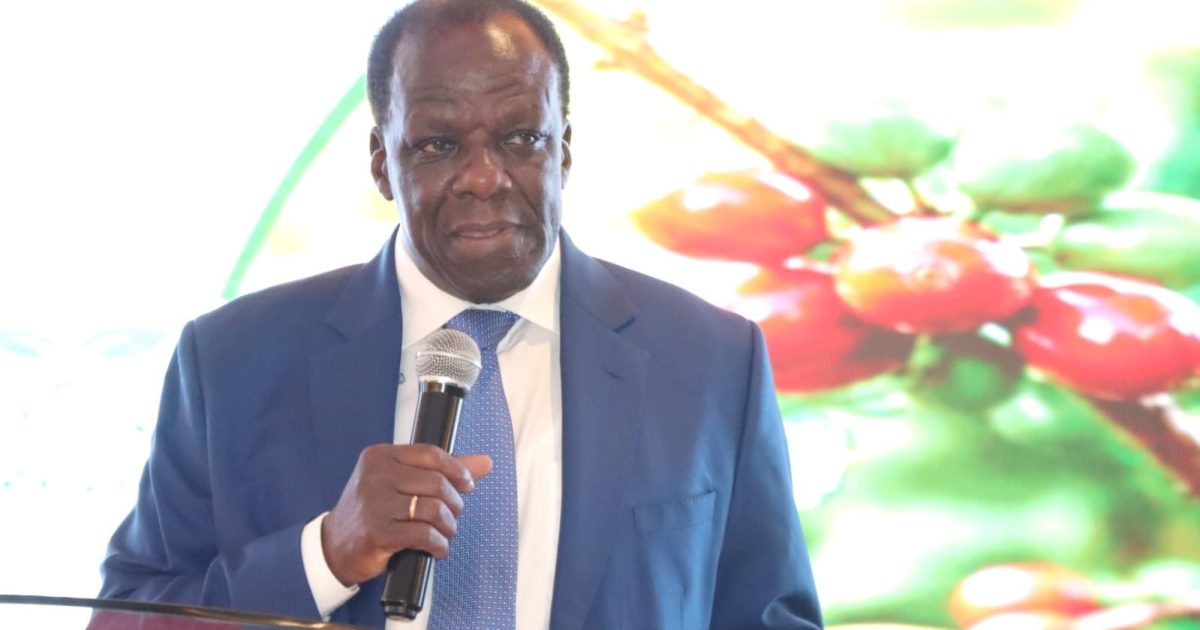
Speaking during the 2026 Hand-in-Hand (HIH) Local Private Sector Investment Forum in Nairobi, the Cabinet Secretary for Cooperatives and MSMEs Development Wycliffe Oparanya said Kenya’s premium coffee enjoys strong global demand, making increased production the country’s immediate priority rather than searching for new markets.
“Kenya’s coffee production is currently a drop in the ocean. As soon as we produce more quality coffee, the market is available,” he said, noting that growing demand in China, India, and the United States presents significant opportunities for Kenyan farmers.
Oparanya said the government has introduced wide-ranging reforms to revive the sector after production declined in the 1980s. The measures include reducing the number of intermediaries to improve farmer earnings, expanding coffee cultivation into Nyanza, Western, and the Rift Valley, and boosting productivity in traditional growing areas through extension services, agronomic support, and farm inputs.
He noted that average yields currently stand at about two kilograms per coffee bush, with the government targeting at least five kilograms per bush.
The Cabinet Secretary also highlighted financial reforms to strengthen coffee cooperatives, including settling long-standing debts and improving governance.
He said an audit established genuine cooperative debts at Sh6.8 billion, down from an initial estimate of Sh11 billion, with the government already clearing about Sh2 billion owed to state institutions.
A further Sh2 billion has been allocated in the current financial year to settle loans owed to commercial banks, while the remaining balance is expected to be cleared through a supplementary budget.
To reduce dependence on expensive commercial loans, the government has also established an Sh8 billion advance revolving fund to enable farmers to access credit at three percent interest.
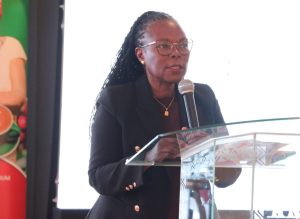
FAO Representative in Kenya Farayi Zimudzi said the UN agency has been working with the government to identify priority investment opportunities capable of accelerating coffee sector growth and attracting private capital.
She said FAO has undertaken a preliminary investment analysis that will form the basis of Kenya’s investment pitches during the Rome forum, where more than 20 countries are expected to compete for global financing.
“The forum in Rome is important because it gives Kenya an opportunity to present viable investment cases to international investors, but what is even more important is the follow-up here at home to ensure these investments materialise,” Zimudzi said.
She emphasised that government resources alone are insufficient to transform the coffee sector and called for stronger participation by private investors, development partners, and financial institutions.
FAO is working jointly with the United Nations Industrial Development Organization (UNIDO), focusing on boosting production while UNIDO supports industrial development and value addition along the coffee value chain.
The proposed investment areas include increasing coffee production and productivity, strengthening value addition, integrating digital marketing systems, promoting youth and women’s participation, and enhancing sustainable farming systems to ensure a steady supply of quality Kenyan coffee.
FAO Sustainable Agri-food Systems Programme Lead Tito Arunga said they have proposed a USD73 million (about Ksh9.4 billion) public-private investment package to increase coffee production, improve quality and create new income opportunities across Kenya’s coffee value chain.
The package includes about USD40 million in public financing, with the remaining USD33 million expected from private sector investors.
Priority investments include rehabilitating and modernising about 100 wet coffee mills to improve quality and establishing a dry mill in Kakamega to serve the expanding coffee-growing region in western Kenya and reduce processing costs.
The proposal also seeks to integrate apiculture with coffee farming by establishing honey-processing hubs at coffee factories, a model that has delivered positive results in countries such as Colombia through improved pollination, additional farmer income, and employment opportunities for women and young people.
FAO is also advocating investment in a digital marketing platform to enhance transparency, improve access to market information, and strengthen direct marketing of Kenyan coffee.
Arunga added that the organisation is promoting value addition through the utilisation of coffee waste, noting that the country generates nearly 200,000 metric tonnes of coffee pulp annually that could be processed into products such as cascara tea and other industrial raw materials.
According to Arunga, the proposed investments are aligned with the government’s coffee sector reforms and are intended to run concurrently with ongoing efforts to expand production and improve competitiveness.
The government believes that combining ongoing sector reforms with increased private investment will help restore Kenya’s position among Africa’s leading coffee producers while improving incomes for thousands of coffee farmers across the country.
By Wangari Ndirangu