The County Government of Nakuru is developing a five-year County Nutrition Action Plan (CNAP 2027–2032) aimed at reducing the burden of malnutrition, improving maternal and child health, and strengthening nutrition services across the devolved unit.
The draft County Nutrition Action Plan sets ambitious targets for scaling up nutrition interventions over the next five years as the county seeks to address the health and economic effects associated with malnutrition.
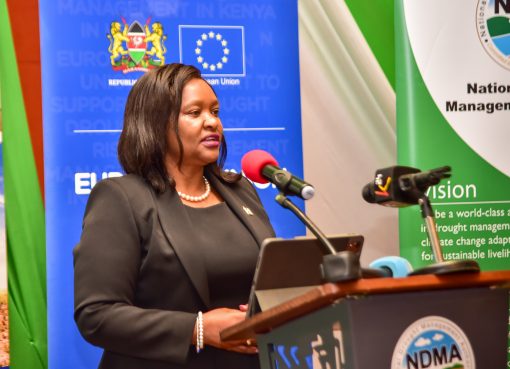
County Executive Committee Member (CECM) for Health Services Roselyn Mungai said malnutrition remains one of the county’s major public health challenges, costing Nakuru an estimated Sh626.9 million annually through increased mortality, reduced labour productivity and lower economic output.
She noted that the losses account for approximately 0.22 per cent of the county’s Gross Domestic Product (GDP), underlining the need for sustained investment in preventive nutrition programmes.
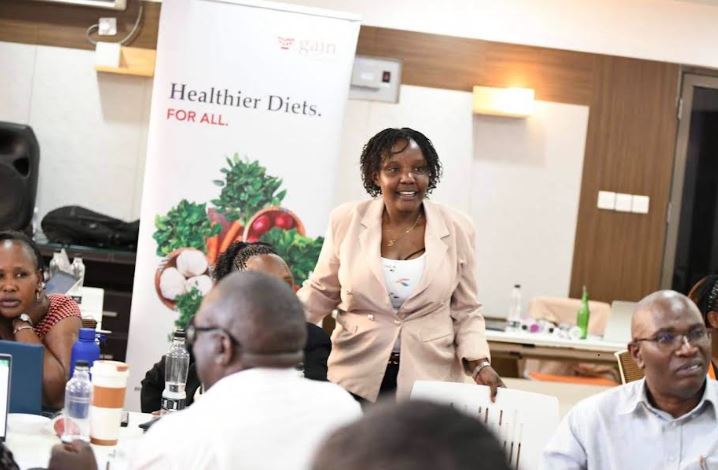
Speaking during a three-day consultative workshop to develop the action plan, Mungai said the document will serve as a strategic roadmap to guide nutrition interventions and coordinate the efforts of government departments, development partners, civil society organisations and other stakeholders.
She explained that the plan seeks to improve nutrition and health outcomes among mothers, children, adolescents and families while strengthening community-based nutrition services.
According to statistics from the Nakuru County Department of Health, the county has an estimated 275,921 children under the age of five.
Of these, about 27.9 per cent are stunted, a figure significantly higher than the national average, while five per cent are wasted and 10.2 per cent are underweight.
The CECM said these figures demonstrate the urgency of implementing targeted nutrition interventions capable of reversing the current trend.
“The draft County Nutrition Action Plan will provide a coordinated framework that brings together all stakeholders to address nutrition challenges and improve health outcomes across Nakuru County,” she said.
She added that Governor Susan Kihika’s administration has placed nutrition at the centre of preventive healthcare because proper nutrition contributes to healthier pregnancies, stronger immunity, improved educational outcomes and a more productive population.
“Good nutrition is the foundation of a healthy population. Through the draft County Nutrition Action Plan 2027–2032, the county government seeks to strengthen nutrition services, prevent malnutrition and ensure mothers, children and families have access to the support and information they require to live healthier lives,” Mungai stated.
The five-year roadmap prioritizes strengthening maternal, infant and young child nutrition, promoting healthy dietary practices, increasing access to nutrition information at household and community levels, and enhancing quality nutrition services throughout the county.
The county has set ambitious targets of reducing malnutrition among children under five and expectant women by 60 per cent and 58 percent, respectively, over the next five years.
According to Mungai, successful implementation of the action plan is projected to prevent approximately 5,436 cases of wasting among children.
The interventions are also expected to avert about 1,473 child deaths, prevent 22,453 cases of anaemia among pregnant women and avoid another 4,666 cases of anemia among adolescent girls.
In addition, the county projects that the prevalence of stunting among children under five will decline by approximately 38 percent during the implementation period.
Cases of iron deficiency anaemia among pregnant women are also expected to reduce by about 58 per cent.
The CECM emphasized that nutrition remains one of the most cost-effective investments in improving public health and accelerating socio-economic development.
She observed that proper nutrition supports healthy pregnancies, strengthens children’s immune systems, enhances cognitive development and improves school performance while contributing to increased productivity in adulthood.
Mungai said undernutrition continues to exert a heavy financial burden on Nakuru’s health and education sectors.
She revealed that undernutrition costs the county’s health system an estimated Sh175.6 million annually through treatment of preventable illnesses associated with poor nutrition.
The education sector also bears substantial losses resulting from poor nutritional outcomes.
According to the county, stunting contributes to approximately 333 cases of class repetition and school dropout every year, affecting educational attainment and future productivity.
She added that absenteeism linked to stunting costs the education sector and affected families an estimated Sh4.07 million annually.
“The preventive high-impact nutrition interventions contained in the draft County Nutrition Action Plan will reach an average of 395,032 newborns, children, adolescent girls and pregnant women every year.
“The plan will accelerate and scale up efforts towards eliminating malnutrition as a public health concern in Nakuru County,” she stated.
Mungai stressed that addressing malnutrition requires a comprehensive multi-sectoral approach involving the health, agriculture, education, gender, sports, water and sanitation sectors alongside development partners and local communities.
She urged residents to establish household and community vegetable gardens to improve dietary diversity and increase access to nutritious foods.
The CECM noted that vegetables provide essential vitamins and minerals that are critical in preventing micronutrient deficiencies, especially among children and pregnant women.
She also pointed out that adolescent girls and women remain among the most vulnerable population groups due to biological and socio-economic factors.
“The women and girls often prepare food for their families but eat last and sometimes least, making them more vulnerable to malnutrition despite their central role in food production and household nutrition,” she observed.
She said empowering women through nutrition education, economic opportunities and improved access to health services would significantly reduce malnutrition among households.
Mungai further observed that one in every three people globally suffers from some form of malnutrition but emphasized that the challenge can be addressed through sustained investments in preventive healthcare and community participation.
She called for greater public awareness on healthy eating, exclusive breastfeeding and appropriate complementary feeding practices to improve nutrition outcomes among infants and young children.
The World Health Organization (WHO) identifies malnutrition in all its forms—including undernutrition, micronutrient deficiencies, overweight and obesity—as one of the world’s leading public health challenges.
WHO notes that nutrition interventions are particularly important during pregnancy and the first two years of a child’s life because adequate nutrition supports healthy physical growth, brain development and lifelong wellbeing.
WHO and the United Nations Children’s Fund (UNICEF) recommend exclusive breastfeeding during the first six months of life, followed by appropriate complementary feeding alongside continued breastfeeding to ensure optimal infant and young child nutrition.
Although Kenya has made significant progress in reducing chronic malnutrition over the past three decades, nutrition remains a major public health concern.
According to the 2022 Kenya Demographic and Health Survey (KDHS), 18 per cent of children under five were stunted, five per cent were wasted, 10 per cent were underweight and three per cent were overweight.
The survey indicates that stunting among children under five declined from 40 per cent in 1993 to 18 per cent in 2022, reflecting sustained national efforts to combat chronic undernutrition.
However, Kenya continues to face a double burden of malnutrition, with persistent undernutrition and micronutrient deficiencies occurring alongside rising cases of overweight, obesity and diet-related non-communicable diseases.
The KDHS further shows that 45 per cent of women aged between 20 and 49 years are overweight or obese, underscoring the need for balanced nutrition interventions that address both undernutrition and unhealthy diets.
UNICEF similarly emphasizes that good nutrition is fundamental to child survival, healthy growth and cognitive development, warning that poor nutrition during early childhood can have lifelong consequences.
Mungai said the development of the Nakuru County Nutrition Action Plan demonstrates the county government’s commitment to making nutrition a priority in improving the health and well-being of its residents.
She noted that the strategy also aligns with national nutrition policies and global Sustainable Development Goals aimed at ending hunger, improving health and promoting sustainable development.
“The development and eventual launch of the Nakuru County Nutrition Action Plan confirms our commitment to making nutrition a priority for a healthier population.
“It is an important milestone in addressing malnutrition both at the county and national levels, and we are encouraged that counties are increasingly allocating more resources towards nutrition interventions,” she said.
The CECM emphasized that eliminating undernutrition does not necessarily require expensive interventions, noting that many effective solutions—including nutrition education, breastfeeding promotion, kitchen gardens, dietary diversification and improved sanitation—are relatively low-cost and can achieve significant results when implemented consistently with active participation from individuals, families and communities.
By Jane Ngugi and Caroline Nyakio