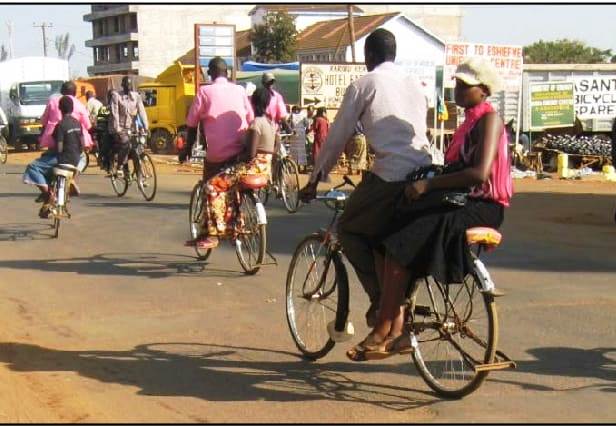
As dawn breaks over Kisumu City, the familiar ringing of bicycle bells echoes through busy streets as hundreds of cyclists begin another day’s work.
While motorcycles and vehicles dominate major roads, pedal-powered bicycles continue to provide an affordable, reliable and environmentally friendly means of transport for thousands of residents.
For decades, bicycles have remained an integral part of Kisumu’s transport network, ferrying passengers, delivering goods and connecting communities in areas where motor vehicles cannot easily reach.
Although often overshadowed by motorcycles, bicycle transport continues to sustain livelihoods while offering a practical solution to urban mobility challenges.
The history of bicycles in western Kenya dates back to the early 1900s, when they were introduced following the establishment of the Uganda Railway terminus in Kisumu.
Initially associated with British colonial administrators, bicycles gradually became popular among African civil servants and labourers who viewed them as an affordable means of transport and a symbol of social mobility.
The now-famous bicycle boda boda traces its origins to the Kenya-Uganda border towns of Busia during the 1960s and 1970s.
Cyclists ferried travellers and goods between customs posts, while calling out “Border, border” to attract customers crossing the international boundary. Over time, the phrase evolved into the now universally recognised term “Boda boda”.
Long before motorcycles transformed the transport industry, bicycles were the preferred mode of transport for traders moving agricultural produce, household goods and passengers across villages and trading centres.
Although there are no official records indicating the exact number of bicycles operating in Kenya, today, estimates suggest that between four and six million bicycles are in use nationwide.
In Kisumu County and the surrounding region, approximately 5,000 bicycles are actively used for commercial transport, serving urban neighbourhoods, informal settlements and rural communities.
Their continued popularity is largely attributed to affordability. Compared with motorcycles and motor vehicles, bicycles are significantly cheaper to purchase and maintain. They require no fuel, making them ideal for operators and customers with limited incomes.
Their simple design also enables them to navigate narrow footpaths, rough roads and unpaved sections that are often inaccessible to larger vehicles.
Besides transporting passengers, bicycles play an important role in moving farm produce, water, firewood and household goods, particularly within low-income and peri-urban communities.
For many residents, bicycles represent more than just transport. They are a dependable source of income and an essential link between homes, markets, schools and health facilities.
One such rider is Peter Ochieng, who has earned a living from bicycle transport for more than eight years.
Every morning before sunrise, he carefully inspects his bicycle, inflates the tyres where necessary and heads to his regular stage in search of customers.
“This bicycle feeds my family,” he says with a smile. “Some days are good, others are difficult, but I am proud of the work I do.”
Like many other bicycle operators, Ochieng depends entirely on daily earnings to provide food, pay school fees and meet other household expenses.
Despite their resilience, bicycle operators continue to face numerous challenges that threaten their livelihoods.
Most roads in Kisumu lack dedicated cycling lanes, forcing riders to compete for space with motorists and motorcycle operators.
Busy highways, impatient drivers, poor road conditions and unpredictable weather expose cyclists to accidents and make their work increasingly difficult.
The situation worsens during the rainy season when flooded and muddy roads slow movement, reduce the number of passengers and increase maintenance costs.
Competition from motorcycles, commonly known as boda bodas, has also reduced the number of customers relying on bicycles for transport.
Nevertheless, many residents continue to prefer bicycles because of their affordability and convenience.
A bicycle ride within the city typically costs between Sh30 and Sh50, while motorcycles and other transport options often charge Sh70 or more for similar distances.
Many passengers also consider bicycles safer and quieter, particularly for short journeys within residential estates and market centres.
Older persons appreciate the slower speed and stability offered by bicycles, while traders frequently use them to transport vegetables, cereals and other goods to areas inaccessible to motorcycles or vehicles.
Apart from supporting livelihoods, bicycle transport contributes significantly to environmental conservation.
Unlike fuel-powered vehicles, bicycles produce no greenhouse gas emissions, consume no fossil fuels and help reduce traffic congestion.
Health experts also acknowledge that cycling promotes physical fitness and improves cardiovascular health for riders.
As cities around the world increasingly promote sustainable transport, bicycle operators believe cycling deserves greater recognition within Kenya’s urban transport planning.
They are calling for investment in dedicated cycling lanes, improved road safety education and policies that recognise bicycles as an important component of integrated public transport systems.
According to the riders, such investments would improve their safety, reduce road accidents and encourage more residents to embrace environmentally friendly transport.
They point to countries in Europe and other parts of the world, where cycling infrastructure has enhanced mobility while reducing pollution and traffic congestion.
Urban planners have increasingly acknowledged that non-motorised transport, including cycling and walking, plays a critical role in building sustainable, inclusive and resilient cities.
As evening approaches and Kisumu gradually slows down, bicycle riders complete their final trips before returning home.
Though their work often attracts little public attention, they continue carrying passengers, goods and livelihoods across the city every day.
For many families, the humble bicycle remains an indispensable economic asset that provides income, improves mobility and supports access to essential services.
In a rapidly changing city, these cyclists continue to demonstrate that progress is not always driven by engines. Sometimes it advances quietly on two wheels, propelled by determination, resilience and the enduring strength of human effort.
By Mabel Keya-Shikuku and Nathan Kimwetich