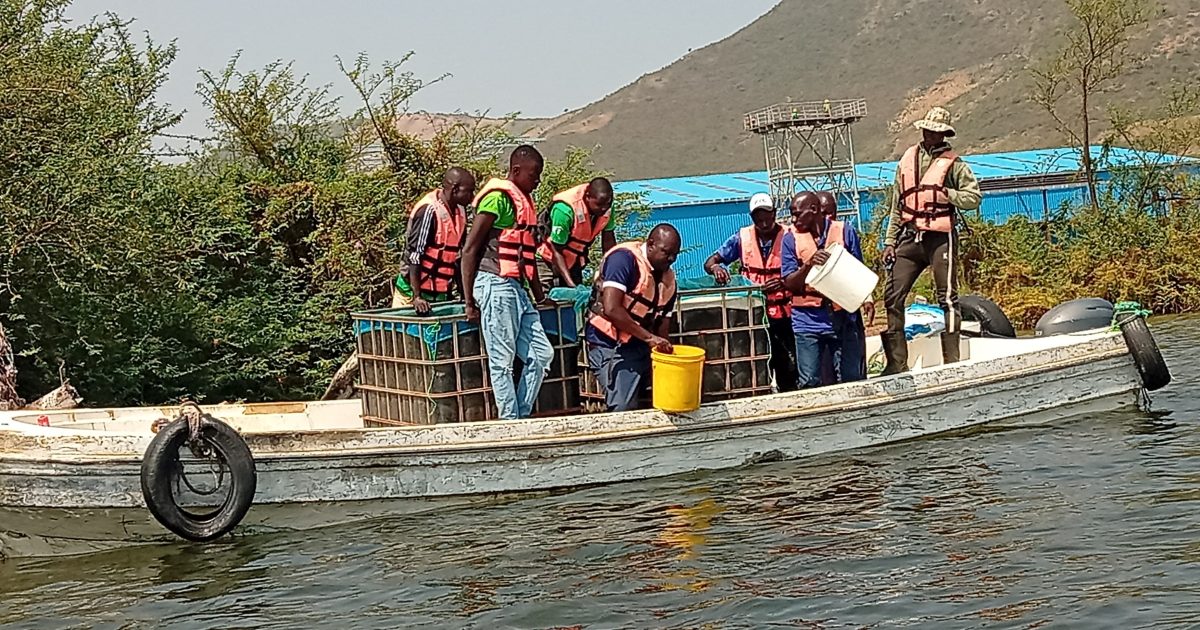
Fishing communities in Homa Bay are witnessing a turnaround in fish catches as conservation efforts and an ambitious restocking programme bear fruit and revive the endangered native Ngege Makwar tilapia.
The initiative is being driven by a partnership between Victory Farms, an aquaculture farm in Sindo, Beach Management Units (BMUs), and local communities, who have intensified efforts to protect fish breeding grounds and replenish depleted stocks in Lake Victoria.
The community has been conducting regular clean-up exercises at landing beaches to improve fish breeding grounds and restore the lake’s ecosystem.
Speaking in Roo Beach, Gideon Rang’wa, a BMU chairman in Suba Central, said protecting breeding habitats has become a priority for local Beach Management Units.
Rang’wa said BMUs have also designated protected breeding areas and are working closely with fishermen to prevent illegal fishing activities that threaten fish populations.
The chairman said the initiatives are already yielding results, with fishermen reporting improved catches after years of declining fish stocks.
He attributed the improved catches to both habitat conservation and the fish restocking programme implemented in partnership with Victory Farms, which regularly releases fingerlings into the lake.
To promote sustainable fishing, the community has banned the use of fishing nets with a mesh size below four inches, allowing fish to mature and reproduce before being harvested.
“We want fishermen to catch mature fish that have already bred. This will ensure sustainable fishing and secure livelihoods for future generations,” Rang’wa said.
Suba South Environment Officer, Nick Ngoe, said that maintaining clean beaches is critical to environmental conservation and sustainable fisheries.
He encouraged other organizations and development partners to support similar environmental initiatives across the region to improve waste management and protect the lake.
“The county also intends to roll out public awareness campaigns to educate residents on proper waste disposal and environmental conservation,” he said.
Victory Farms Community Relations Coordinator David Otieno said the company’s restocking programme is specifically targeting Oreochromis esculents, locally known as Ngege Makwar, a native tilapia species whose population has declined over the years due to overfishing, climate change and environmental degradation.
Otieno said the species is highly valued for its nutritional benefits and cultural significance among communities living along Lake Victoria, where it has traditionally been regarded as a prized delicacy.
To date, Victory Farms has released about five million fingerlings in Lake Victoria as part of its efforts to increase fish stock and improve livelihoods of fishermen.
“The restocking programme is not only restoring biodiversity in Lake Victoria but is also improving food security and household incomes by increasing the population of wild fish,” he said.
According to Otieno, reports from participating Beach Management Units indicate that areas where fingerlings have been released are recording higher fish catches, demonstrating the positive impact of coordinated conservation efforts.
By Sitna Omar