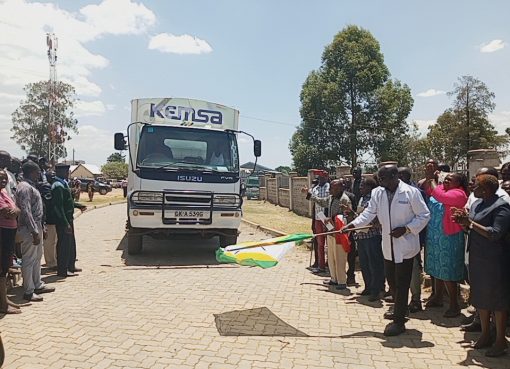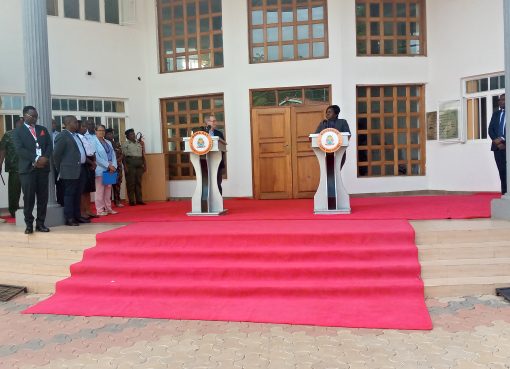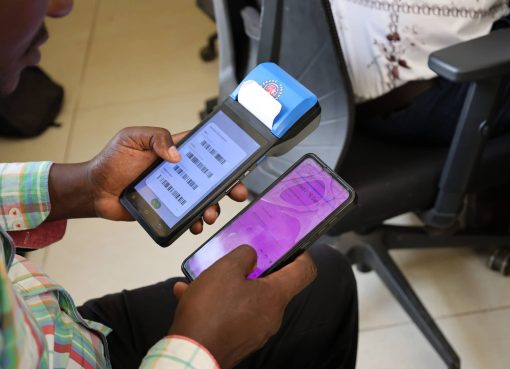
The Kenya Informal Settlements Improvement Project (KISIP) is a government initiative backed by the State Department for Housing and Urban Development, the World Bank, and other partners to enhance living standards, basic infrastructure, and land tenure security in urban informal settlements.
The Kenya Informal Settlements Improvement Project Phase 2 (KISIP 2) in Kisumu County is a major Sh1.2 billion to Sh1.3 billion infrastructure and slum-upgrading initiative funded by the World Bank and Agence Française de Développement (AFD) to improve basic services, roads, and land tenure security in underserved areas.
Some of the projects include roads and walkways: Upgrading access routes and footpaths to bitumen standards, drainage, and sanitation: Constructing stormwater management systems and sewer lines to reduce flooding and improve hygiene.
Other areas of intervention include public lighting, such as installing high-mast security lights to boost safety, and market upgrading, such as modernizing facilities like Kibuye Market to support local traders.
The total population of Nyalenda in Kisumu is estimated at roughly 76,000 to over 100,000 people, split across its administrative ward.
For decades, navigating the alleys of Nyalenda and Manyatta, which are two of Kisumu’s largest and most densely populated informal settlements, was a daily endurance test against the elements.
During the long rainy seasons, relentless downpours turned the unpaved dirt tracks into impassable corridors of sticky, knee-deep black cotton soil.
Small-scale traders saw their perishable stock ruined by flash floods, while working-class families found themselves completely marooned inside their homes. When night fell, thick darkness enveloped the narrow pathways, transforming routine evening commutes into harrowing journeys defined by the constant fear of muggings and opportunistic crime.
Despite sitting just minutes away from the bustling Kisumu Central Business District (CBD), deep pockets of Manyatta and Nyalenda remained structurally isolated from the city’s economic growth.
Emergency response vehicles dispatched from regional referral facilities, such as the Jaramogi Oginga Odinga Teaching and Referral Hospital (JOOTRH) or the Kisumu County Referral Hospital, routinely found it impossible to navigate the estate interiors during medical or fire crises. Basic urban amenities like motorable roads, functional stormwater drainage, public lighting, and formal land tenure were largely absent, leaving thousands of residents living in perpetual urban vulnerability.
Today, a comprehensive structural transformation is rewriting the narrative of both settlements. Under the Second Kenya Informal Settlement Improvement Project (KISIP II), a Sh1.4 billion joint development initiative financed by the World Bank in partnership with the National Government and the County Government.
Nyalenda A, Nyalenda B, Manyatta A, and Manyatta B are undergoing a massive urban facelift. The ambitious project is replacing treacherous mud tracks with durable bitumen corridors, clearing stagnant floodwaters through deep drainage networks, and illuminating former crime hot spots with solar-powered floodlights.
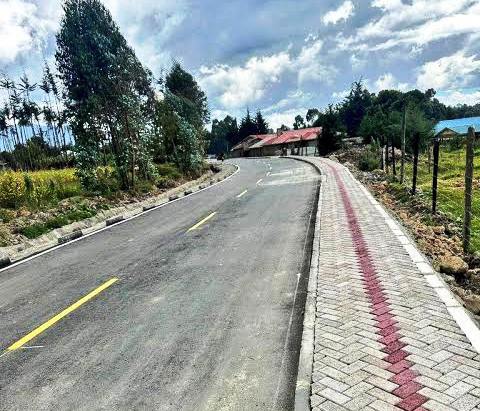
The most visible physical milestone of this civil engineering campaign lies beneath the feet of residents. Pavel-lying crews and heavy earthmovers have opened up critical interior arteries, building motorable bitumen-standard access roads fitted with paved pedestrian walkways.
Key feeder routes that were once impassable, including the Transformer–Daraja Mbili Road, Carwash–Sije Road, Corner Lego corridor, and the Wandiege–Walgudha stretch in Manyatta now links the interior of the settlement directly to major urban arteries like Kibos Road.
In Nyalenda, newly paved networks connecting Pandpieri, Kapoho, and the Christ Is the Answer Ministries (CITAM) Church junction allow traffic to flow smoothly out to the Nairobi Road bypass corridor.
Overcoming the unique geographical and geological hurdles of the Kano Plains required specialized civil engineering interventions. Eng. Kevin Owilla, a project coordinator supervising engineering works across the Kisumu KISIP II sites, explains that the technical design had to be tailored specifically to counter the aggressive swelling nature of local soils and the low-lying terrain near Lake Victoria.
“We are executing these civil works to full bitumen standards with heavily reinforced sub-bases specifically engineered to withstand Kisumu’s expansive black cotton clay,” Eng. Owilla says.
He explains that in the past, poorly constructed tracks failed within a single rainy season because water pooled underneath the road bed. The engineering team prioritized concrete-lined stormwater drainages running parallel to every access road.
Channeling runoff directly into primary discharge arteries like the Auji River and Kothwuon River drainage systems, this will ensure that floodwaters are safely evacuated before they can compromise the road pavement or inundate nearby residential homes.
The ecological benefits of these concrete stormwater channels extend far beyond structural protection. By preventing surface runoff from stagnating inside residential plots and flooding therein, the drainage infrastructure has also eradicated historical breeding grounds for mosquitoes and waterborne diseases.
Local health facilities report a noticeable decline in seasonal malaria and diarrheal cases during heavy rains, demonstrating how civil infrastructure directly serves as a public health intervention.
Parallel to the transport improvements, the economic ecosystem of Nyalenda and Manyatta has been revitalized by the installation of high-mast solar floodlights, locally known as mulika mwizi.
Towering high above the iron-sheet roofs at major intersections, market squares, and previously dark alleyways, these solar lighting units have effectively eliminated dark zones and extended trading hours deep into the night.
At a bustling road junction near Manyatta A, fresh produce vendor Mama Jane Atieno carefully arranges crates of tomatoes, green vegetables, and fruits under the bright white glow of a newly installed high-mast light. For Atieno, the installation of public lighting directly altered her family’s financial stability.
“Before these paved roads and high-mast lights were constructed, doing business here after 6:30 PM was impossible because of total darkness and the constant threat of gang muggings,” Atieno recalls. “We used to rush to pack up our produce early, which meant selling at throwaway prices to clear stock before dark.
Now, with clear tarmac under our feet and floodlights illuminating the whole junction, I comfortably keep my grocery stall open until 10:00 PM. My daily business earnings have nearly doubled because workers returning late from the town centre can stop by and safely shop right outside their estate gates.”
The seamless integration of street paving and security lighting has also brought relief to the transport sector, particularly for the hundreds of young people who earn their living as public service operators. Otieno Omondi, a long-time resident and boda-boda operator based near Kapoho in Nyalenda B, points to his motorcycle as proof of the transformation.
“During the rainy season, navigating through Kapoho used to be a nightmare that destroyed our motorcycles,” Omondi explains. “The sticky black cotton mud would clog our mudguards, snap drive chains, and wear out brake pads within weeks.
Worse still, passengers refused to pay for rides deep inside the estate because they knew the bikes would get stuck, leaving them to walk through dark, muddy water. Today, Otieno drops my passengers directly at their doorstep in Pandpieri at any hour of the night without worrying about breakdown costs or safety risks. He says this has restored dignity to our work and made our neighborhoods feel like a true part of Kisumu City.
Beyond visible surface improvements like tarmac, drainage, and lighting, KISIP II addresses the root cause of informal settlement vulnerability: land tenure insecurity. Working alongside local community structures, project planners have undertaken systematic boundary mapping and surveying across Nyalenda and Manyatta to regularize land plots.
Long-term residents who previously held informal, contestable claims are being issued legally recognized allotment letters and land title deeds.
This security of tenure provides the foundation for sustainable urban renewal. Free from the constant fear of arbitrary displacement or land disputes, property owners in Manyatta and Nyalenda are investing their savings into transforming temporary, iron-sheet structures into modern, multi-story brick-and-mortar buildings.
Commercial banks and microfinance institutions, which historically viewed informal settlement settlements as unbankable, now accept regularized titles as valid collateral, unlocking formal credit for local entrepreneurs.
The holistic approach deployed through KISIP II demonstrates that upgrading informal urban spaces does not require the destruction of existing communities.
By systematically integrating bitumen road networks, engineered stormwater drainage, security lighting, and formal title security, the project has turned Nyalenda and Manyatta into vibrant, economically active urban neighborhoods where residents can live, work, and thrive with dignity.
City Manager, Abala Wanga, says housing and proper infrastructure has been a challenge for the city for a long time but the current county administration under Governor Prof. Peter Anyang` Nyong`o decided to face the challenge head-on, working with stakeholders to provide housing and proper infrastructure in the city.
By Mabel Keya Shikuku and Tonny Brian