The Turkana County Government, through its Department of Fisheries and Aquaculture, has entered a partnership with SNV Netherlands Development Organization to support 10,000 youth from host and refugee communities, targeting improved food security in the county.
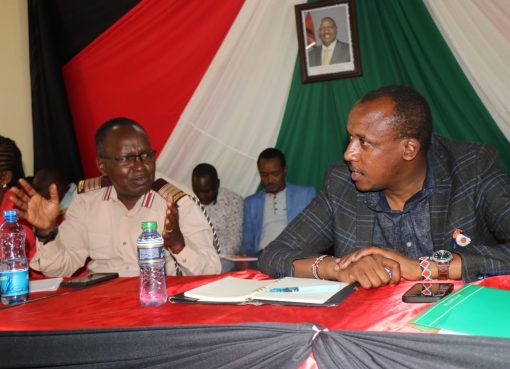
Of the beneficiaries, 7,000 will be drawn from host communities and 3,000 from refugee communities, officials said. The partnership was announced during a courtesy visit by SNV representatives to county fisheries officials in Lodwar, where discussions centered on quality assurance, capture fisheries and aquaculture under SNV’s CASHA Project.
Acting Deputy Director for Fisheries and Aquaculture John Bett said aquaculture holds significant untapped potential for the county.
“Aquaculture is an emerging and potentially viable sub-sector in Turkana, and the government is happy to join hands with SNV and other sector players to meaningfully exploit this for the benefit of the Turkana community,” Bett said.
CASHA — Creating Shared Value in the Livestock Sector with Young People in Kenya’s ASALs — is a five-year initiative led by SNV aimed at creating climate-resilient jobs for 200,000 youth and women across arid and semi-arid regions.
SNV Monitoring and Evaluation Advisor Ivy Mwihaki said the programme spans 15 counties and covers red meat, apiculture, aquaculture and related value chains, with SNV specifically leading aquaculture and capture fisheries components to open income pathways for young people.
In Turkana, she said, CASHA will prioritize young women, youth with disabilities and refugees across Turkana West, Turkana South, Turkana Central and Loima sub-counties.
The initiative is funded by the Mastercard Foundation and led by the Food and Agriculture Organization, bringing together a consortium that includes SNV, ILRI, BOMA, E4Impact and the Kenya Livestock Marketing Council, with focus areas spanning poultry, beef, fodder production and other agri-food enterprises.
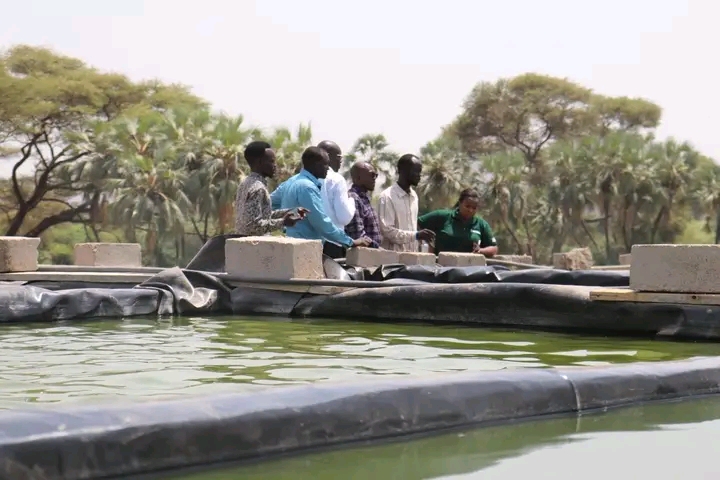
Following the meeting, officials toured Jackdaughters Integrated Farm in Loborot, Nabulon village, which operates five fish ponds, a CCTV-monitored elevated water tank with alarm system, a 25-cubic-metre storage tank, a solar-powered borehole, livestock and intercropped food crops.
Farm advisor John Lomilo, who also teaches at a nearby primary school, said the two-acre enterprise operates on a circular economy model that supports 100 members.
“Through the circular economy model on two acres, proceeds from the farm are helping 100 members meet their daily needs and secure food for their households,” Lomilo said, though he noted continuing challenges in production and market access.
The team also visited Narukoo Fresh Fish Market in Kanamkemer, where discussions with market officials identified support needs from the county and SNV.
Officials proposed fast-tracking an integrated training curriculum covering capture fisheries, aquaculture and market access for fishermen, fishmongers and transporters. They also agreed to recruit more youth aged 18 to 35 into aquaculture enterprises and to convert existing groups into cooperatives and SACCOs to enable low-interest loans and dividends for members.
Officials present during the field visit included John Mcmei of SNV, Collins Louga and John Ekeno of the Fisheries Department; and fish market officials Emmanuel Ekorot, Michael Ekaran, Rebecca Aroo, Hellen Arukudi, Clementina Ekwanga, Lydia Nangor, Elizabeth Lotieng, Daisy Nawoton and James Emorut.
By Peter Gitonga