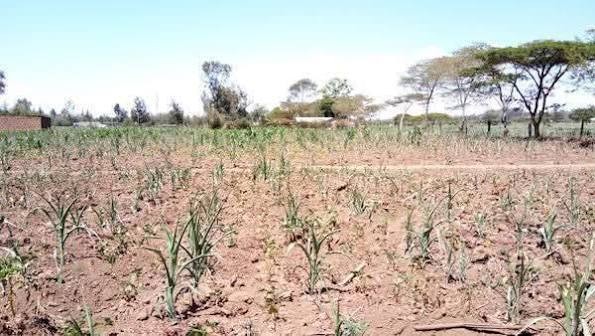
East Africa is expected to experience a sharp deterioration in food security as the strengthening El Nino weather pattern threatens to push millions more people into acute hunger across vulnerable countries through 2027.
According to a new analysis by the United Nations World Food Programme (WFP), the report projects that more than 18 million additional people in East and Southern Africa could face acute food insecurity, representing a 26 percent increase, as droughts, floods, and extreme temperatures disrupt agricultural production and livelihoods.
In a press release on Wednesday, WFP has warned that the climate phenomenon, expected to peak between September and December 2026, will continue to affect harvests and food production well into 2027, particularly in countries already struggling with poverty, conflict, economic instability and recurring climate shocks.
“The sooner we help families prepare for these climate shocks, the greater our ability to save lives and protect livelihoods,” said WFP Acting Executive Director Carl Skau.
He warned that severe floods and prolonged droughts could rapidly push vulnerable communities from coping into crisis.
The agency estimates that globally the 2026–2027 El Niño could push at least 49 million more people into acute food insecurity by the end of 2027.
Its analysis covered 45 food-insecure countries where El Niño is expected to significantly alter rainfall patterns, temperatures, and the frequency of floods and droughts.
Across these countries, the number of people facing acute food insecurity is projected to rise from about 225 million to 274 million, an increase of approximately 22 percent.
Southern African countries are expected to be among the hardest hit because many households rely on rain-fed subsistence farming, making them highly vulnerable to rainfall failure and prolonged dry spells.
To reduce the humanitarian impact, WFP and its partners are scaling up anticipatory action programmes by preparing communities before disasters strike.
The agency is working with the Food and Agriculture Organization (FAO), the United Nations Office for the Coordination of Humanitarian Affairs (OCHA), governments, and other partners to strengthen preparedness in more than 50 countries.
According to WFP, evidence from previous El Niño events shows that every USD1 invested in anticipatory action can save between USD3 and USD7 in avoided disaster losses and emergency response costs.
WFP and FAO have appealed for increased international support to enable vulnerable communities to prepare for the expected impacts of El Niño before humanitarian conditions worsen.
Last month, the Kenya Meteorological Department (KMD) indicated that the country may experience above‑normal rainfall from October as a strong El Niño event develops, raising the risk of wetter conditions extending into early 2027.
KMD pointed out that there is an 81 percent probability that the 2026 El Niño will be very strong and a 97 percent chance that it will persist into the first months of 2027.
By Wangari Ndirangu