Agricultural experts are urging farmers in Nandi County to embrace intercropping and other smart farming technologies as shrinking land sizes threaten household food security and farm incomes.
Population growth and inheritance are steadily reducing the size of family farms, making it increasingly difficult for households to meet their food and economic needs through traditional monocropping systems.
Agroecologist Grace Chepkemboi says producing more from every acre has become a necessity rather than an option as pressure on agricultural land continues to increase.
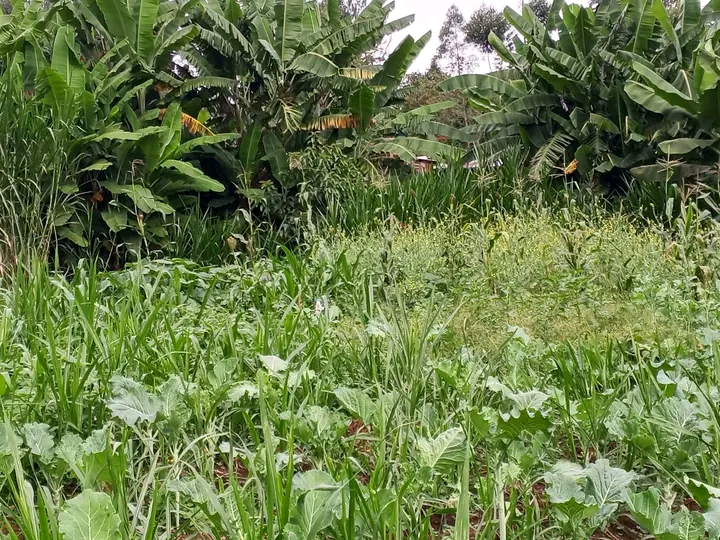
Intercropping, the practice of cultivating two or more compatible crops on the same piece of land, is emerging as a practical approach to increasing productivity while conserving natural resources.
According to Chepkemboi, farmers who combine maize with beans, potatoes with legumes or vegetables with cereals can harvest diverse crops from the same piece of land, spreading production risks and making efficient use of available resources.
She said shrinking land sizes should encourage farmers to innovate rather than discourage agricultural production.
“Intercropping enables farmers to maximise every square metre of land. Different crops complement each other by utilising sunlight, soil nutrients and moisture more efficiently, resulting in better overall productivity than growing a single crop,” she said.
Chepkemboi observed that legumes such as beans naturally enrich the soil through nitrogen fixation, improving soil fertility for companion crops and reducing farmers’ dependence on commercial fertilisers.
She noted that smallholder farmers could significantly increase household food supplies by carefully selecting compatible crop combinations suited to local ecological conditions.
Environmental conservationist David Kibet said intercropping also promotes environmental sustainability by protecting soil and conserving water.
“When farms maintain continuous ground cover through diversified cropping, rainfall is absorbed more effectively, soil erosion is minimised and beneficial organisms thrive. Healthy soils ultimately translate into healthy harvests,” he said.
Kibet added that maintaining biodiversity within farms can help reduce pest outbreaks while encouraging natural pollinators and other beneficial insects that contribute to agricultural productivity.
He emphasized that environmental conservation and increased food production should go hand in hand, saying sustainable farming practices provide long-term solutions to climate change and food security challenges.
Horticulturalist Ruth Jepchirchir encouraged farmers to integrate vegetables into their cropping systems to improve household nutrition and generate regular income.
“Families should not rely entirely on one staple crop. By introducing vegetables alongside cereals and legumes, households can enjoy balanced diets while earning income from frequent vegetable harvests,” she said.
Jepchirchir explained that vegetables such as kales, spinach, cabbages and tomatoes require relatively small spaces and can generate substantial returns when properly managed.
She said diversified farms are generally more resilient because they provide multiple harvests at different times, reducing financial pressure on farming families and ensuring a more consistent supply of food.
Agroforestry advocate Peter Langat said trees could complement intercropping systems when properly integrated instead of competing with food crops.
“Appropriately positioned trees improve soil fertility, reduce wind damage, conserve moisture and provide additional products such as fruits, fodder, timber and firewood. They strengthen the productivity of the entire farming system,” he said.
Langat encouraged farmers to plant suitable tree species along farm boundaries and within carefully planned farming landscapes to enhance environmental conservation while providing additional benefits to households.
Across Nandi County, farmers are increasingly recognising the importance of producing more food from shrinking parcels of land.
Rising food demand, changing climatic conditions and limited opportunities for agricultural expansion have made efficient land utilisation a priority for farming communities.
Agronomists have consequently been encouraging farmers to adopt climate-smart practices that improve productivity while conserving natural resources.
Demonstration farms, farmer field days and community training programmes have helped increase awareness of improved crop management, soil conservation and efficient land use.
Intercropping can also strengthen household resilience by reducing dependence on a single crop. If drought, pests or diseases affect one crop, companion crops may still produce reasonable harvests, safeguarding household food supplies and incomes.
Nutrition specialists say diversified cropping can also contribute to healthier diets by increasing access to cereals, legumes and vegetables rich in proteins, vitamins and minerals. This is particularly important for children, expectant mothers and older members of farming households.
Langat noted that economic opportunities also arise from diversified production. While staple crops provide household food reserves, vegetables and legumes can provide regular market income, enabling families to meet education, healthcare and other household expenses throughout the year.
As pressure on agricultural land continues to grow, experts believe intercropping offers one of the most practical pathways towards sustainable agricultural development.
By maximising productivity on limited acreage, improving soil health and enhancing climate resilience, the practice has the potential to strengthen food and nutritional security while improving livelihoods for thousands of farming households.
For farmers, the future may depend less on expanding the size of their farms and more on making every available acre productive through innovative and sustainable farming practices such as intercropping.
By Sammy Mwibanda