Konza Technopolis has recorded significant progress in infrastructure development, investment attraction, digital transformation, education and innovation, with the flagship smart city increasingly positioning itself as a regional hub for science, technology and enterprise.
According to Josephine Ndambuki, Chief Manager for Business Development and Innovation at Konza Technopolis, Phase One of the development has been completed, commissioned and is operational, while at least 30 companies are currently working from the Technopolis.
Speaking to Kenya News Agency (KNA) at Konza city during a Government Delivery Unit (GDU) inspection of ongoing projects, Ndambuki said about 80 per cent of Phase One has been committed to investors, signaling growing private sector interest in the 5,000-acre smart city being developed under Kenya’s Vision 2030 programme.
She said the Technopolis has also attracted universities, innovation ecosystem institutions and technology companies, while major projects in data infrastructure, housing, digital skills, creative industries, drone technology and advanced scientific research continue to expand the city’s economic base.
Konza Technopolis Development Authority is developing the city as a science park and innovation area designed around a sustainable “live, work and thrive” model. At full development, the city is projected to contribute about two per cent to Kenya’s Gross Domestic Product and accommodate more than 240,000 workers.
The development is anchored on three strategic clusters—Information and Communication Technology and IT-enabled services, life sciences, and engineering.
Ndambuki said the Authority was seeking to activate the three clusters through research and development, education, innovation, commercialization of emerging technologies and investment attraction.
Konza is also a gazetted Special Economic Zone, with an Export Processing Zone, offering fiscal and non-fiscal incentives to investors.
The development of Konza Technopolis has progressed through three broad phases: planning from 2008 to 2013, foundation development from 2014 to 2020, and the current acceleration phase running from 2020 to 2030.
The planning phase involved feasibility studies, benchmarking, preparation of the master plan and development guidelines. The master plan was approved by the Government in 2013.
The foundation stage focused on putting in place the infrastructure required to transform the project from a planned city into an operational smart city.
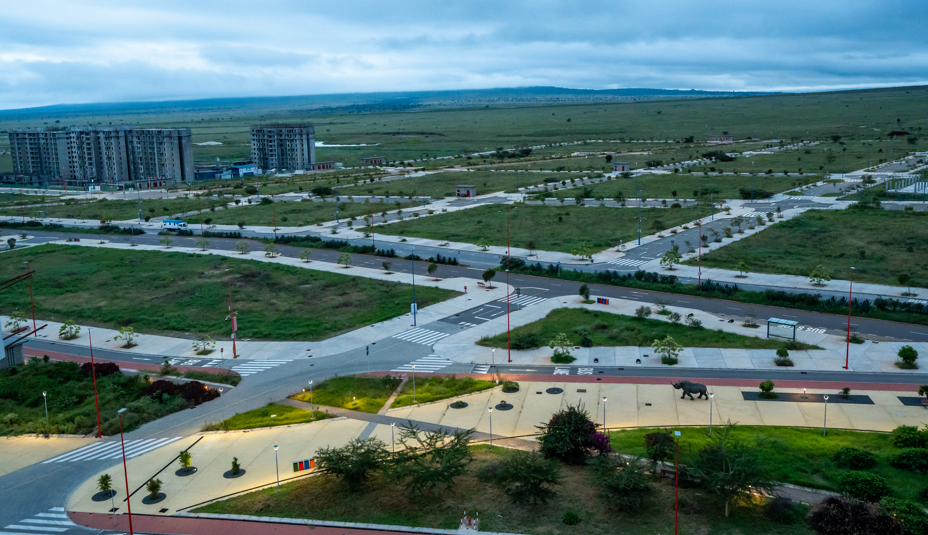
According to Ndambuki, Phase One horizontal infrastructure is complete. It includes roads, electricity, fibre-optic networks, water and drainage systems, solid waste management infrastructure and other utility networks.
The city has a 40-kilometre road network of bitumen standard, incorporating provisions for both motorised and non-motorised transport and a green transit corridor.
Other completed facilities include a wastewater reclamation plant designed to recycle up to 70 per cent of treated water for reuse, a fresh-water treatment facility and smart city installations.
The infrastructure also includes smart poles equipped for security, public communication, advertising and street lighting.
Public facilities developed include the Public Safety Centre, Welcome Centre, athletic field, open parks and public spaces.
The Konza Technopolis office complex has also been completed, alongside a 28-unit furnished apartment block that is ready for letting.
The city’s first phase covers more than 1,700 acres, including a 1,000-acre wildlife corridor, underscoring the emphasis on environmental sustainability in the development.
Universities anchor knowledge economy
Education and research are emerging as major components of Konza’s development.
Ndambuki said the Kenya Advanced Institute of Science and Technology (Kenya-AIST), a postgraduate research university, has been established at the Technopolis.
Construction of the university began in September 2021 and has been completed, with facilities including an administration block, library, cafeteria, laboratories, lecture rooms, student hostels, staff housing and faculty residences.
The university was granted its Charter in 2026, paving the way for the institution to fully undertake its mandate of advancing science, technology, innovation and commercialization.
Kenya-AIST is expected to offer postgraduate programmes in fields including electrical and electronic engineering, information and communication technology, mechanical engineering, civil engineering, chemical engineering and agricultural biotechnology.
The Open University of Kenya, the country’s first fully online university, is also hosted at Konza.
The university’s learning management system is powered by Konza Cloud and the National Data Centre. It has grown to serve more than 20,000 students in at least 10 countries and has held two graduation ceremonies.
Riara University has also established a campus at Konza, with its administration block completed and preparations underway for the admission of its first cohort of students in September 2026, beginning with programmes under the School of Computing.
The presence of the three institutions is expected to strengthen Technopolis as a centre for higher education, research, innovation and development of specialised talent.
The Konza National Data Centre and Konza Cloud are among the key digital infrastructure projects anchoring the Silicon Savannah concept.
“The National Data Centre is operational and currently hosts more than 100 solutions serving public and private sector users”, disclosed Ndambuki, clarifying that the facility works with more than 90 partners to develop and commercialize local technology solutions, while Konza Cloud supports thousands of government digital applications.
The data centre has received Uptime Institute Tier III certification and LEED Platinum certification, reflecting its compliance with international standards for resilience and sustainable building practices.
Konza Cloud is also being developed to support a Silicon Savannah App Store, providing a platform for Kenyan innovators to deploy and scale locally developed digital solutions.
A Business Continuity Park located offsite complements the data centre by enhancing availability and resilience of critical digital services.
The Authority is also planning an expansion of the data centre as demand for secure cloud, hosting and digital infrastructure services grows.
Konza has expanded its digital skills and innovation programmes beyond the Technopolis through the Jitume Digital Enablement Programme.
Ndambuki said 355 Jitume digital hubs have already been delivered across the country, supporting access to digital skills, devices, artificial intelligence training, online work and e-government services.
The programme forms part of the Government’s wider plan to establish 1,450 digital hubs nationally.
Phase Two targets an additional 100 community-based hubs, with implementation involving the Communications Authority and local legislators.
The Authority has also established innovation hubs in partnership with development organisations and other partners.
These include the UNDP Timbuktoo GreenTech Hub, the Green and Digital Innovation Hub and the Konza Innovation Ecosystem Initiative.
The facilities provide incubation, acceleration, innovation support, mentorship and market access to startups and innovators.
More than 50 startups have been onboarded onto Konza Cloud, enabling them to access digital infrastructure and cloud services as they develop and scale their solutions.
Konza has also established a Technology and Innovation Support Centre to provide access to intellectual property information, technology intelligence and innovation support services.
The Authority is in the process of establishing a Technology Transfer Office to strengthen research commercialization, intellectual property management, technology transfer and industry collaboration.
The Technopolis is also using its facilities as a platform for exposing young people to careers in science, technology and innovation.
Through the Konza NextGen Explorers programme, high school, TVET, college and university students visit the Technopolis for academic and career exposure.
Ndambuki said more than 15,000 college and university students have been reached through academic visits since 2022.
The visits expose students to careers in technology, innovation and smart city development while allowing them to interact with professionals working in their areas of interest.
The Authority also organizes technology bootcamps for children and supports science congresses and other technology-related activities.
“It reached 120 students through a children’s technology bootcamp in the 2024/25 financial year and another 150 students in the first quarter of the 2025/26 financial year”, said Nbambuki.
Regular technology talks, webinars and conferences are also being used to bring together experts, researchers and industry players to discuss emerging opportunities.
Konza is also developing a 160-acre Digital Media City intended to position Kenya as a leading African centre for creative and digital content production.
The facility is expected to host multimedia training institutions, digital media enterprises, post-production studios, gaming, animation and music production facilities.
The project is being financed through the Korea Exim Bank under the Kenya-Korea Economic Development Cooperation framework and is progressing through technical planning and design.
As part of the phased implementation, Konza has established a Jitume Digital Media Factory to provide an initial platform for digital content creation, talent development and collaboration.
Another emerging area is unmanned aerial systems.
Konza hosts Kenya’s first Kenya Civil Aviation Authority-certified Drone Zone, which is operational and provides a controlled environment for testing, validation and demonstration of drones.
According to Ndambuki, the facility supports applications in agriculture, logistics, infrastructure inspection, security, environmental monitoring and e-commerce.
Construction of the Konza Technopolis Convention Centre is at an advanced stage, with structural works completed and internal finishing ongoing.
The facility is intended to position Konza as a destination for scientific, business and technology conferences.
However, lack of development funding has slowed completion, with the Authority seeking additional exchequer support to finalize the project.
Other specialised projects under development include a biopharma park, vaccine production facility, nuclear research hub, smart industrial park, innovation incubation park and a TVET centre of excellence.
Plans are also progressing for a dedicated water pipeline, expansion of Phase Two infrastructure, expansion of the Nairobi-Emali road, a smart farm and additional legal and regulatory frameworks to support the operation of the Technopolis.
The Export Processing Zone has also been established, with the first operators onboarded through a 60-acre private investment.
Four Special Economic Zone enterprises have so far been onboarded.
Environmental sustainability remains a central component of Konza’s development model.
Ndambuki said the Technopolis is being developed as a green and sustainable city integrating environmental, social and economic considerations.
The city’s development incorporates green building standards, wastewater recycling, green transport corridors, wildlife conservation and energy-efficient infrastructure.
A sustainability framework aligned with the United Nations Sustainable Development Goals guides the development, particularly goals relating to sustainable cities, responsible consumption, climate action, innovation, economic growth, quality education and partnerships.
Global recognition
Konza has established international partnerships and networks aimed at strengthening investment, research, technology transfer and innovation.
The Authority is a member of the International Association of Science Parks and Areas of Innovation, the World Free Zones Organization, Kenya Private Sector Alliance and the Business Process Outsourcing Association of Kenya.
Konza hosted the 41 st IASP World Conference on Science Parks and Areas of Innovation from September 24–27, 2024 bringing together international science park and innovation ecosystem stakeholders and raising Kenya’s profile as a destination for technology and research investment.
The Technopolis has also attracted partnerships involving institutions and stakeholders from countries including the United States, South Korea, Italy, China, Israel and Estonia.
Its achievements have earned several international recognitions, including the Africa Climate Summit Award for Best Public Sector Sustainable Project in 2023 and third place in the IASP Inspiring Solutions Awards in 2021.
Konza has also been recognised by the World Free Zones Organization as a Sustainable Cities finalist/model free zone.
Its digital infrastructure has attained Uptime Institute Tier III, ANSI/TIA-942 and LEED Platinum certifications, while the Technopolis Development Authority is ISO 9001:2015 certified.
The development at Konza has already generated thousands of employment opportunities.
According to the progress brief, Phase One has created more than 3,500 direct jobs, with the wider employment and supply-chain impact estimated to benefit about 50,000 Kenyan family members.
More than 1,000 professionals have been engaged in developing Kenya-AIST, while thousands of students have benefited from technical visits, mentorship and innovation programmes.
The Jitume programme has reached more than 150,000 Kenyans through over 355 digital hubs in more than 40 counties.
The National Data Centre is providing digital infrastructure to more than 100 government institutions and private enterprises, while more than 50 Kenyan startups and SMEs are collaborating with Konza on technology and innovation solutions.
With Phase One operational and further investments being developed, Ndambuki said the focus is now on accelerating investment, completing major capital projects, expanding digital and physical infrastructure, strengthening innovation and positioning Konza Technopolis as Africa’s Silicon Savannah.
The Authority is expected to continue working with government, private investors, development partners, universities and innovators to unlock the next phase of the Technopolis and translate the long-term smart city vision into a fully functioning centre of economic and technological activity.
By Donald Ngala