New technologies for treating, testing and tracing maize seed could strengthen Kenya’s efforts to contain Maize Lethal Necrosis (MLN) and improve the safe movement of seed within the country and across borders.
The technologies, presented at the International Phytosanitary and Seed Conference 2026 in Nairobi, include a GPS-enabled digital surveillance platform for tracking maize seed production and a seed decontamination system designed to reduce contamination by Maize Chlorotic Mottle Virus (MCMV), one of the viruses associated with MLN.
The Maize Clean Seed Production Tracker, developed through a partnership between the International Maize and Wheat Improvement Center (CIMMYT) and the International Institute of Tropical Agriculture (IITA) and co-implemented by the Kenya Plant Health Inspectorate Service (KEPHIS) and seed producers, enables monitoring of seed-production fields, recording of disease observations and GPS locations, and risk-based decision-making.
Between March and November 2025, the digital system supported surveillance of 120 maize fields in 31 counties, strengthening disease monitoring and oversight of clean-seed production.
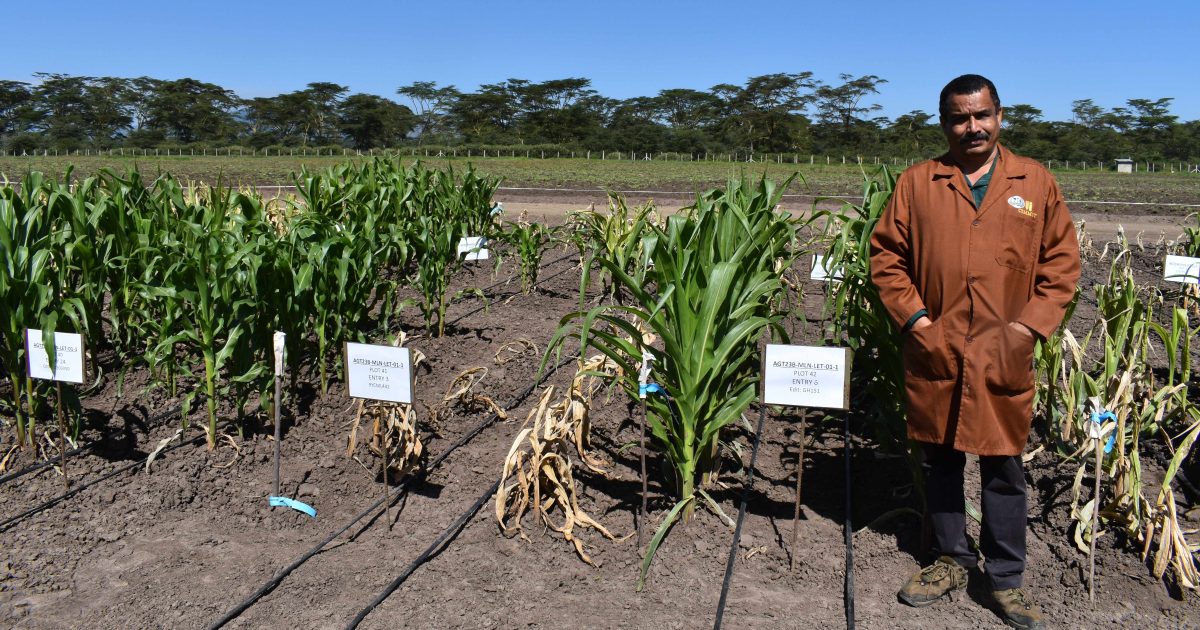
The complementary MCMV seed decontamination technology, developed under the leadership of renowned maize pathologist and plant health specialist Dr. L.M. Suresh, is designed to treat contaminated maize seed before it is moved from production sites.
Validation tests showed a substantial reduction in MCMV detection, with treated samples testing negative, indicating the potential of the technology to support safer seed distribution and movement.
The system can be adapted to different seed volumes, ranging from a small unit capable of treating about 800 pouches containing 200 kernels each to a larger system with a capacity of up to 500 kilograms per treatment cycle.
Dr. Suresh, who was a keynote speaker, said ensuring seed health at the source was critical in reducing the risk of spreading MLN and protecting maize breeding materials.
“Clean seed is our first line of defense against MLN. By treating and validating seed at its source, we can make seed movement safer within countries and across borders, reduce the risk of spreading MCMV, and protect valuable breeding material,” he said.
He noted that integrating seed decontamination with the Maize Seed Tracker could provide traceability from seed production to distribution, strengthening transparency and regional biosecurity.
The incorporation would enable seed to be treated and tested at the source while its production and movement are digitally recorded, providing a more coordinated approach to managing MLN risks.
The developers said the technology could be considered for incorporation into phytosanitary policies and seed-health protocols in Kenya and other countries in Eastern and Southern Africa.
They also recommended scaling the system according to seed volumes, delivery requirements, and operational needs, while linking it with digital tracking to strengthen clean-seed movement and biosecurity.
MLN is a serious disease of maize caused by co-infection with MCMV and Sugarcane Mosaic Virus and has previously posed a major threat to maize production and seed movement in parts of Eastern Africa.
The new approaches seek to strengthen preventive measures by combining seed treatment, testing and digital traceability rather than relying solely on disease response after outbreaks occur.
The Kenya Plant Health Inspectorate Service (KEPHIS) Managing Director, Prof. Theophilus Mutui, during the opening of the conference, said they were proposing tougher penalties for counterfeit seed dealers, with a plan to increase fines to triple the value of fake seed consignments to protect farmers and strengthen food security.
“Tougher measures are needed to curb the circulation of fake seeds that undermine crop yields, farmer incomes, and agricultural productivity,” he said.
Chairperson of the Seed Traders’ Association (STAK) Betty Kiplagat said it was time to fully implement market surveillance with counties and multi-agency and anti-counterfeit teams, considering that penalties are not deterrent enough.
“We are asking for a review of the law to make penalties tough enough to protect farmers and legitimate businesses.” Kiplagat said
Currently the legal penalty for selling fake or uncertified seeds in Kenya under the Seed and Plant Varieties Act (Cap 326) is a fine of up to Ksh 1 million, a prison term of up to 2 years, or both.
Agricultural actors, seed traders, and government officials strongly argue that these current penalties are too lenient and fail to deter cartels considering fake seeds cause total harvest failures and devastate food security; key stakeholders are demanding much harsher consequences. Experts are asking for stiffer penalties.
The four-day International Phytosanitary and Seed Quality Conference is running under the theme “Revitalising phytosanitary and seed systems for climate-resilient sustainable agriculture.”
By Wangari Ndirangu