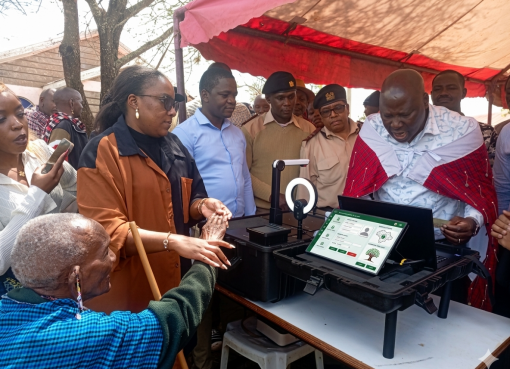
Potato farmers in Nakuru County can now access essential extension services from their mobile phones following the launch of a new app.
The app, VarScout, is an integrated solutions program seeking to address crucial potato farming techniques and health available to farmers in hard-to-reach areas.
It aims to bridge current gaps in access, availability and awareness of disease and pest control interventions, proper agronomical practices, market trends and relevant farm inputs among others.
While indicating that the new app could help thousands of potato farmers in the devolved unit adapt to climate change by offering information on best seeds for changing growing conditions County Chief Officer for Agriculture Engineer Margaret Kinyanjui noted that the adoption of digital tools such as VarScout was strengthening the county’s ability to understand farmers’ needs and make evidence-based decisions within the potato value chain.
Engineer Kinyanjui pointed out that the Mobile-based digital tool would help improve agricultural extension services in the devolved unit by bridging the gap caused by a shortage of physical extension officers.
“From digital advisories on weather and planting information to marketing of produce and accessing financial and insurance services, agriculture in the County Government of Nakuru is coming of age. The Mobile app is designed to change the way potato farmers do business as they are able to access information via mobile or smartphone applications,” stated the Chief Officer.
She added “Digital innovation is transforming ideas into values, creating employment and new business. With the new challenge in technologies, we need to address these opportunities in terms of fighting hunger, reducing poverty, increasing resilience and improving productivity in agriculture.”
She said the devolved unit in partnership with International Potato Center (CIP), launched the app aimed at scaling up disruptive digital technologies in Kenyan agriculture.
“The idea is to ensure access to extension services, finance, market and a data-driven application. The platform has identified four key categories including productivity, market linkages, financial inclusion and data analytics,” Engineer Kinyanjui elaborated.
The Chief officer indicated that the technology will also be targeting the youth who are the major users.
“We want to improve small holder potato farmer practices by providing them with customized e-extension that incorporates current and predictive data such as agro-weather analytics, pest and disease trends and prices, as well as monitor emergency food reserve stocks with digital tools to determine the future quantity of stock to buy. The App will also help farmers make more dynamic trade and price stability decisions using early warning system for food price inflation among others,” she said.
The VarScout digital extension platform uses interactive voice response services to explain and transfer agricultural technologies to smallholder farmers. It uses cloud-based mobile and online applications to provide smallholder farmers with linkage to market and fair prices for their produce.
It is packaged with a real-time soil testing service that uses technology to provide precise and actionable information to farmers using sensors and mobile technology.
Engineer Kinyanjui indicated that the platform will enable agricultural officers and field teams to digitally collect and analyze information on potato varieties grown by farmers, generating evidence that can be used to guide extension support, seed interventions, research and investment across the county.
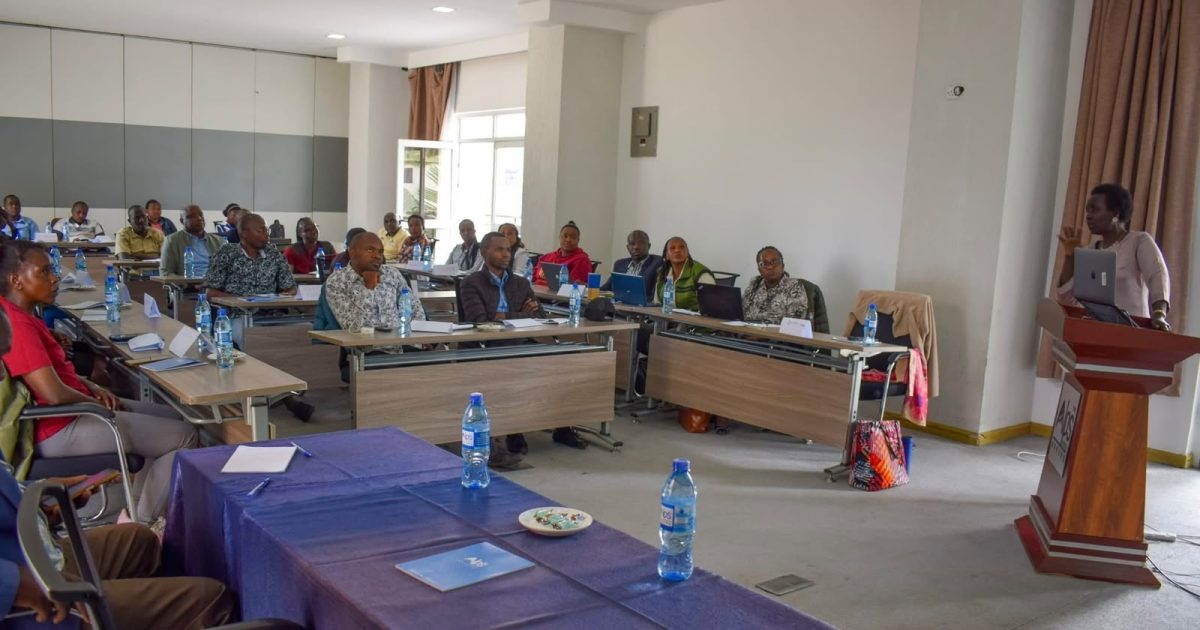
The progress was reviewed during a meeting that brought together the County Government of Nakuru, CIP and field teams to assess data collected through the platform, review emerging trends and identify gaps and challenges affecting field-level data collection.
“Reliable agricultural data is critical to effective planning and service delivery,” said Engineer Kinyanjui.
Engineer Kinyanjui stated that VarScout will help understand what farmers are growing, where different potato varieties are concentrated, and the challenges they face.
She observed that the information collected will enable the county to strengthen extension services, target interventions more effectively and support farmers to make informed production decisions.
The Chief Officer said the county would continue working with CIP and other partners to strengthen digital agricultural information systems and ensure that data generated from farms translates into practical interventions that benefit farmers.
Accurate information on varieties, Engineer Kinyanjui observed, was particularly important in the potato value chain, where farmers require varieties suited to their production environments, market preferences, disease pressures and changing climatic conditions.
Nakuru County Potato Liaison Officer Lynnette Echessa highlighted that the review was important in ensuring that information collected through VarScout was accurate, complete and useful for guiding interventions in potato production.
“Data is only useful when it is reliable and complete; we need to ensure that the data collected from farmers accurately reflects what is happening on the ground so that it can support meaningful decisions,” said Echessa.
She called for continued collaboration between the County Government, CIP and field teams to strengthen the use of the application and ensure that identified gaps are addressed promptly.
Ms. Echessa said the platform had the potential to transform agricultural extension by enabling county officers, researchers and other stakeholders to access timely information on the distribution and performance of potato varieties.
VarScout is a cloud- and mobile-phone-based digital platform developed by CIP in partnership with RESONANZ Group GmbH to collect, store, monitor and visualize crop varietal information.
The platform allows farmers, extension officers, researchers, and policymakers to capture field-level information that can support crop management, breeding, agricultural policy and investment decisions.
VarScout was introduced in Kenya in 2022, with CIP training Ward Agricultural Extension Officers in major potato-producing counties to use the application for field data collection.
By March 2024, more than 1,070 potato field observations had been uploaded, while a scaling phase targeted the collection of more than 20,000 datasets in Nakuru and Meru.
The digital platform is particularly relevant to Nakuru, one of Kenya’s important potato-producing counties, where farmers grow different varieties under varying agro-ecological and market conditions.
Data generated through VarScout has already provided insights into Kenya’s potato varietal landscape.
A CIP study published in 2025 found that Shangi accounted for 73 percent of the potato area covered by the study, followed by Steven at seven percent and Sherekea at six percent.
The study also found that 19.5 percent of farmers surveyed used clean seed, with adoption in Nakuru standing at 21.5 percent.
Farmers using clean seed achieved an average of 1.5 tonnes more yield per hectare than those using saved seed, highlighting the importance of reliable field-level information in strengthening seed-system interventions.
The findings demonstrate how information collected through digital platforms can help identify gaps in seed use and provide evidence for interventions aimed at improving productivity.
However, CIP notes that further methodological improvements and ground-truthing are needed to strengthen the evidence generated through VarScout.
For farmers, improved information on the varieties grown in different areas can support better-targeted extension services, including advice on variety selection, disease management, seed quality, and production practices.
The information can also help researchers and breeders understand which varieties are being adopted by farmers, where they are grown, and what characteristics are influencing their popularity, thereby supporting the development and dissemination of varieties suited to farmers’ needs.
CIP has worked with national and county partners to promote potato varieties with characteristics such as higher yields, disease resistance, and tolerance to climate-related stresses.
The organization notes that potato is an important food and cash crop for smallholder farmers in Kenya and has significant potential to contribute to food security and household incomes.
The platform can further support monitoring of varietal turnover, seed use, and production trends, helping stakeholders identify changes in farmer preferences and emerging challenges within the potato value chain.
The review meeting also focused on strengthening the capacity of field teams to consistently use the application, improve the accuracy and completeness of data entered into the system, and enhance follow-up where gaps are identified.
Participants reviewed the progress achieved so far, examined emerging insights and trends, and assessed the quality and completeness of information collected from farmers.
They also identified data gaps and field-level challenges and discussed practical measures to improve data collection and maximize the use of VarScout.
The exercise is expected to strengthen the evidence base available to the county for agricultural planning, extension support, and decision-making while providing researchers and other stakeholders with a clearer understanding of the potato varieties grown by farmers across Nakuru.
The County Government of Nakuru has continued to collaborate with research institutions and agricultural stakeholders to improve potato production, promote access to quality seed, and strengthen farmers’ resilience to climate change, pests, and diseases.
Through the integration of digital data collection with agricultural extension and research, the county expects to improve its ability to identify farmers’ needs, target resources, and support interventions that can contribute to higher productivity, better incomes, and a more resilient potato value chain.
By Jane Ngugi and Carolyne Nyakio