Education stakeholders in Murang’a County have called for the establishment of Junior Secondary Schools as independent institutions with their own administrators, Boards of Management and funding, saying the current comprehensive school model has created challenges in leadership and resource allocation.
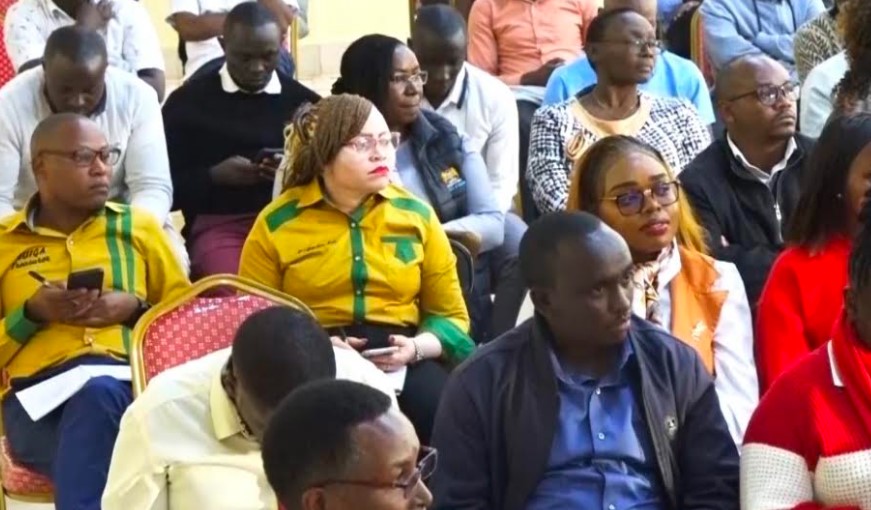
The stakeholders made the proposals during a public participation forum on six education Bills organised by the National Assembly Departmental Committee on Education at Murang’a University of Technology on Wednesday.
They argued that Junior Schools, which accommodate learners in Grades 7 to 9, have different administrative and educational needs from primary schools and should therefore have structures tailored to their specific requirements.
Junior School representative Polycarp Mutugi proposed that Junior Schools be separated from the primary section, which caters for learners from Pre-Primary 1 to Grade 6.
He proposed the appointment of independent principals, deputy principals and senior masters to oversee Junior Schools instead of having primary school head teachers serve as overall administrators of institutions operating under the comprehensive school model.
Mutugi said separating the two sections would provide clearer leadership and enable schools to plan and utilise resources according to the needs of learners at each level.
“Junior Schools have different needs from primary schools, and there is a need for a leadership structure that understands and responds to those needs,” he said.
Murang’a KUPPET official Thomas Kimani supported the proposal, calling for Junior Schools to have independent Boards of Management.
Kimani said separate governance structures would help address challenges arising from the implementation of the Competency-Based Curriculum (CBC), particularly those related to infrastructure, teaching resources and administration.
Under the current arrangement, primary and junior school sections operate within the same institution, sharing administration, a Board of Management and funding.
However, the proposal exposed differences between Junior Secondary School teachers and primary school head teachers over the future of the comprehensive school model.
While Junior School representatives pushed for greater autonomy, Kenya Primary School Head Teachers Association (KEPSHA) Murang’a branch chairman Paul Mwaura opposed the proposal, arguing that the existing arrangement should be retained.
Mwaura also opposed a proposal to have the county commissioner chair the County Education Board, saying the position should be filled in a manner that reflects the professional and administrative nature of the education sector.
The stakeholders further called for stronger powers for education quality assurance officers to protect learners from unsafe learning environments.
Education Quality Assurance and Standards Officer for Kahuro Sub-County Dr Edna Gesare proposed that the officers be empowered to order the closure of schools that fail to meet prescribed safety and quality standards.
Gesare said the proposed powers should enable authorities to take decisive action where a school’s infrastructure or learning environment poses a risk to learners and staff.
She said quality assurance officers should have sufficient authority to intervene before unsafe conditions result in injuries or other harm to learners.
The forum also raised concerns over higher education financing, with stakeholders opposing a proposal to replace the current combination of scholarships and loans with an all-loan financing model.
They called for the proposed Tertiary Education, Placement and Funding Bill, 2026 to retain provisions that provide support to students who may not be able to meet the full cost of their education through loans.
The stakeholders also questioned a proposal giving the Cabinet Secretary for Education powers to determine interest charged on student loans, calling for greater clarity and safeguards to protect students from unaffordable repayment obligations.
They further raised concerns over delays in the disbursement of Government funding to universities, saying inadequate and delayed financing continues to affect operations and service delivery in institutions of higher learning.
The public participation forum was presided over by Kasipul MP Eve Obara, who is also the Vice Chairperson of the Parliamentary Committee on Education.
She was accompanied by Gatundu North MP Elijah Njoroge, Kitutu Masaba MP Clive Ombane and Mandera South MP Abdul Haro Kore.
About 100 people attended the forum, which sought public views on six Bills aimed at restructuring different areas of Kenya’s education system.
The Bills include the Tertiary Education, Placement and Funding Bill, 2026; Basic Education Bill, 2026; Kenya National Educational Assessments Council Bill, 2026; Pre-Service Education and In-Service Training Bill, 2026; Kenya National Qualifications Framework (Amendment) Bill, 2026; and Kenya Institute of Curriculum Development (Amendment) Bill, 2026.
The proposals and views raised during the forum are expected to inform Parliament’s consideration of the Bills as it reviews the legal and administrative framework governing education in the country.
by Bernard Munyao