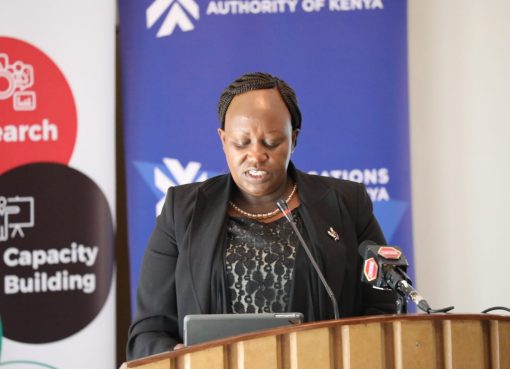
The Chair of the Internet Corporation for Assigned Names and Numbers (ICANN) Board, Tripti Sinha, has called on African governments, businesses, technical experts and communities to work together to build an internet ecosystem that is inclusive, innovative and resilient.
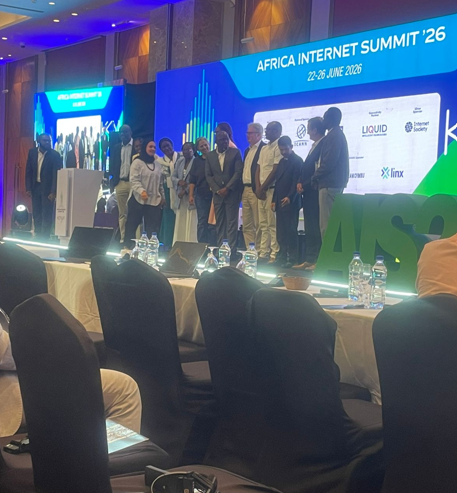
Speaking in Nairobi during the opening ceremony of the Africa Internet Summit 2026, Sinha highlighted that Africa’s digital transformation depends on collaboration, innovation and resilience, which she described as the three pillars that will enable the continent to shape and lead the global digital economy.
“The answer lies not in a single solution, but in a powerful combination of forces at the heart of this year’s theme: Shaping Africa’s internet future through collaboration, innovation and resilience,” she stated.
Further, Sinha noted that Africa’s diversity, comprising more than 50 countries, hundreds of languages and varying levels of infrastructure development, presents both opportunities and challenges that require collective action.
“Africa’s internet future cannot be built in isolation. Collaboration is essential because it allows governments, private sector actors, civil society and international partners to align their efforts,” explained the Chairperson.
Similarly, she observed that no single entity has the resources or reach to build the digital infrastructure the continent requires, adding that partnerships have already demonstrated their value through initiatives such as cross-border fibre networks and connectivity projects targeting rural and underserved communities.
“Without collaboration, progress will be fragmented and uneven. With it, Africa can move forward with unity and purpose,” she declared.
On the other hand, Sinha also paid tribute to the late ICANN Board member Alan Barrett, whom she described as one of the true pioneers of the internet in Africa.
In retrospect, she recalled that Barrett was instrumental in establishing the first internet connection for South African universities, helped create the .za domain, played a key role in the formation of AFRINIC and served as the organisation’s Chief Executive Officer from 2015 to 2019.
“His deep knowledge and commitment to the internet community in Africa helped build a bedrock of internet governance and his tireless work ethic and technical brilliance leave behind a monumental legacy,” she expressed.
Sinha advised that Africa should develop solutions tailored to its unique circumstances rather than replicating models from other regions.
“If collaboration lays the foundation, innovation is the engine that drives Africa’s internet future forward,” she emphasized.
Concurrently, the Chairperson noted that constraints such as limited infrastructure had inspired mobile-first solutions that have transformed access to financial services, healthcare and education.
“Mobile money platforms, born out of necessity, have become global benchmarks for financial inclusion,” she stated.
Additionally, Sinha described Africa’s youthful population as another major driver of innovation, saying the continent is home to a generation that is digitally curious, entrepreneurial and eager to solve problems.
She urged governments to support innovation ecosystems by reducing regulatory barriers and encouraging experimentation while investing in education, technology access and entrepreneurship.
The Board Chair further underscored the need for greater inclusion of African languages online through Universal Acceptance and Internationalized Domain Names, stressing that language remains one of the clearest examples of local innovation, shaping the continent’s digital future.
“When people cannot use their own languages online, participation is limited. A more inclusive internet enables greater creativity, identity and opportunity,” she claimed.
According to Sinha, ICANN and its partners have engaged more than 300 universities across Africa to improve Universal Acceptance compliance, with fully compliant institutions increasing from 44 to 105.
She insisted that Africa’s digital systems must be capable of withstanding economic shocks, climate change, cybersecurity threats and political instability. “While collaboration and innovation drive progress, resilience ensures that progress is sustained,” said Sinha.
The Corp Chairperson mentioned that internet disruptions have far-reaching effects on education, healthcare, commerce and governance, making resilient infrastructure and cybersecurity investments essential.
She also revealed that progress in internet security across the continent was encouraging, citing the growth of Domain Name System Security Extensions (DNSSEC) validation in Africa from 21 percent to 44 percent between 2020 and 2025, the largest regional increase globally during the period.
“The internet is built on a distributed model. No single institution operates it and no single actor can secure it,” she echoed, emphasizing the importance of multistakeholder participation.
Sinha also highlighted the crucial role of National Research and Education Networks (NRENs), describing them as one of the most important, yet often overlooked pillars of Africa’s digital future.
She said successful NRENs have evolved beyond providing connectivity to universities and now deliver cybersecurity services, cloud platforms, digital identity systems and research computing infrastructure.
The Chairperson further cited Kenya’s KENET, which has connected more than 200 institutions, including primary and secondary schools, through a member-government model without annual government funding, an achievement she described as remarkable.
Sinha disclosed that several countries, including South Africa, Uganda, Morocco, Egypt and Zambia, have made significant strides in developing research and education networks, while others are advancing through regional collaborations such as the UbuntuNet Alliance.
She called for sustained investments in campus networks, digital identity systems, talent development and long-term funding models to strengthen Africa’s research and education infrastructure.
“The momentum is real, the community is committed and the vision is clear,” she proclaimed.
Sinha urged African stakeholders to continue building partnerships, promoting innovation and strengthening resilience to prepare the continent for emerging technologies such as Artificial Intelligence and quantum computing.
“The digital future belongs to those who build for it. The opportunity before Africa is immense. By embracing these principles, the continent can leapfrog traditional barriers, empower its people and take its rightful place as a leader in the global digital age,” she stated.
By Paskal Osonga and Molvin Laventa