After nearly two decades of fighting one of Kenya’s most neglected public health challenges, the Ahadi Kenya Trust has officially closed its anti-jigger campaign operations, marking the milestone with the launch of a Jigger Archive and Resource Centre in the heart of Murang’a.
The archive documents the organization’s 19-year journey in combating jigger infestation across the country, while preserving records, testimonies, photographs and milestones from a campaign that transformed thousands of lives.
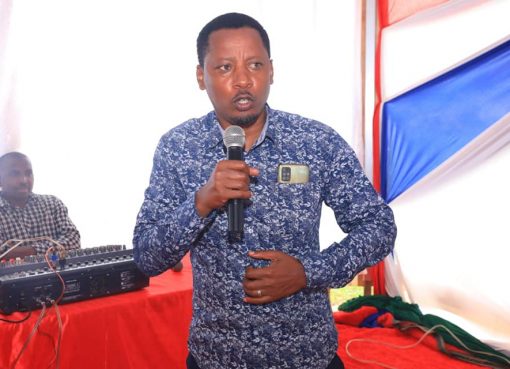
Speaking during the event, the Ahadi Kenya Trust CEO Dr. Stanley Kamau said the organization had achieved over 90 percent success in eradicating the menace, with fewer than 300 people currently affected by jiggers nationwide.

“When we started the campaign in 2007, over two million people were infested with jiggers, but today lives have been transformed and the menace greatly reduced. We can now confidently place jiggers where they belong, that is in the archives,” he said.
Dr. Kamau noted that the centre will serve as a historical resource for future generations to understand the journey Kenya has undertaken in restoring dignity to vulnerable communities.
The CEO reiterated that the archive stands not only as a celebration of victory against jiggers, but also as a reminder of the resilience, dignity and hope restored to thousands of Kenyan families.
“We have been documenting the anti-jigger journey over the years and this archive holds all that history.
He noted that generations to come will be able to learn and see where we came from as a country.
Reflecting on the nearly two decades long anti jigger journey he says, “Awareness through drives sustained the campaign as it was funds intensive. Corporates, schools and communities came together to support the anti-jigger movement through sports events, drives and mobilization of national support.”
Dr. Kamau observes that the interventions included treatment campaigns for wound care hygiene education, fumigation, sanitation drives, shoes distribution and community sensitization.
The 19-year long campaign also focused on long term solutions that helped families move beyond infestation.“ Livelihood projects such as farming, poultry keeping, beekeeping, irrigation water provision and small businesses were initiated for survivors and victims, so as to improve their living conditions and reduce the risk of re- infestation.”
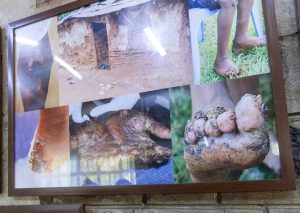
A section in the archives explains the life cycle of the jigger causing flea and how infestation spreads.
“The female flea burrows into the skin, feeds on blood and lays eggs, the eggs fall into dusty environments where they hatch and continue the cycle within homes and communities’ explains ‘Wandutu,’ the Kikuyu vernacular name for jiggers, a name he cheekily says he’s considering adding to his official names).
And because many people suffering from jiggers would hide due to shame and stigma, Wandutu reveals that through schools, local leaders, health workers and community outreach, Ahadi Kenya Trust helped locate the victims and connect them to treatment, rehabilitation and care.
The emotional event, attended by the Prime Cabinet Secretary Musalia Mudavadi, was marked by moving testimonies from former victims, whose lives were changed through the initiative.
One of the most emotional moments came from 25-year-old Peter Okeka from Busia County, who narrated his painful childhood battle with jiggers and how the organisation restored his hope.
“I was in Class Five when I got jiggers. We were very poor, and poverty and jiggers often go hand in hand,” he recalled.
Okeka said the infestation left his feet severely wounded, forcing his mother to buy razor blades daily in an attempt to remove the parasites.
“The pain was unbearable. Instead of relief, I was left with deep wounds on my feet. I missed school many times because I could barely walk,” he said.
He narrated how both he and his brother suffered immensely, spending sleepless nights scratching their feet against wooden beds in search of temporary relief.
“At night I cried not only because of my pain, but also from seeing my younger brother suffer the same way,” he said.
According to Okeka, stigma from villagers worsened their suffering, with some accusing the family of being bewitched.
Despite the hardships, he excelled in his studies and scored 401 marks in his primary school examinations.
Through well-wishers, he was later connected to Ahadi Kenya Trust, placed under treatment and eventually joined Mang’u High School before proceeding to Technical University of Mombasa, where he completed a degree in Communication and Media Studies in 2023.
“You chose compassion over discrimination, action over silence and service to humanity,” he said in gratitude to the organization.
by Florence Kinyua and Purity Mugo