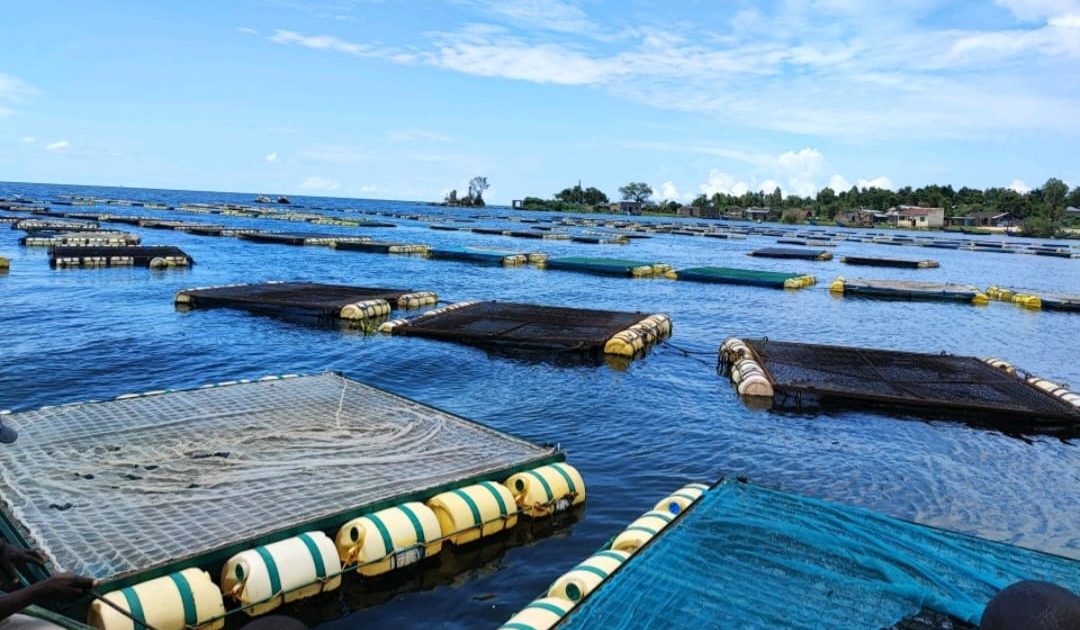
The battle over Kenya’s aquaculture regulations has escalated to the Court of Appeal, with fish farmers warning that new Government-imposed charges could cripple an industry supporting more than 100,000 jobs and the livelihoods of more than 500,000 households.
The Lake Victoria Aquaculture Association (LVA) has appealed against a High Court decision upholding the Fisheries Management and Development (Aquaculture) Regulations, 2024, which introduced a Sh. 50,000 licensing fee and a five per cent ad valorem levy on fish landed by commercial aquaculture operators.
The Association wants the Court of Appeal to overturn the judgment delivered on June 29, 2026, by Justice Roselyne Ekirapa Aburili, who dismissed its petition challenging the regulations.
In its Memorandum of Appeal, LVA contests several findings made by the High Court, including the decision that it lacked the legal capacity to Institute the petition in its own name.
The Association also disputes the finding that there was adequate public participation in the formulation of the regulations.
LVA argues that the contentious Sixth Schedule, which contains the Sh.50,000 licensing fee and five per cent levy, was introduced after the earlier consultation process had ended and without meaningful engagement with the stakeholders who would be directly affected.
It has further challenged the High Court’s findings on devolution, the Government’s authority to impose the charges, the character of the five per cent levy as effectively a tax and the impact of the charges on the economic viability of small and medium-scale aquaculture operators.
LVA wants the Appellate Court to declare the regulations unconstitutional, null and void and issue orders quashing them together with the disputed Sixth Schedule.
The High Court dismissed the original petition on June 29, finding that LVA had failed to establish the constitutional violations it had alleged.
However, LVA says the dispute is no longer simply about whether the Government has the legal authority to impose the levy and licensing fee, adding it also concerns what the association describes as the Government’s failure to implement an agreement reached after it brought industry players to the negotiating table.
Following the original court challenge, Mining, Blue Economy and Maritime Affairs Cabinet Secretary Hassan, Ali Joho, established a Ministry-Industry task force comprising Government officials, representatives of the Council of Governors, LVA and other stakeholders.
The Task Force was mandated to examine the contentious regulations and develop practical recommendations for resolving the dispute.
Months of consultations culminated in a Joint Communiqué outlining an agreed way forward.
LVA says it participated in the process in good faith, expecting the Government to implement the recommendations and bring the legal dispute to an end.
Instead, the association says, months later, the agreed recommendations remain unimplemented.
In a letter dated August 27, LVA Secretary, Pete Ondeng, told State Department for Fisheries Principal Secretary (PS), Betsy Njagi, that the Association’s primary objective remained finding a practical pathway towards implementation of the Joint Communiqué.
Ondeng said the communiqué had been jointly developed through the consultative process initiated by Joho.
The Association has repeatedly sought a meeting with Joho, to discuss the impasse, but says it has failed to secure an audience with the Cabinet Secretary.
LVA Chairman Ochieng’ Mbeo said the Association had never intended to confront the Government.
When LVA first went to Court in December 2024, Mbeo said, it had exhausted other avenues available to protect thousands of Kenyans dependent on aquaculture.
“Nearly two years into the dispute, it is difficult to understand why a government-initiated process that brought the State and industry players together, has failed to produce implementation of the agreed recommendations,” he said.
Mbeo warned that the disputed charges could raise the cost of locally produced fish, discourage investment and innovation, force small and medium-scale operators out of business and undermine food security and employment.
According to LVA’s court papers, the wider aquaculture sector directly supports more than 100,000 jobs and provides livelihoods for more than 500,000 households.
“The proposed licensing fees is unsustainable and could force many out of business,” Mbeo warned.
The Association, an industry body based in Kisumu that brings together players across the aquaculture value chain in the Lake Victoria region, says the dispute exposes a policy contradiction in the Government’s approach to the sector.
It argues that while the Government is promoting aquaculture as a pillar of the Blue Economy, the regulations it has imposed could undermine the survival of the same industry it seeks to grow.
The Association also warns that the measures could worsen the plight of farmers already struggling with high feed and other input costs, limited access to financing, inadequate extension services and competition from cheaper imported fish.
LVA argues that the combined effect of the charges could make aquaculture economically unviable, discourage investment and innovation, distort fish prices and undermine Kenya’s food-security objectives.
Despite escalating the matter to the Court of Appeal, the association says it remains open to dialogue.
In its latest letter to the PS, the Association asked for an opportunity to meet the Cabinet Secretary and present practical proposals for implementing the Joint Communiqué.
“We remain confident that, with the necessary policy direction and goodwill, a practical resolution can be found,” Ondeng wrote.
For LVA, the dispute has now moved beyond the legality of the levy and licensing fee and also wants the State to demonstrate whether it is prepared to honour the outcome of a consultative process it established itself — and whether its ambition of making aquaculture a pillar of the Blue Economy, can survive regulations that the industry says could drive farmers out of business.
By Faith Lumumba