For residents of Bureti, the value of a road is measured with the time it takes to move tea, milk, and other farm produce to market, while a reliable water supply can mean the difference between a growing trading centre and one struggling to keep pace with its population.
That is why roads, water, electricity, education, trade, and sports have emerged as some of the key development priorities in Bureti Sub-county in Kericho, following President William Ruto’s development tour of the South Rift last week.
The President’s September 10 visit brought several of the projects into sharp focus, including the launch of the 34-kilometer Panda Pilis–Kampala–Bokoiyot–Mabasi road, commissioning of Kapkatet Modern Market, and launch of the Sh1.1 billion Kapkatet Stadium.
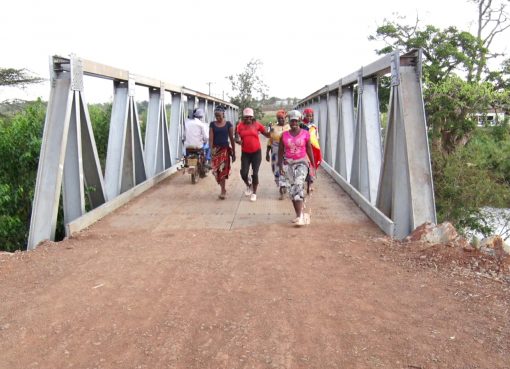
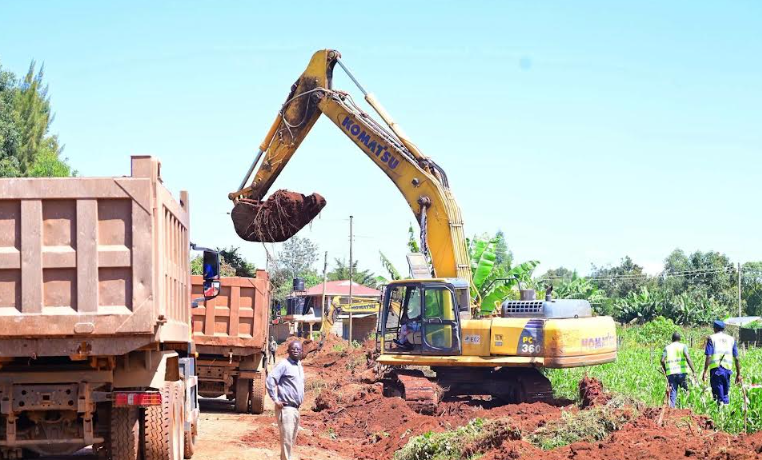
The Panda Pilis–Kampala–Bokoiyot–Mabasi road is among the projects with the clearest potential to change the movement of people and farm produce in the constituency. According to the Kenya Rural Roads Authority (KeRRA), the road comprises an 18.6-kilometer Panda Pilis–Kampala section and a 15.4-kilometer Bokoiyot–Mabasi section, giving a combined length of 34 kilometres.
The area is predominantly agricultural, with tea, maize, and dairy farming forming the backbone of the local economy.
The Sh3.08 billion road project is expected to open up farming areas, reduce the cost and time of transporting produce, and improve access to schools, health facilities, and administrative centres.
At the time of inspection, the works were reported to be 11.5 per cent complete, with 1.2 kilometres already blacktopped.
For Bureti, however, connectivity is not limited to the 34-kilometer project. The Kapkatet–Boito–Kapset–Kaptien–Kapleleito–Kiptenden–Kapkoros–Kiplelji–Kapsimotwa–Kapkwen–Olbutyo–Siongiroi corridor stretches about 91 kilometres and is being upgraded to bitumen standard.
The corridor links communities and markets across Kericho and Bomet counties and is expected to ease movement of agricultural produce.
Water is another pressing priority. President Ruto announced that Sh1.6 billion had been secured for water projects serving Kapkatet and Litein, with a further Sh400 million allocated for Kericho town. Local reports indicated that the Kapkatet and Litein projects were expected to be launched in October.
The investment comes as Bureti’s trading centres and settlements continue to expand, increasing demand for dependable water for households, schools, health facilities, and businesses.
County planning documents have also identified several smaller water interventions in the constituency, including pipeline extensions and community water projects, underlining the longstanding nature of the need.
Electricity is also being taken closer to households under the Sh1.6 billion Last Mile Connectivity programme in Kericho County, which targets 16,000 households. Although the programme is countywide, improved electricity access is expected to support homes, small businesses, and productive activities in rural areas, including Bureti.
At Kapkatet, the new modern market is expected to give more than 200 traders a better working environment while bringing trading activities into an organized facility equipped with services such as water, electricity, sanitation, storage, and cold rooms. The market is among modern markets being developed in Kericho County to replace open-air trading spaces.
The transformation of Kapkatet is also being extended to sports. The Sh1.1 billion Kapkatet Stadium is designed to accommodate 10,000 spectators and will have a six-lane athletics track and a standard football pitch.
The facility is expected to provide a venue for sporting activities while creating space for young people to develop their talents.
The Stadium project had earlier been handed over to the State Departments responsible for Defence and Sports, with the Ministry of Defence involved in supervision of the works. The facility is being developed on the site of the historic Kapkatet Stadium.
Grassroots sport has also received attention, with Kapkatet Football Club allocated Sh5 million to support the acquisition of a bus. The intervention comes alongside investment in the stadium, giving local teams a better opportunity to participate in competitions beyond the immediate area.
Education remains another important part of the development agenda. Tengecha Boys Senior School and Tengecha Girls Senior School were each allocated Sh20 million, while their primary and junior sections were allocated Sh10 million each. Rungut Primary School was also allocated Sh5 million.
The allocations come at a time when the constituency is seeking to strengthen learning facilities and provide young people with better opportunities to progress through the education system.
Other road priorities raised for Bureti include the Kapkatet–Cheplanget, Getarwet–Roret, and Kapchelach roads, as well as expansion of the road through Kapkatet town. Some of these are requests or priorities whose detailed contracts, costs, and implementation schedules still require confirmation from the responsible roads agencies.
That distinction is important because the list of priorities in Bureti covers projects at different stages, with some already launched or commissioned, others under construction, and some still awaiting formal implementation details.
For residents, however, the test will ultimately be on the ground: whether the roads become passable in all seasons, whether water reaches homes and businesses, whether farmers find better markets for their produce, and whether young people can turn new sporting and education facilities into opportunities.
With Bureti heavily dependent on agriculture and its trading centres continuing to grow, the road and water projects could have the widest economic impact.
Better connectivity can bring farmers closer to markets, while reliable water and electricity can support businesses that depend on regular services.
The development priorities, therefore, touch the ordinary activities that sustain the constituency’s farming, trading, learning, transport, and sports, making implementation the next critical step after the announcements and project launches.
By Gilbert Mutai