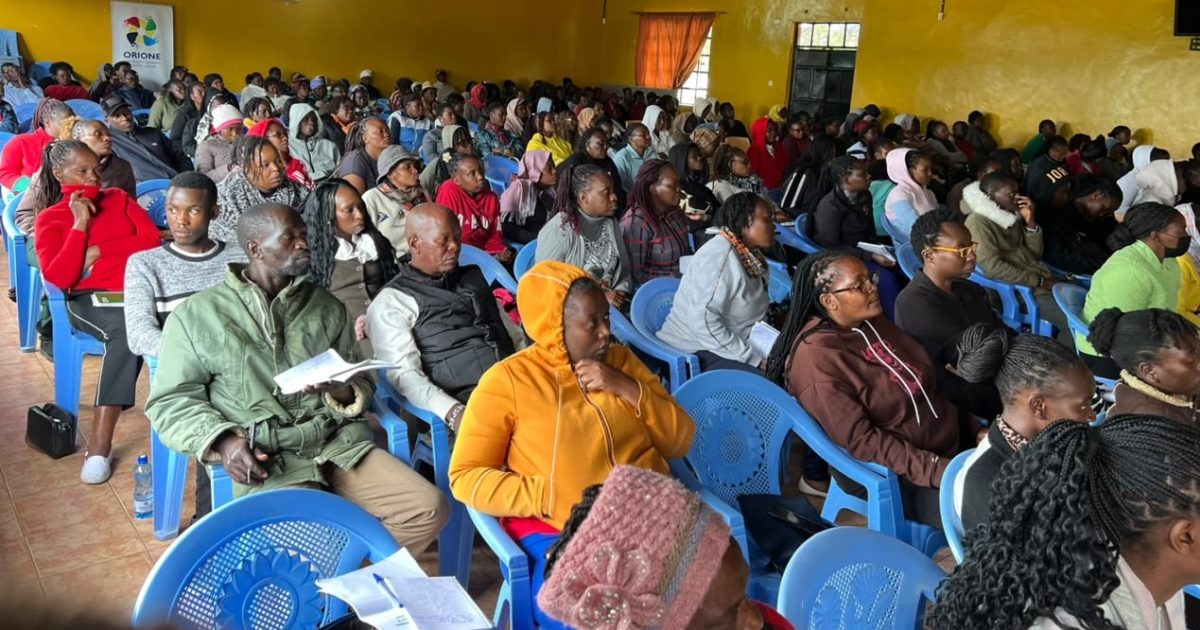
More than 300 teachers, caregivers, community health workers, and disability inclusion champions are undergoing a free four-month training programme aimed at improving early identification, support, and inclusion of children with neurodevelopmental disabilities.
The training, organized by the Orione Community Training Centre in Kandisi in partnership with the Manos Unidas Foundation of Spain under the Inclusive Futures Certification Programme, seeks to equip participants with practical skills in early intervention, inclusive education, community practice, and disability advocacy.
The programme being undertaken in Ongata Rongai addresses neurodevelopmental conditions such as autism spectrum disorder (ASD), Down syndrome, cerebral palsy, attention deficit hyperactivity disorder (ADHD), intellectual disability, and speech and language disorders.
Speaking during the training, speech and language therapist Regina Mbugua said early diagnosis and timely intervention significantly improve a child’s development and quality of life.
She noted that early intervention enables children to benefit from therapies while their brains and bodies are still developing, making it easier for them to acquire communication, mobility, and learning skills.
Mbugua said stigma and misconceptions surrounding disability continue to discourage many families from seeking timely medical assessment and support. “Many children are hidden by their families because disability is still associated with witchcraft, curses, or bad luck. This delays diagnosis and denies them the opportunity to receive the support they need,” she said.
She added that the training also promotes inclusion by equipping teachers, healthcare workers, religious leaders, and other community stakeholders with knowledge on supporting children with disabilities in schools and public spaces.
According to organizers, neurodevelopmental disabilities may result from genetic factors, complications during pregnancy or birth, childhood illnesses such as meningitis, or exposure to environmental toxins such as lead and mercury.
They cited recent survey findings indicating that 11.4 per cent of Kenyan children aged between three and 21 years live with a disability, underscoring the need for greater awareness and early intervention.
Parent and autism advocate Idah Mbiti shared her family’s journey after her daughter was diagnosed with autism at Kenyatta National Hospital.
Mbiti said she initially believed her daughter only had delayed speech but later sought specialized care after receiving the diagnosis. She noted that enrolling her daughter at Orione Community Training Centre had greatly improved the child’s independence and daily living skills.
She urged parents to accept and support children with disabilities instead of hiding them because of stigma. “No parent should deny a child the right to education or access to therapy because of fear or shame. Every child deserves love, acceptance, and the opportunity to reach their full potential,” she said.
Early stimulation teacher Jacinta Kiamba said teaching children with neurodevelopmental disabilities requires patience and personalized learning approaches, noting that some children need additional support to develop basic skills such as writing and drawing.
Vocational skills trainer Lyndon Wepukhulu said learners who demonstrate interest and readiness are transitioned into vocational training after the age of 18, with parents, teachers, and therapists jointly identifying suitable career pathways such as farming, poultry keeping, and beadwork.
The programme also trains participants on advocacy and child protection, promoting the rights of persons with disabilities as provided for under Article 54 of the Constitution of Kenya and the Persons with Disabilities Act. The rights include access to education, healthcare, accessibility, protection from discrimination, and equal opportunities.
The training is expected to conclude in September, with participants who successfully complete the course receiving certificates in disability inclusion.
By Peter Muteti