Inside the children’s ward at Homa Bay Teaching and Referral Hospital, laughter rises above the usual sounds of hospital monitors and hurried footsteps.
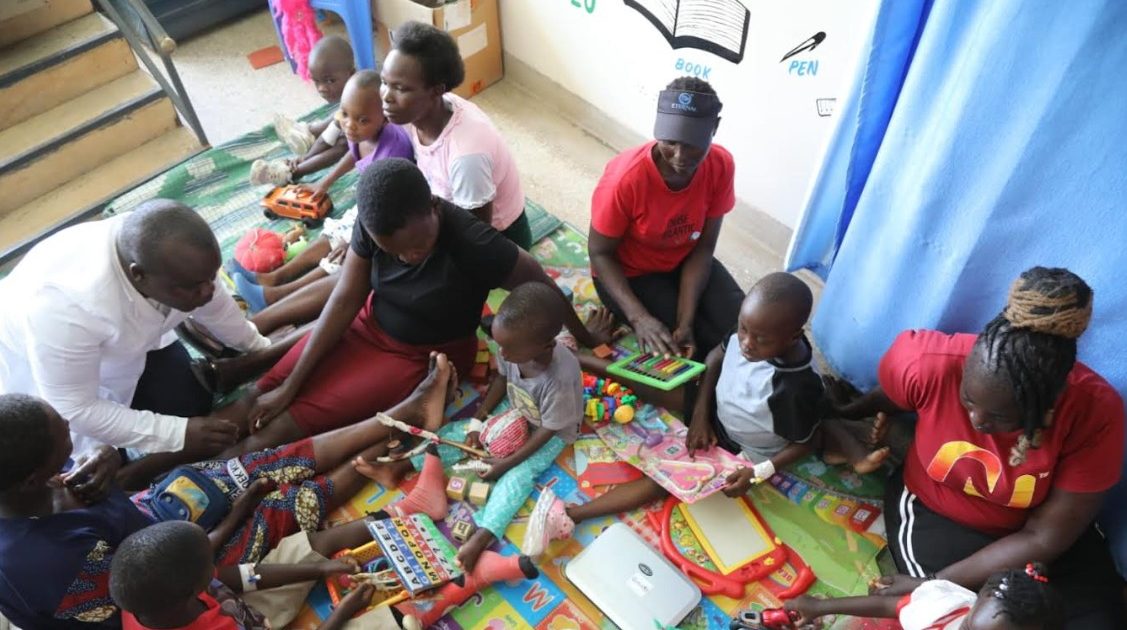
Young patients gather inside a brightly painted play room, some seated on the floor colouring pictures, others reading numbers written across the walls, while a few stack toy blocks under the watchful eyes of smiling parents.
For children battling illnesses such as malaria, pneumonia, and diarrhoea, the room offers more than entertainment. It provides comfort, emotional support, and, according to healthcare workers, a faster path to recovery.
The colourful play room stands in sharp contrast to the crowded hospital ward outside. Its walls are covered with cheerful paintings of animals, flowers, birds, and numbers.
Small child-sized chairs and tables fill one corner, while shelves carry books, crayons, puzzles, and toys. For a moment, the children forget they are patients.
“We realise that children heal not only through medicine but also through happiness and emotional support,” says Carolyne Adongo, Director of Nursing Services at the hospital, as she watches a group of children singing together.
The play room was introduced about six years ago as part of a therapeutic approach aimed at helping children recover while receiving treatment. According to Adongo, many children arrive frightened, stressed, and resistant to treatment.
“Some cry whenever they see doctors or nurses approaching with medication. But after spending time in the playroom, they slowly become comfortable with the environment and begin interacting freely with healthcare workers,” she explains.
The room allows children to play alongside their parents, creating a strong emotional support system during treatment. Mothers and fathers sit beside their children reading numbers aloud, colouring pictures, and joining simple games to encourage them.
One child bursts into laughter when he identifies animals painted on the wall. Nearby, another carefully colours drawings using crayons as his mother gently guides him.
For many parents enduring sleepless nights beside hospital beds, these moments offer rare relief and hope.
Despite the success of the initiative, the paediatric ward continues to struggle with severe overcrowding.
The ward was designed to accommodate only 35 children, but admissions often rise sharply during peak malaria seasons.
“Sometimes we admit between 89 and 95 children. Because of congestion, some children are forced to share beds. In some cases, three children sleep on one bed, which is not comfortable,” says Adongo.
The pressure stretches both space and staff. Nurses move quickly from bed to bed trying to attend to every child, while parents struggle to find enough room to sit beside their sick children.
“We are also facing a challenge of human resources. The number of nurses and healthcare workers is not enough compared to the number of patients we receive every day,” Adongo implies.
Despite these challenges, the healthcare workers remain committed to ensuring children receive not only medical attention but also emotional care.
According to paediatric nurse Josiah Orwa, the play room has transformed the relationship between young patients and healthcare workers.
“When children interact with us through play, they stop fearing doctors and nurses. It becomes easier to give medication because the children are already comfortable with us,” says Orwa.
He explains that some children are admitted to the hospital withdrawn, refusing medication and food. But after spending time in the play room, their moods begin to change.
“Without playing, recovery may delay. Children need interaction and happiness to heal emotionally and physically,” adds the nurse.
He points toward a young boy quietly arranging toy blocks beside other children. The boy had reportedly refused to speak or eat after being admitted with pneumonia. After several days in the play room, he slowly began opening up and interacting with both nurses and other children.
Parents say the changes are visible. “When my child was admitted, he was weak and unhappy. But after coming here to play with other children, he became active and cheerful again,” says Cynthia Obana, whose son is receiving treatment at the hospital.
As she speaks, her son, who is seated on the floor, laughs while colouring pictures.
“My son is able to interact with other children and engage in little activities like reading numbers and colouring. This has greatly improved his recovery,” she says.
For Obana and many other parents, the room eases emotional stress during an otherwise difficult period.
“The room creates a positive environment not only for the children but also for their families,” she adds.
The initiative aligns with broader efforts to promote nurturing care and child-friendly healthcare spaces across Homa Bay County.
Immaculate Otieno, a Project Officer at Kisumu Medical and Education Trust (KMET) working on early childhood development under the Smart Start initiative, underscores the importance of having child-friendly spaces in different sectors, whether in the health or education sector or any other public and private institutions.
“We believe nurturing care initiatives can be amplified. We want communities, health facilities, institutions, and workplaces to advocate for child-friendly spaces that support caregivers and children,” she says.
According to Otieno, healthcare environments should communicate safety and comfort to children.
“When a child is admitted to a paediatric ward, the ward itself should speak to the child. We expect colourful walls, child-sized beds and chairs, and spaces that encourage children to thrive instead of feeling frightened,” explains Otieno.
She notes that even basic hospital services, including hygiene facilities and meals, should be designed with children in mind.
“We expect handwashing stations to be at a height where children can wash their hands independently,” she says.
“Even the diet should be child-friendly because what a seven-month-old baby can eat is different from what adults eat.”
Otieno emphasises that play itself is therapeutic. “Play is like a drug to a child. Paediatricians will always tell you that one sign a child is improving is when they are able to play.”
Studies, she explains, have shown that children in hospitals recover faster when they are allowed to engage in play and social interaction, even from their beds.
“Play reduces the number of days a child stays in hospital,” she says.
Back inside the ward, laughter continues echoing through the play room as children clap, sing songs, and play games guided by nurses and parents.
The atmosphere feels far removed from the sadness usually associated with hospitals.
The healthcare workers believe the initiative is slowly reshaping paediatric healthcare in Homa Bay County by focusing not only on medicine but also on emotional well-being.
By Shanel Kwamboka and Sitna Omar