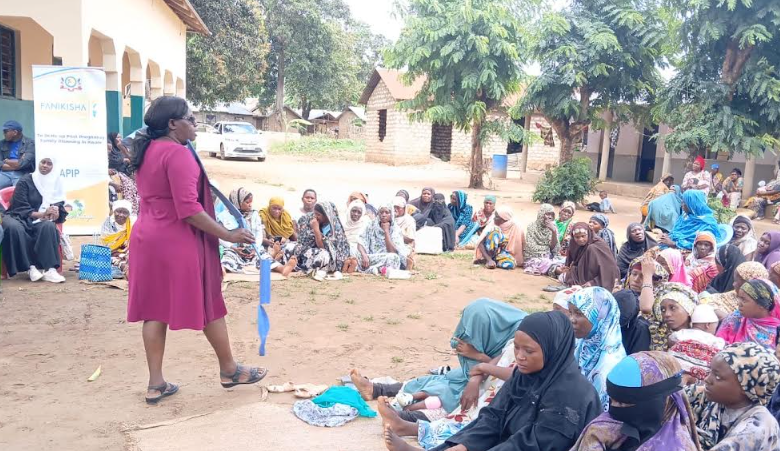
Couples in Botola, Lunga Lunga Sub-County, have been urged to discuss family planning and agree on appropriate child-spacing intervals to enable them to provide better care for their families.
Speaking during a family planning education programme in the area, Fanikisha Foundation Director and Founder Christine Mbula said couples should plan their families and allow adequate spacing time between births to promote the health and well-being of mothers and children.
Mbula also urged men to support their pregnant partners by accompanying them to antenatal clinic visits.
She said pregnant women should attend antenatal care at least eight times during pregnancy to access essential services and monitor the health of both the mother and unborn child.
Mbula noted that some men were reluctant to accompany their wives to health facilities because of fear of HIV testing, adding that the tests were important in preventing mother-to-child transmission of HIV.
She also encouraged expectant mothers to deliver in health facilities where skilled health workers can provide timely assistance in case of complications, including excessive bleeding.
Asha Rajab from Mdalo said the programme had increased her understanding of the importance of hospital deliveries.
“I delivered four children at home without experiencing complications, but my recent deliveries in hospital have also gone well,” she said.
Mwanaisha Idd said she had learnt the importance of family planning, particularly child spacing, which she said gives parents adequate time to raise their children.
Botola area Chairman Rashid Hassan Jembe thanked Fanikisha Foundation for educating residents on family planning and maternal health.
Dr. Daizy Ruto of Jijenge, Kenya, which works closely with the Fanikisha Foundation, advised women who experience miscarriages to allow their bodies adequate time to recover before attempting another pregnancy.
She also said some side effects associated with family planning methods could be minimized through proper assessment before choosing a method.
“Women should have their medical history assessed and undergo the necessary tests before choosing a family planning method,” said Ruto.
By Chari Suche and Achieng Eurelia