The Ethics and Anti-Corruption Commission (EACC) has called for increased funding, staffing and technological capacity to strengthen investigations and enhance the fight against corruption and unethical conduct.
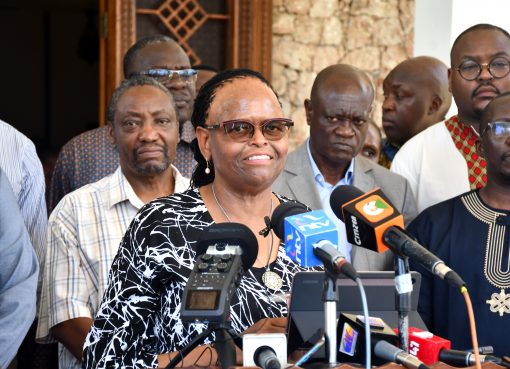
Speaking to journalists in Eldoret, Uasin Gishu County, during a public participation and stakeholder engagement forum on the Commission’s FY 2027/28 budget estimates, EACC Director of Legal Services David Too said additional resources would enable the Commission to investigate more cases, monitor public projects and recover assets acquired through corrupt practices.
“We are hearing from stakeholders that more resources need to be deployed in the fight against corruption, particularly within county governments and the national government. Residents are asking for more personnel so that the Commission can investigate the many cases that have been reported,” said Too.
He said bribery at service delivery points had emerged as a major concern during the public participation forums and remained one of the Commission’s strategic priorities.
“The stakeholders are telling us where to focus our efforts, particularly on bribery at service points. That is actually our strategic focus as a Commission. Generally, they are asking us to do more in the fight against corruption,” he said.
Too said the views collected from members of the public, organisations and other stakeholders would inform the Commission’s budget priorities and help direct resources towards areas with the greatest impact.
He noted that public participation in the budget-making process was a constitutional requirement and was also provided for under the Public Finance Management Act.
The Commission has conducted similar engagements in Nakuru, Nyeri, Isiolo, Malindi and Mombasa, among other areas, with the exercise continuing within the timelines set by the National Treasury.
Too said the National Assembly had increased the Commission’s allocation from Sh4.3 billion in the previous financial year to Sh4.9 billion in the current financial year, which had enabled it to recruit about 100 additional staff.
“We thank the National Assembly for having increased our budget. During the previous year, we had a budget of Sh4.3 billion, and this year we have Sh4.9 billion, close to Sh5 billion. We are seeing that there is an improvement,” he said.
He, however, said the allocation was still inadequate to meet the Commission’s needs, adding that development partners had continued to support capacity building and other areas of its work.
The Commission said inadequate funding, staffing, skills and technology continued to constrain its ability to undertake investigations and fully discharge its mandate.
It identified sophisticated corruption schemes, cybercrime, illicit financial flows and inadequate data systems as emerging challenges requiring investment in digital forensics, data analytics, financial intelligence and information-sharing systems.
Weak legal and institutional frameworks, including legal gaps, prolonged processes and inadequate coordination among agencies, were also cited as challenges affecting the fight against corruption.
The Commission said it would pursue legal reforms, strengthen enforcement, improve case management and enhance inter-agency coordination to address the challenges.
Too said the EACC’s current priorities included monitoring capital-intensive projects undertaken by national and county governments, asset recovery and preventing bribery at service delivery points.
“Asset recovery is key in deterring people from engaging in corruption because whatever they have benefited, it is taken away from them,” he said.
He emphasised the need for collaboration with regulatory and oversight agencies and professional organisations, saying the Commission could not effectively fight corruption on its own.
“We must collaborate with regulatory and oversight agencies, as well as professional organisations, to achieve meaningful results,” he said.
The EACC reported that during the 2025/26 financial year, it investigated 572 cases involving corruption, economic crime, bribery and unethical conduct, with 178 files forwarded to the Director of Public Prosecutions for further action.
During the period, the Commission recovered corruptly acquired assets, unexplained wealth and irregularly obtained benefits valued at approximately Sh3.6 billion. It also secured preservation orders for assets worth about Sh7.3 billion and filed 46 recovery suits involving assets valued at approximately Sh14.1 billion.
On prevention and public education, the Commission said it sensitized 177,000 learners on ethics, integrity and good governance, while more than 92,000 citizens were reached through community and professional outreach programmes.
It also conducted 312 sensitisation sessions for public officers in ministries, departments, agencies and other public sector organisations, reaching 22,508 people.
Too said the Commission had partnered with the Kenya Institute of Curriculum Development (KICD) to strengthen ethics education in learning institutions and was supporting the establishment of integrity clubs and participation in drama festivals focusing on corruption and ethical conduct.
For the 2026/27 financial year, the EACC has an approved budget of Sh4.973 billion for recurrent expenditure and Sh123 million for development expenditure.
Its targets include investigating 436 cases involving corruption, economic crime, bribery and unethical conduct; recovering Sh4.5 billion in corruptly acquired assets and unexplained wealth; and preserving assets worth approximately Sh2.4 billion.
The Commission also said it plans to sensitise 300,000 learners, complete 100 investigations into ethical violations and achieve 80 per cent compliance in the submission of declarations of income, assets and liabilities by State and public officers.
The Commission has invited stakeholders to submit proposals and memoranda outlining priority interventions, expected outcomes and the resources required for implementation through bp@integrity.go.ke.
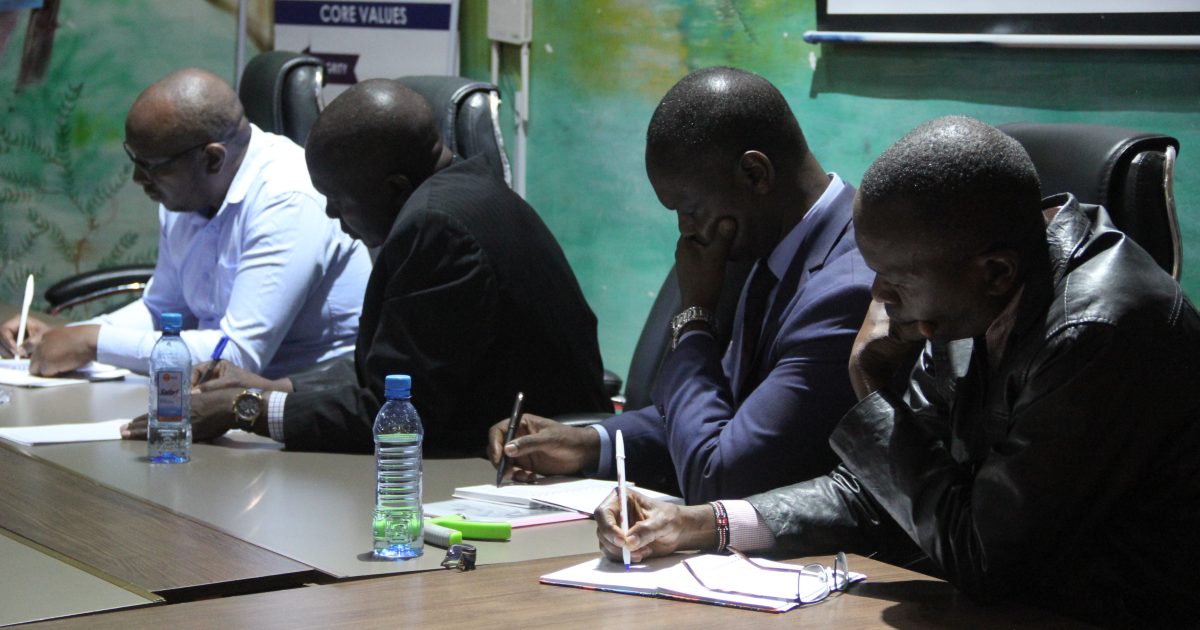
The Eldoret forum is part of the Commission’s nationwide public participation and stakeholder engagement exercise, whose views and recommendations will inform its programmes and interventions under the proposed FY 2027/28 budget and Medium-Term Expenditure Framework (MTEF).
By Fredrick Maritim and Stanley Kimtai