The County Government of Nakuru and the Shelter Afrique Development Bank (ShafDB) are working on a strategic partnership to accelerate affordable housing, regenerate aging urban estates, and drive climate-resilient urban development.
The partnership further focuses on establishing policy frameworks, conducting municipal diagnostics, preparing joint proposals, and initiating site visits to old county estates for revitalization.
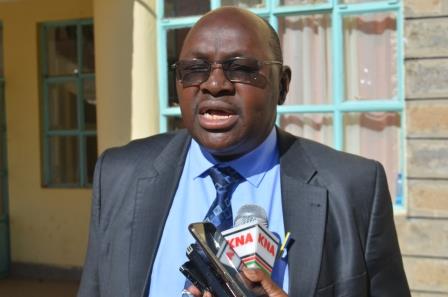
According to County Executive Committee Member (CECM) for Lands, Physical Planning, Housing and Urban Development, John Kihagi, the proposed collaboration will support project preparation, financing and construction while creating opportunities for private and institutional investment in Nakuru’s growing urban centres.
Speaking during a meeting with a delegation from ShafDB Kihagi said the county administration had prioritized public land as an important resource for attracting investment into affordable housing and urban development.
He said Nakuru was seeking to regenerate ageing public housing estates while promoting brownfield and infill development to make better use of land within existing urban areas.
The CECM disclosed that Governor Susan Kihika’s administration was developing a Housing Policy to guide investment, partnerships, estate regeneration and sustainable housing development.
Kihagi said city and municipal boards will play a central role in housing delivery because they understand local urban needs and can help ensure projects respond to residents.
He indicated that the proposed partnership comes as the National Government continues to implement the Bottom-Up Economic Transformation Agenda (BETA), which identifies Housing and Settlement as one of its five priority areas.
The County official said that under BETA, the Government was targeting an annual supply of 250,000 housing units to address Kenya’s housing deficit and expand access to affordable homes.
He added that the Government had also positioned affordable housing as an economic intervention capable of creating employment across construction, manufacturing and related value chains.
Kihagi pointed out that the Fourth Medium Term Plan 2023–2027 provides for 60,000 affordable housing units through budget support and another 140,000 units annually through the National Housing Development Fund.
It also targets one million affordable home-financing mortgages during the plan period.
The Kenya National Bureau of Statistics (KNBS) in its 2023/24 Kenya Housing Survey, reported that the country faces a significant shortage of habitable housing space.
The survey also emphasizes the importance of affordable housing in supporting healthier communities and economic opportunities.
Kihagi noted that the housing challenge was particularly significant in urban areas, where rapid population growth continues to increase demand for affordable and adequately serviced homes.
KNBS place Kenya’s annual housing demand at about 250,000 units, against an estimated annual production of about 50,000 units. This leaves an annual shortfall of roughly 200,000 homes.
The national housing programme also seeks to increase the supply of affordable homes while creating employment opportunities for young people and supporting local construction enterprises.
According to the Government Delivery Unit, more than 260,000 affordable housing units were under construction in 2025, creating more than 640,000 construction-sector jobs.
Kihagi observed that the proposed ShafDB partnership will complement the national housing programme by connecting county land and planning capacity with development finance, technical expertise and private-sector investment.
During the engagement, ShafDB presented its municipal toolkit for secondary cities and the VIRAL diagnostic framework, which supports municipalities in assessing housing needs, land management, institutional capacity, regulations, financing and project development.
The bank also shared its experience in financing affordable housing and urban infrastructure across Africa.
The collaboration will cover the housing development cycle, starting with policy formulation and municipal diagnostics before moving to project preparation, financing and construction.
Nakuru County and ShafDB agreed to prepare a joint proposal and establish a technical team to advance the proposed cooperation. The partners will also undertake site visits to existing county housing estates and other priority locations to identify suitable opportunities for regeneration and new housing projects.
Mr Kihagi stated that the proposed collaboration reflects a wider African housing challenge. Shelter Afrique has previously estimated Africa’s housing shortage at about 56 million units, with more than 90 per cent of the deficit falling within the affordable housing segment.
The World Bank has also reported that a large proportion of Kenya’s urban population lives in informal settlements, highlighting the need for increased investment in affordable and adequate housing.
The challenge extends beyond Kenya. The United Nations estimates that Africa’s urban population will continue expanding rapidly in coming decades, increasing demand for housing, infrastructure, transport, water and sanitation.
The African Development Bank has similarly identified rapid urbanization, population growth, limited housing finance, land-tenure challenges and high development costs among factors constraining affordable housing delivery across the continent.
ShafDB’s growing role in housing finance also comes at a time when the institution is expanding its lending activities.
The bank reported that loan disbursements increased by 162 per cent to Sh8.15 million Kenya shillings in 2025, compared with Sh3.1 million Kenya shillings in 2024.
The proposed Nakuru partnership therefore places the county within a broader national and continental effort to mobilize development finance for urban housing.
For Nakuru, Mr Kihagi said the focus will be on unlocking existing public land, renewing ageing estates and creating sustainable housing developments that can accommodate the county’s growing urban population.
The county delegation included Naivasha Municipal Manager Daniel Nderitu and County Director of Housing Stephen Mucheru.
ShafDB was represented by Head of Project Finance Group Monsurat Muhammed, Dr Gambo and Investment Officer Lawrence Kiarie.
The proposed partnership is expected to move to the technical stage through the joint proposal, formation of the technical team and assessment of potential project sites.
By Esther Mwangi/ Jefther Afuyo