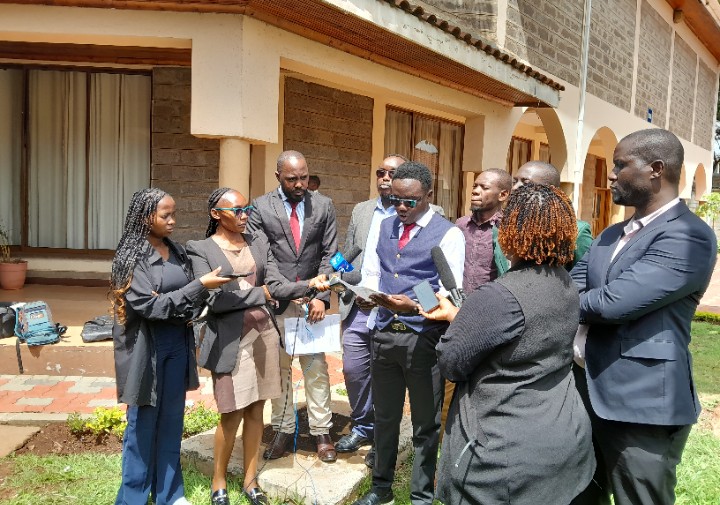
The Elimu Bora Working Group has raised concern over alleged illegal salary deductions affecting teachers across the country, calling for urgent investigations and accountability from relevant state agencies.
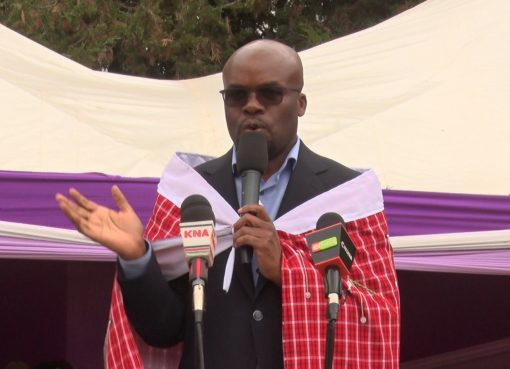
Elimu Bora Working Group member Tom Ogada said the deductions were being channelled through the Kenya Women Teachers’ Association (KEWOTA), which he described as an irregular entity operating outside the established legal framework.
He warned that the situation pointed to a coordinated scheme undermining labour rights and weakening legitimate teachers’ unions.
“This appears to be a coordinated arrangement that undermines labour rights, weakens legitimate unions and enables large-scale financial impropriety,” Ogada said.
He further alleged that KEWOTA was established and operated with involvement and support from individuals within the Teachers Service Commission (TSC) and the Ministry of Education, adding that its formation bypassed required legal and regulatory procedures governing staff associations.
According to him, the emergence of KEWOTA also aligned with efforts to weaken established unions such as the Kenya National Union of Teachers (KNUT) and the Kenya Union of Post-Primary Education Teachers (KUPPET), creating parallel structures that enabled salary deductions with limited scrutiny.
“By breaking down union membership and influence, space was created for parallel structures through which teachers’ salaries could be accessed,” he added.
Elimu Bora Convener Ray Orek outlined that only the Teachers Service Commission is mandated to effect deductions under strictly defined conditions.
Orek explained that deductions are only lawful where there is a court order, arbitration award, or a collective bargaining agreement, as provided under Section 19 of the Employment Act, none of which, he said, applies to KEWOTA.
“The authority to deduct from teachers’ salaries rests solely with the TSC under a clear legal and administrative framework,” he stated.
He added that affected teachers neither joined the association voluntarily nor provided consent for deductions, terming the practice a violation of labour rights and statutory protections.
The group also linked the alleged scheme to broader corruption concerns, arguing that KEWOTA may be controlled by individuals connected to political and bureaucratic structures.
They estimated that at least Sh228 million could be deducted annually, potentially rising to billions over time.
“This directly deprives teachers of their earnings, erodes public trust and diverts resources from an already strained education sector,” Orek said.
In their demands, the group urged the Ministry of Education to disclose KEWOTA’s legal status, including any approvals or correspondence authorising its operations.
They also called on the Ethics and Anti-Corruption Commission (EACC) to launch an independent probe into its formation, financing and activities.
The Directorate of Criminal Investigations (DCI) was further urged to pursue criminal accountability against individuals found to have facilitated unlawful deductions, while Parliament’s committees on Education and Labour were asked to open a public inquiry into what the group termed the weakening of teachers’ unions.
Elimu Bora member David Karani stressed that halting the deductions alone would not be enough, insisting that affected teachers must be refunded.
“Stopping the deductions is not enough. The money taken illegally over the years must be returned to the teachers,” he said, adding that the practice was unlawful where consent was not obtained.
He further urged swift investigations, warning that accountability must extend to all those implicated.
“We urge speedy and conclusive investigations to establish how the organisation was formed and how these activities have been conducted,” Karani noted.
The group warned that continued unlawful deductions risk demoralising teachers and undermining the quality of education.
“A demoralised teacher cannot effectively deliver in the classroom,” said Karani.
The Elimu Bora Working Group reaffirmed its commitment to pursuing justice for affected teachers, saying transparency and accountability are essential to restoring confidence in the education sector.
By Anita Kariuki and Nyawira Githinji