West Pokot County has become a focal point in the implementation of Kenya’s National Policy on Women’s Economic Empowerment (NPWEE), as government and development partners intensify efforts to address long-standing gender inequalities affecting women.
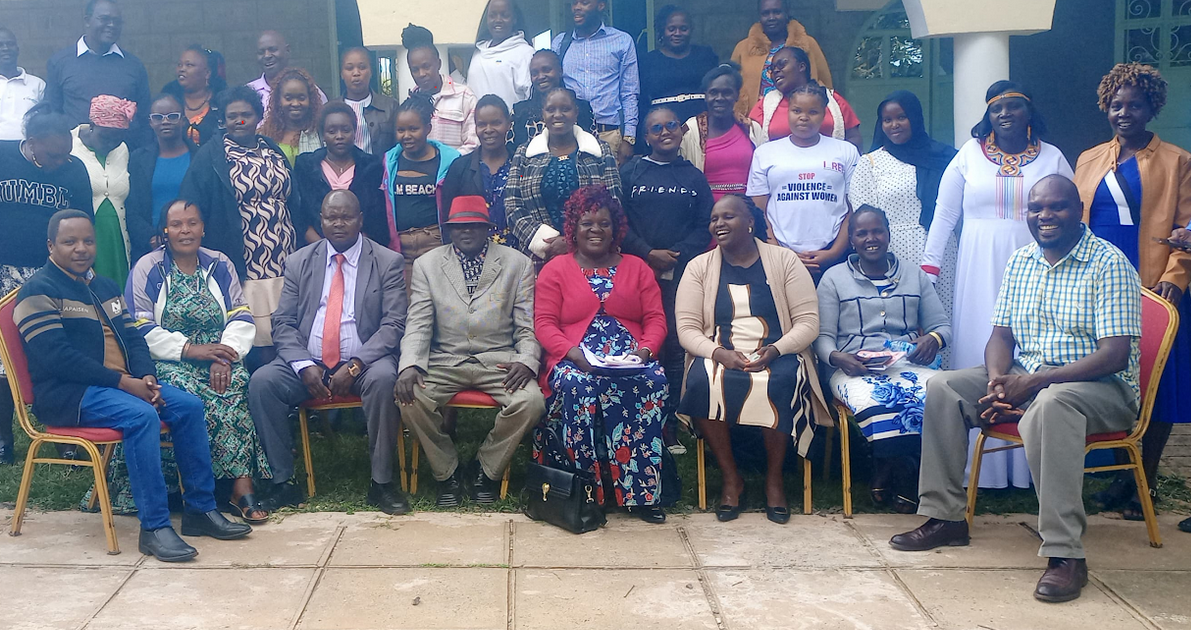
An inaugural meeting held at Horizon Hotel in Kapenguria Constituency, led by the State Department for Gender and Affirmative Action in partnership with the University of Nairobi and UN Women, is part of a three-year programme aimed at strengthening the roll-out of the Policy across the country.
Speaking during the sensitization forum, Professor Martin Oleche, Chair of the Department of Economics and Development Studies at the University of Nairobi, said the Policy has already received Cabinet approval and is currently at the Parliamentary Committee stage.
He noted that West Pokot is among 16 counties selected for the Pilot Phase due to the unique structure of gender relations in the area.
“We are here to strengthen implementation of the Policy by working with both National and County gender sector stakeholders, while also engaging communities, to understand what is happening on the ground,” said Prof.Oleche.
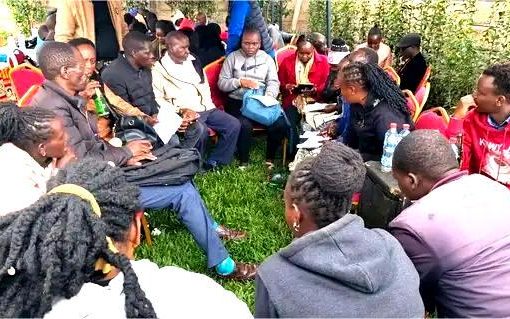
Discussions during the two-day sensitization exercise revealed deeply rooted challenges affecting women in the region, including economic dependency, gender-based violence, and restrictive cultural practices.
Participants highlighted cases where women are forced to surrender their salaries and ATM cards to their husbands, leaving them financially dependent, despite being employed.
“There are women who must declare all their income or even hand over their earnings entirely. This is economic control and it is still widespread,” Dorcas Aleutum, Kapenguria Location Chief and one of the participants at the meeting noted.
Other concerns raised included limited access to land and capital resources, with many women unable to own property or engage meaningfully in agriculture and business.
Residents who attended the Forum called for urgent interventions to protect women’s rights and promote independence.
Elizer Loshangóle, a resident of Kapenguria Ward, stressed the importance of allowing women to work and take charge of their own income.
“Women should be respected and allowed to work; It is wrong for anyone to control what they earn,’’ she said.
West Pokot County Director of Gender, Emmanuel Oigo, acknowledged the magnitude of challenges facing women, including gender-based violence, female genital mutilation (FGM), and lack of recognition of unpaid care work.
“We are looking at policies that can help women be heard and supported in their communities. Issues like FGM and violence against women must be addressed collectively,’’ he said.
Stakeholders also pointed to economic abuse as a major barrier to empowerment. Cases were cited where women are forced to take loans by their spouses, only for the money to be misused, leaving them burdened with debt.
In some instances, women are denied access to identification documents, effectively locking them out of financial services and government support programmes.
Masika Mwinyi, a representative and officer from the Youths for a Sustainable World (YSW) organisation, noted that the lack of resources such as land and capital increases women’s vulnerability and exposure to abuse.
“When women cannot access resources, they become dependent, and this often contributes to gender-based violence,” he said, adding that there is a need to domesticate the policy at the county level.
The forum also heard concerns about reproductive coercion, with some women reportedly prevented from accessing family planning services or forced into repeated pregnancies.
Additionally, harmful practices such as FGM continue to affect both women and girls despite ongoing awareness campaigns.
Local leaders, including members of the Council of Elders, expressed support for reforms and condemned practices that deny women control over their earnings.
“No woman should be forced to surrender her salary. Everyone has a right to benefit from their own work,” said Thomas Ruto, a representative of the elders.
Despite the challenges, stakeholders observed encouraging signs, noting that more women are becoming aware of their rights and are beginning to speak out.
“There is progress. Women now understand their rights better than before, even though challenges remain,’’ Prof. Oleche said.
The ongoing exercise in West Pokot included mapping existing women empowerment initiatives and identifying priority areas such as employment, agriculture, and leadership.
The national policy on Women’s Economic Empowerment is expected to enhance financial inclusion, expand access to resources, and strengthen women’s participation in leadership and decision-making.
As implementation gains momentum, stakeholders expressed optimism that the policy will help dismantle systemic barriers and improve the livelihoods of women not only in West Pokot but across the country.
By Anthony Melly