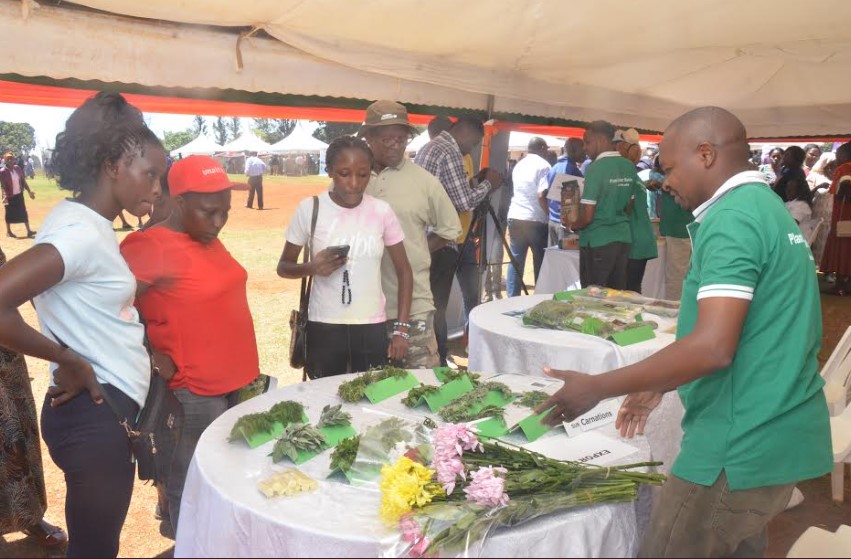
Young people have been urged to embrace agriculture and utilise available land to create employment and contribute to food security, amid concerns over the ageing population of farmers in the country.
Speaking during the inaugural Kilimo Kraft Innovations Africa Agricultural Expo held at Kairuni Stadium in Maara Constituency, Tharaka-Nithi County, the organisation’s founding director, Chris Kimathi, said there was a need to attract more young people into farming to sustain food production.
Kimathi said the Expo, which brought together farmers, agricultural institutions, input suppliers and other stakeholders, was aimed at changing the perception that agriculture is a dirty and less rewarding career.
“We have a dream of recruiting as many young people into farming as possible to grow enough food. Our vision is to see young people engaging in farming,” he said.
Kimathi, a civil engineer by profession and a beekeeper, said agriculture had enabled him to travel abroad and create opportunities for himself, adding that he wanted to share his experiences with young people in the community.
He said the average age of farmers was estimated at about 70 years, making it necessary to deliberately encourage young people to take up agriculture and ensure continuity in food production.
“Young people should do away with the notion that they will all get white-collar jobs because the Government cannot get enough money to employ everybody,” he said.
Kimathi urged young people to identify challenges in their communities, acquire relevant skills and return to apply the knowledge in solving local problems.
He also encouraged farmers to make productive use of available parcels of land, saying lack of rainfall should not discourage people from engaging in agriculture.
“There is no dry place; dryness is in our perception,” he said.
He added that the Expo was held ahead of the rainy season to enable farmers to learn about appropriate seeds and technologies.
He said the Expo, the first of its kind organised by the company in Tharaka-Nithi County, would be held annually to provide farmers with opportunities to interact with agricultural stakeholders and acquire practical skills.
County veterinary officer Denis Nyamu said the Tharaka-Nithi County Government was working with farmers to improve livestock production through affordable artificial insemination (AI) services.
Nyamu said the county was not only providing ordinary AI services but was focusing on improving livestock breeds according to the different ecological zones.
“We follow up with farmers and try to change their breeds depending on the eco-zone. We urge farmers to prepare for the rainy season by producing and preserving adequate fodder, particularly through silage, to ensure livestock have feed during periods when pasture may be scarce.
Chuka University representative Pamela Apuko said the institution was collaborating with farmers to provide students with practical agricultural experience while equipping them with skills that could help address unemployment and food insecurity.
Apuko said the university offered various agriculture-related courses and was also involved in research and discussions on climate change and its effects on farmers, gender and the environment.
She said the institution was promoting organic farming as part of efforts to improve food safety and public health.
“Exhibitions are necessary for farmers because they give local people the skills they require. We urge the national and county governments to support agricultural exhibitions to enhance skills, networking and knowledge sharing,” said Ms Apuko.
The Expo also showcased innovations aimed at turning agricultural waste into economic opportunities.
One of the innovations involved making sanitary pads from banana fibre, with exhibitors saying the initiative could create a market for banana waste while encouraging farmers to increase banana production.
Timothy Thuranira from Agribase Bio Science International said his organisation was sensitising farmers on the use of quality seeds for crops such as maize, beans and cowpeas.
He said the company was promoting seeds suited to different weather conditions, including varieties that could perform well under high rainfall conditions.
Bayer East Africa sales agronomist Denis Munene said farmers were being trained on how to identify certified planting seeds and distinguish them from counterfeit products.
Munene said farmers were also being introduced to digital applications that help them select appropriate seed varieties based on their growing zones, altitude, rainfall and changing climatic conditions.
Farmers who attended the Expo welcomed the initiative, saying it provided an opportunity to acquire practical knowledge and learn about new agricultural technologies.
Rodah Mugambi, a farmer involved in banana value addition, said she had learnt about opportunities for making sanitary pads from banana fibres after interacting with Chuka University representatives.
“We did not know where to start, but Chuka University has given us an insight into the same,” she said, urging organisers to consider holding the Expo twice a year to reach more farmers.
Another farmer, Dorothy Marangu, said she had acquired knowledge on silage making, grain packaging and clean-energy technologies.
She said her disability group was using modern jikos and hoped to receive further support to expand the initiative from Micro and Small Enterprise Authority who were also present at the Expo.
Meanwhile, the Kenya Plant Health Inspectorate Service (KEPHIS) used the Expo to sensitise farmers on seed certification, plant health and laboratory testing of agricultural inputs and produce.
Farmers visited its stand and interacted with officers from its headquarters and Embu regional office.
They were informed that seed certification helps ensure that seed sold to them meets required quality standards, while plant health services help prevent and manage the spread of pests and diseases.
KEPHIS also highlighted laboratory testing services aimed at supporting the quality, safety and compliance of agricultural inputs and produce.
Direct engagement with farmers enabled KEPHIS to provide practical information while gaining a better understanding of challenges affecting farmers, strengthening collaboration in promoting plant health, quality agricultural inputs, food security and safe trade.
by Dickson Mwiti