A family in Kisumu County says a decades-long land dispute has left them homeless, traumatised and unable to bury a relative more than a year after his death.
The family of the late Thomas Onyando of Ogwedhi Village in Koru Location, Muhoroni Sub-county, claims they have been barred from accessing ancestral land where generations of their relatives have been buried, turning mourning into a prolonged legal and emotional ordeal.
Speaking to the press, Peter Ochieng Onyando, a son of the late Thomas Onyando, said the dispute began shortly after his father’s death in 1994 when the family of the late John Onyunga Malala claimed ownership of the land, arguing that Onyando had sold it before his death.
Peter, however, maintained that the transaction was not a land sale but an arrangement under which Malala would recover Sh50,000 he had advanced to Onyando through proceeds from sugarcane harvested on the property.
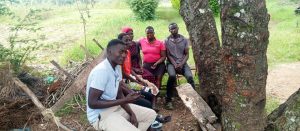
According to Peter, the family had a written agreement allowing Malala to harvest sugarcane from the land until he recovered his money.
He alleged that while doing so, Malala acquired title deeds for portions of the property and registered them in the names of his wives, Millicent Malala and Leonil Malala.
The dispute eventually landed before a tribunal chaired by the then area District Officer after questions emerged over the ownership documents.
Peter said the matter had earlier been filed in court under Case Number 123 of 1988 but was dismissed.
According to Peter, the tribunal and land officials struggled to establish how the title deeds had been obtained.
He claimed the parties later agreed that the Onyando family would allow further sugarcane harvesting from the land to offset a Sh550,000 settlement demanded in exchange for the return of the title deeds.
Peter said the arrangement continued until 2002 when the amount was fully recovered.
The conflict resurfaced in 2016 when, according to Peter, the Malala family obtained fresh title documents and filed a court case against Onyando’s grandchildren and in-laws, describing them as squatters on the land.
“They took the grandchildren to court but left out the direct beneficiaries of the land,” Peter said.
The Onyando family has since filed a fresh case at the Environment and Land Court in Kisumu under Case Number ELC 961 of 2025.
Peter also questioned what he described as inconsistencies in the land’s records.
He claimed documents showed a discharge in the name of Thomas Onyando Mieri dated October 29, 1986, but a title deed issued less than two weeks later, on November 11, 1986, bore the name of John Onyunga Malala.
He said the family raised the matter with the Land Registrar in Awasi and sought the surrender of the disputed title deeds, but the request was declined after the holders cited a court ruling from Tamu Law Courts.
Beyond the legal battle, family members accuse their rivals of orchestrating violent evictions, destruction of property and intimidation in an effort to force them off the land.
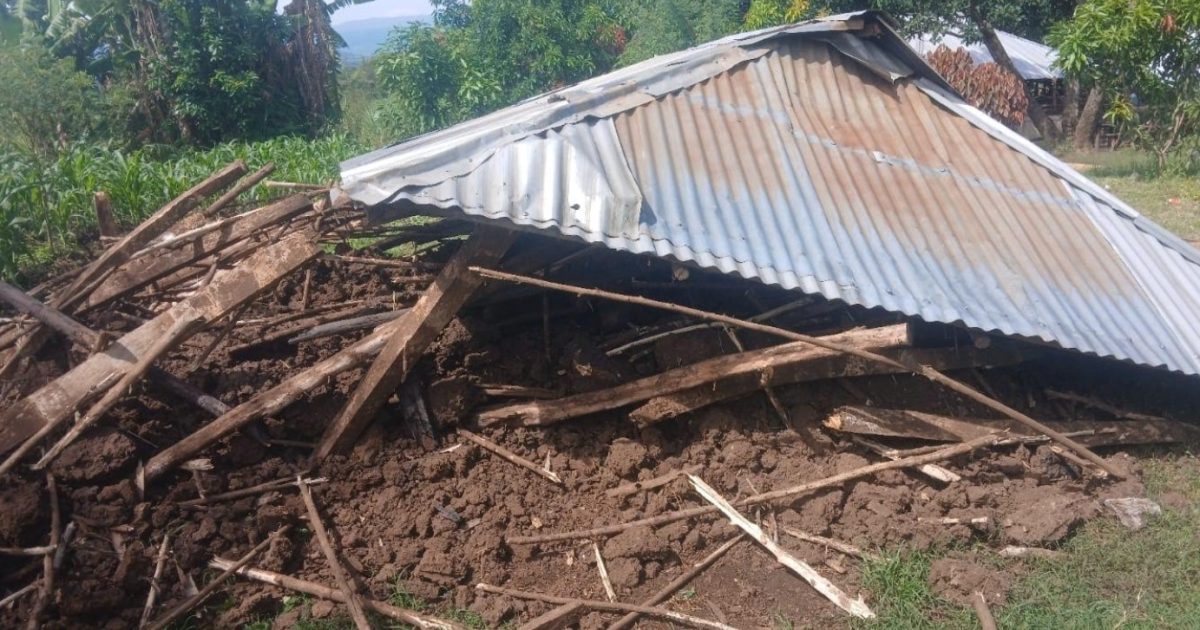
Maurice Okoth Omondi, a grandson of the late Onyando, alleged that on March 20, 2023, Gerald Malala, accompanied by police officers and a group of men, demolished their home.
He further claimed that a year later, while family members were away attending the burial of his sister in Asembo, their homestead and those of other Onyando relatives were set ablaze and reduced to ashes.
“I sometimes wonder whether we have equal rights like other people. We are being treated like animals on our own land and nobody seems to care,” Maurice said.
He accused local authorities of failing to act despite numerous reports.
“We record statements and receive OB numbers, but nothing happens. The only time we see police officers is when they accompany people who come to demolish our property,” he alleged.
Maurice said repeated destruction of homes has forced family members to seek shelter from neighbours while living in constant fear.
“We cannot return because every time we build, the structures are destroyed. We cannot farm because our crops are cut down, and some of us have survived attempts on our lives,” he said.
For Dinna Awuor, a daughter-in-law of the late Onyando, the dispute became even more painful when a court order allegedly stopped the burial of her son.
She said she had lived on the land for years and never knew it was under dispute until preparations for the burial began.
“We were preparing to bury my son when we were served with a court order. Twelve months later, his body is still in the mortuary,” she said.
Another daughter-in-law, Phoebe Auma Odhiambo, alleged that armed men once surrounded her house at night, poured petrol around it and set it on fire while she, her husband and four children were inside.
She said the family escaped but the incident left them severely traumatised.
“Since then, my husband has never been the same. Sometimes he appears mentally disturbed by what happened,” she said.
Phoebe also claimed that attempts to seek legal assistance and intervention from authorities had yielded little success.
“We have sought help from many people, including lawyers. Whenever we think we are making progress, the cases collapse. We no longer know where to turn,” she said.
Another family member, Colleta Adongo Omodi, said repeated appeals to police and local administrators had not produced meaningful intervention.
She claimed officers responded too late to incidents reported by the family and alleged that they had been advised to leave the disputed land.
“When we reported the matter, we were told to leave the land, yet that is where my husband is buried,” she said.
The family is now appealing to the government, human rights organisations and other stakeholders to intervene and help them bury their relative, whose body they say has remained in the mortuary for a year because of the ongoing dispute.
They are also calling for investigations into the alleged attacks, evictions and intimidation linked to the contested land, saying every delay continues to deepen their suffering as they grieve while living in fear and uncertainty.
By Obed Atinga