The Government is moving to strengthen communication on programmes under the Bottom-Up Economic Transformation Agenda (BETA) by making public engagement an integral part of planning, implementation and reporting.
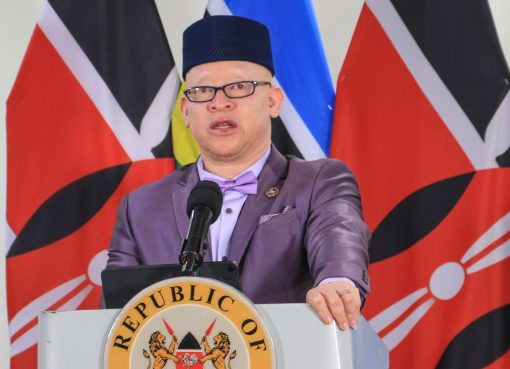
Principal Secretary (PS) for Broadcasting and Telecommunications Stephen Isaboke said the move was informed by instances where implementation of Government projects had progressed faster than public awareness, creating an information gap that could allow misinformation and inaccurate narratives to take root.
“Sometimes we are running ahead in terms of actual projects, and we think everyone is actually aware of what we are doing,” Isaboke said while speaking during an interview with the National Broadcaster-KBC.
The PS stressed that Government communication must go beyond announcing activities to demonstrating what has been achieved, the progress of ongoing programmes and projects and their impact on citizens, particularly young people, women, farmers and other targeted groups.
“It is not enough just to do, it is also important that people know what we are doing,” he said.
The PS explained that the approach is anchored in the Constitution, which guarantees freedom of expression, media freedom and the right of access to information, while placing an obligation on public institutions to provide citizens with accurate and timely information.
Isaboke highlighted that the strategy also seeks to ensure that Ministries, Departments and Agencies (MDAs) have their facts, figures and programme details in order, to enable the Government to communicate consistently across different levels; from the President and Cabinet Secretaries (CSs) to Principal Secretaries (PSs) and Chief Executive Officers (CEOs).
With the rapid growth of digital platforms, the communication strategy takes a digital-first and mobile-first approach, requiring MDAs to use their websites and social media platforms to engage citizens directly.
The PS observed that information can be debated, challenged, remixed or rejected within minutes in the digital space, making speed and accuracy critical in ensuring that an information vacuum is not filled by false narratives.
“Can we own the narrative? Can we be the first people to speak about something that is originating from government or issues of public interest?” he posed.
Isaboke said that rather than suppressing criticism or freedom of expression, the strategy seeks to ensure that citizens have reliable information against which claims can be assessed.
“Where online activity crosses into criminal conduct, existing laws and engagement with digital platforms may be invoked,” said Isaboke.
MDAs, he outlined, are expected to communicate three key areas: their mandates, major projects, and the progress and impact of those projects.
The PS said that emphasis on evidence is particularly important as the administration enters the final phase of its five-year term, with Government expected to demonstrate what has been completed, how far ongoing programmes have progressed and the difference they are making in the lives of Kenyans.
Isaboke cited the Nairobi River regeneration programme as an example of evidence-based communication, noting that members of the media had been taken to the ground to witness the works rather than relying solely on official statements.
He said the “finishing strong” phase should therefore be accompanied by evidence of implementation and clear information on how programmes are benefiting young people, women, farmers and other intended beneficiaries.
“To improve access to verified Government information, the administration is developing the National Communication Centre (NCC) as a repository and one-stop point for public information,” disclosed the PS.
According to Isaboke, the centre, which is under construction and draws lessons from Singapore, is expected to consolidate facts, figures, programme details and relevant contacts from different Government institutions, giving the public a single point from which to obtain reliable information. “It is not a centralizing thing, it is a collection, it’s actually a coordination,” Isaboke clarified.
He added that Public Communication Officers, statisticians and other relevant officials will provide information to the centre for consolidation and coordination, while CSs, PSs and CEOs will continue serving as principal spokespersons for their respective portfolios, policies, programmes and projects.
Isaboke highlighted that the CS provides policy leadership, while a PS plays a key role in translating policy into implementation and CEOs lead the mandates of their respective agencies.
He added that the communication framework further incorporates crisis and risk communication, requiring MDAs to identify potential risks within their areas of responsibility and establish mechanisms for communicating with the public before emergencies occur.
On the forecasted El Niño, Isaboke noted that the governments’ dissemination of relevant and timely information demonstrates the importance of early communication.
The PS explained that crisis communication framework brings together relevant institutions depending on the nature of an emergency, including the Interior, National Treasury, Environment, Public Health and Roads sectors.
The strategy, he said comes against the backdrop of Kenya’s wider digital transformation, with investment in connectivity changing how citizens interact with Government while opening up new economic opportunities.
Isaboke said the country was pursuing an ambitious digital infrastructure programme involving 100,000 kilometres of fibre, 1,450 Jitume hubs and 25,000 free Wi-Fi hotspots.
The expansion is supporting growth in the digital economy through content creation, e-commerce, entertainment and the gig economy, with more than 300,000 young people having secured employment in the Business Process Outsourcing (BPO) sector.
Digital infrastructure, he noted, is consequently not only about expanding connectivity but also about creating opportunities for employment, entrepreneurship and wider economic participation.
On the presence of foreigners in the country, Isaboke said Kenya remained open to investors, students, tourists and other visitors provided they complied with the law.
He acknowledged that a country undergoing significant transformation would inevitably attract debate and criticism, but urged Kenyans to engage constructively by supporting initiatives that work while identifying areas that require improvement. “There is no one else waiting to transform this country; it is us,” Isaboke said.
He called for greater cooperation among citizens and institutions, noting that effective development communication should enable Kenyans to understand Government programmes, participate in them and hold those responsible for implementation to account.
by Sharon Njeru