The Ministry of Health has reaffirmed its commitment to combating the rising cases of teenage pregnancies and HIV infections among young people through increased investment in comprehensive sexuality education and the revival of community-based prevention programmes affected by donor funding cuts.
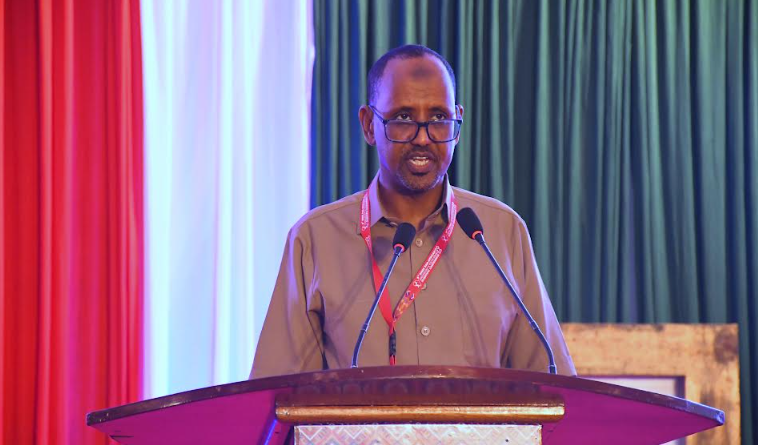
Speaking in Mombasa during the opening of the 9th RHNK Pan-African Adolescent and Youth SRHR Scientific Conference, the Ministry of Health Head of Family Health Department, Dr Bishar Issak, said healthcare workers will be trained to provide adolescent-friendly services and ensure young people have access to medicines, commodities, and essential health tools at nearby health facilities.
In 2025, Dr Issak disclosed that 41 per cent of new HIV infections in Kenya were among adolescents aged between 15 and 24 years, while mother-to-child transmission rose from 7.3 per cent to 9 per cent.
“In Garissa, just 15 per cent of adolescent girls have comprehensive HIV knowledge. Only 26 per cent of adolescent girls nationally have known that a condom prevents HIV transmission. These are not gaps in statistics; there are gaps in survival,” said Dr Isaak.
He further disclosed that teenage pregnancies remain one of the country’s most pressing public health challenges, noting that nationally, 15 per cent of girls aged between 15 and 19 years are either pregnant or already mothers.
“In counties like Samburu, that figure rises to 50 per cent. This is a show of inequality and equity. In West Pokot, that number represents 36 per cent. This number represents girls whose dreams have been interrupted, shattered, whose bodies have been asked to carry responsibilities they were not ready for and whose future depends entirely on whether the systems around them are strong enough to hold them,” he noted.
In Kenya, he said, young women have access to free maternal healthcare under Taifa Care, which is being administered through the Social Health Authority (SHA), but emphasised the need to prioritise the prevention of teenage pregnancies.
Dr Issak highlighted that more than 30 million Kenyans have been registered under SHA to access free primary healthcare, alongside the formalisation of 170,000 Community Health Promoters, the launch of the Digital Health Superhighway, and the EWENE (Every Woman Every Newborn Everywhere) initiative, which enables the ministry to track deliveries and outcomes in real time across the country.
Dr Issak said Africa’s future is youthful, with adolescents accounting for 23 per cent of the continent’s population, while 60 per cent of Africans are below the age of 25.
“Those numbers are not a burden, they are a bait. The question is whether we will honour it and reap the benefits. Africa Agenda 2063 calls young people the primary drivers and principal engine of the demographic dividend,” said Dr Issak.
To leverage the demographic dividend, he called for political will, sound policies, adequate financing, and the courage to hold candid conversations on issues affecting young people.
Dr Issak noted that a girl cannot drive an economy if she is out of school because of an unintended pregnancy, and a young man cannot contribute to national development if he is sick and lacks access to accurate information.
The conference has brought together more than 750 participants from 44 African countries and is being held under the theme, “Strengthening SRHR to Achieve Youth Agency, Full Potential and Meaningful Engagement in Africa’s Dynamic Socio-Political and Economic Landscape.”
Nelly Munyasia, Executive Director (ED) of Reproductive Health Network Kenya, said 11 policy briefs were developed during last year’s conference to drive reforms in Sexual and Reproductive Health and Rights (SRHR) across African countries.
She added that this year’s conference has also produced a referral document that will serve as a key resource for healthcare providers, young people and Ministries of Health in developing policies affecting adolescents and youth.
Munyasia noted that nearly a quarter of Africa’s population is made up of adolescents and that by 2050, one in every three adolescents globally will live in sub-Saharan Africa amid the many challenges facing young people.
“Adolescent pregnancies keep on rising, and HIV infections among young women remain devastatingly high. Sexual and Gender-Based Violence is not declining; rather, it is being normalised,” stated the ED.
She added, “And at exactly the moment we need to scale up our response, global health financing is shrinking. Commodity shortages are disrupting access to contraceptives, and the systems that young people are depending on are under pressure from every direction.”
The ED further noted that African youth are being failed by the systems built to serve them but remain resilient and innovative, gradually reclaiming their space despite limited resources.
The four-day conference, Munyasia stated, will tackle the triple threat of adolescent pregnancies, HIV infections, and Gender-Based Violence (GBV), “not as a separate crisis but as the deeply interconnected reality that it is.”
“We will be removing barriers; we will be talking about financing, not just international aid, but also domestic accountability, tax justice, and the resources African governments owed the young people,” she said.
On her part, Dr Claudia Shilumani, Regional Director of the International Planned Parenthood Federation (IPPF), said the potential of young people can only be realized through deliberate, sustained, and courageous investments.
“At the heart of that investment, it must be SRHR. SRHR is not a peripheral agenda. It is the foundation for education, economic productivity, gender equality and demographic resilience, we all say we want for Africa,” stated Dr Shilumani.
She added that when rights are protected, nations prosper, but when they are denied, the human and economic costs are staggering.
“If we don’t invest in adolescent and youth SRHR today, we are not simply failing young people. We are actively undermining Africa’s economic productivity, we are reversing decades of gains in maternal health and HIV prevention, and we are sabotaging girls’ education,” said Dr Shilumani.
“We are producing a continent that is young in age but old in the cycle of poverty, old in gender equality and old in preventable diseases,” she added.
By Sadik Hassan