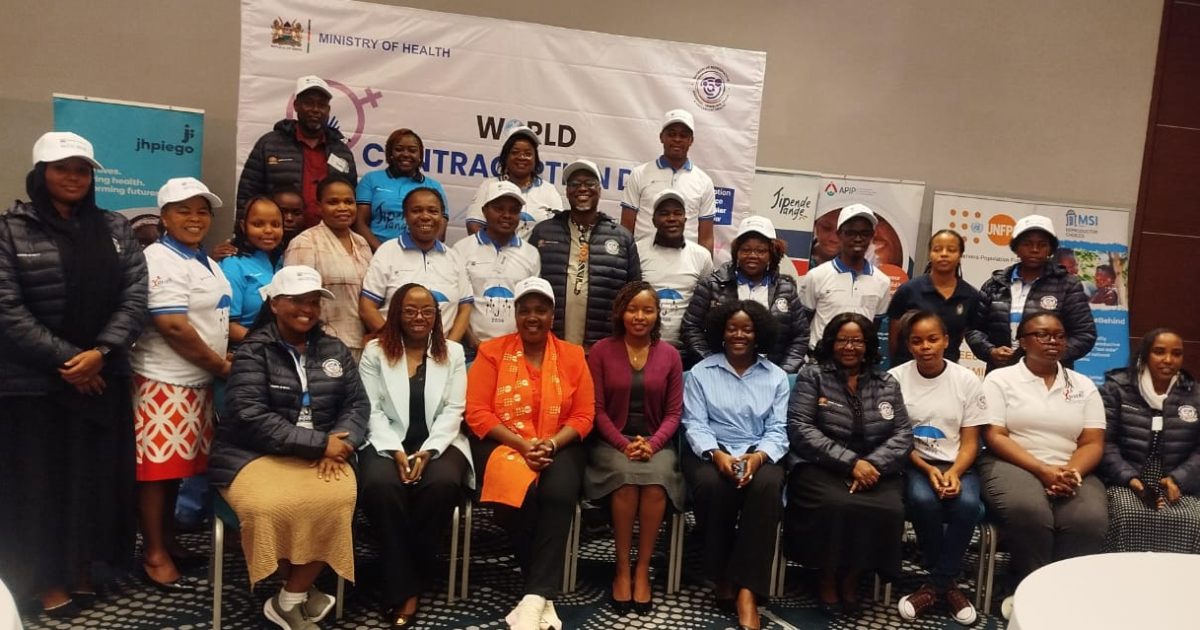
The Ministry of Health has called for increased access to quality family planning information and contraceptive services, particularly for young people, as Kenya seeks to expand choice and reduce barriers to reproductive healthcare.
Director of Curative and Nursing Services at the Ministry of Health Dr. Andrew Toro said access to contraception should be supported by accurate information, reliable commodities, sustainable financing, and services that respect individual choices.
Speaking during celebrations to mark World Contraception Day in Nairobi on Friday, Dr. Toro said the government was strengthening domestic financing, service integration, self-care approaches, and referral systems to sustain progress in family planning.
This year’s theme, “A Choice for All: Agency, Intention, and Access,” focuses on enabling individuals to make informed decisions about contraception and access the services and methods that meet their needs.
Dr. Toro said Kenya had made progress in family planning, with modern contraceptive use among married women increasing from 32 percent in 2003 to 57 percent in 2022, while unmet need declined from 27 percent to 14 percent over the same period.
However, he noted that challenges including misinformation, provider bias, geographical disparities, commodity shortages, and financing constraints continued to affect access to services.
The ministry is also promoting self-care approaches, including self-administered contraceptive methods such as DMPA-SC, to give women greater flexibility while maintaining appropriate clinical support.
Dr. Toro said healthcare providers had a responsibility to give clients accurate information on available methods, including possible side effects, to enable them to make informed choices.
“Take time with them, go through the methods, ask questions, talk about adverse reactions, and ensure you inform them,” he said.
Rose Nzyoka of InSupply said expanding contraceptive choice would require stronger private-sector engagement, sustainable financing, and reliable availability of commodities.
She said pharmacies could play an important role in bringing contraceptive services closer to communities while strengthening links between private providers and the public health system.
“Because when a woman can make an informed choice about her contraceptive, she is also making a choice about her future,” Nzyoka said.
Robina Anene, Reproductive Health Coordinator in Nairobi County, said the county was strengthening community-based approaches to improve access to family planning services.
She said community health promoters were being linked with health facilities to provide information, support clients, and refer those requiring additional services.
The county has also strengthened collaboration with community pharmacies and empowered health facilities to procure commodities during periods of shortages to maintain availability.
“We have empowered our facilities to be able to purchase commodities so that our communities do not fall short of options,” Anene said.
Anene said Nairobi was also integrating family planning with other health services and prioritizing adolescent and youth-friendly services to address privacy, stigma, and other barriers faced by young people.
Phelista Mutsi, a youth representative and youth champion, urged young people to seek accurate information from qualified healthcare providers before choosing contraceptive methods.
Mutsi said young people needed access to services that respected their privacy and dignity while providing information on the benefits and possible side effects of different methods.
The discussions also highlighted the need to address misinformation and stigma that can prevent individuals from seeking family planning services.
Dr. Toro said healthcare workers should provide services without allowing personal beliefs or biases to interfere with clients’ access to accurate information and available contraceptive options.
The Ministry said it was pursuing a Total Market Approach, bringing together public, private-for-profit, and private-not-for-profit providers to improve commodity availability and expand access points.
The approach is intended to complement public health services while providing clients with more convenient options for accessing contraceptive information and services.
Dr. Toro called for continued collaboration among government, healthcare providers, development partners, private-sector actors, and communities to strengthen financing, commodity security, service delivery, and access to informed contraceptive choice.
By Nancy Omondi and Celine Mwende