Homa Bay County Director of Education Eunice Khaemba has urged schools to strengthen security measures and improve risk management to ensure learners study in a secure environment.
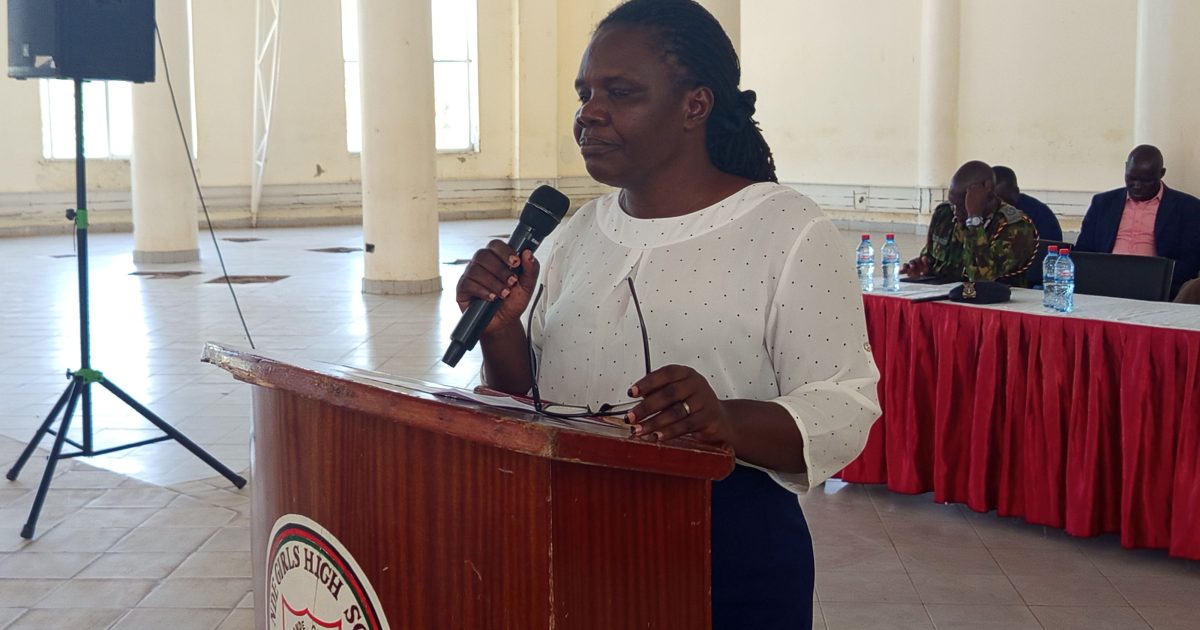
Speaking at a stakeholders’ meeting in Ogande Girls High School, Khaemba called on education stakeholders to work together in identifying and addressing potential security threats before they escalate.
She noted that insecurity remains a significant concern in schools and urged institutions to remain vigilant at all times. “As a county, we need to find ways of mitigating any possible occurrence that may threaten the safety and welfare of learners and staff members,” she said.
Khaemba identified school unrest as one of the major challenges affecting learning institutions, emphasizing that warning signs should never be ignored or concealed from authorities.
She urged school administrators to openly report challenges within their institutions rather than fear negative publicity.
“If there are signs of unrest or insecurity, let them be investigated immediately. We should not fear exposing problems because addressing them early helps us protect our learners and institutions,” she stated.
To improve preparedness and response mechanisms, the director directed all schools to establish Risk Management Committees.
According to Khaemba, the committees will be tasked with identifying potential risks, assessing vulnerabilities, and recommending measures to prevent accidents and disasters.
He also outlined safety requirements for boarding facilities, particularly dormitories, emphasizing that every dormitory or floor should have at least three doors to facilitate safe evacuation during emergencies and warned against practices that could hinder escape.
She cautioned schools against locking dormitory doors from the outside when students are inside and discouraged the installation of grills on dormitory windows, noting that such measures could endanger learners during emergencies such as fires.
School governance also featured prominently during the meeting, with Khaemba directing institutions to hold regular Board of Management (BOM) meetings to review security and welfare issues.
“Board of Management meetings should not just be held for compliance purposes. They should be used to critically examine possible weaknesses in institutions and come up with solutions that can prevent future problems,” she said.
The director further raised concerns about congestion in some schools, particularly boarding institutions, warning that overcrowding compromises student safety, learning conditions, and resources.
To address the issue, she announced that beginning next year, admissions in boarding schools will be determined by bed capacity to ensure institutions only enrol students they can comfortably accommodate.
“This will help reduce congestion and ensure that learners have adequate space and safe living conditions within our schools,” she noted.
Khaemba further proposed the introduction of suggestion boxes in schools to provide learners with a safe and confidential platform to raise concerns. She said the initiative would help school administrators identify and address issues before they escalate.
In addition, she encouraged principals and school administrators to adopt a more hands-on management approach by regularly interacting with learners, teachers, and support staff.
“School leaders should not manage from behind office desks alone. They need to be visible and actively involved in the day-to-day activities of their institutions,” she said.
On student discipline, Khaemba advocated for a humane and lawful approach, urging educators to rely more on counselling and mentorship programs, and constructive engagement rather than harsh disciplinary methods.
“When disciplining learners, let us have some humanity. Let us follow the law and seek alternative ways of addressing misconduct while helping students become responsible members of society,” she advised.
The director emphasized that ensuring school safety requires collective efforts from teachers, school boards, parents, and government agencies.
She expressed confidence that stronger collaboration would create safe, secure, and learner-friendly institutions across the county, where risks are identified and addressed before escalating into disasters.
by Shanel Kwamboka and Sitna Omar