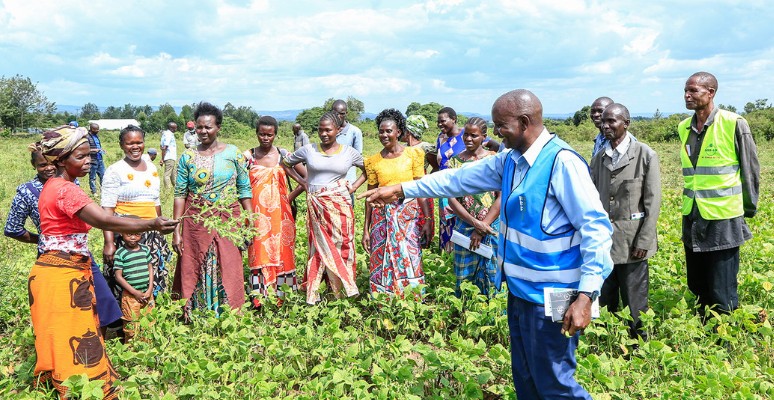
More than 12,400 tobacco farmers in Kenya have now transitioned to growing food crops under the Tobacco Free Farms initiative programme.
Spearheaded by the World Health Organization (WHO), the Ministry of Health, and development partners, the Tobacco-Free Farms initiative helps smallholder farmers to grow sustainable, profitable, and eco-friendly food crops aimed at improving livelihoods, food security, and public health.
Since its launch in Migori County in 2021, the initiative has converted more than 11,540 acres of tobacco farmland into the production of nutritious crops, including high-iron beans, groundnuts, and finger millet.
The programme has yielded over 3.8 million kilograms of food, with participating farmers reporting up to a threefold increase in income.
As the world commemorated the World No Tobacco Day (WNTD) Sunday, a press release by the Tobacco Free Fund noted that the shift is also helping farmers avoid the significant health risks associated with tobacco cultivation.
“Tobacco workers can absorb nicotine equivalent to smoking up to 50 cigarettes a day through skin contact with wet tobacco leaves, exposing them to green tobacco sickness, a condition characterized by headaches, dizziness, vomiting, abdominal pain, and breathing difficulties,” the press release noted.
According to Dr. Neema Kimambo, WHO Kenya Acting Representative, tobacco farming traps families in a cycle of dependency, low returns, and deteriorating health.
“The Tobacco Free Farms initiative breaks that cycle by giving farmers a viable, profitable, and healthier alternative. What began as a pilot in one county has become a model for the region,” she added.
The initiative, Dr. Kimambo noted, supports farmers with seeds, fertilizers, access to finance, training in sustainable agriculture, post-harvest management, and also guaranteed market access.
“Community outreach programmes also educate farmers on the economic and health benefits of transitioning from tobacco to food crops,” she explained.
Reports from participating communities indicate improved household nutrition, better health outcomes, increased women’s empowerment, reduced child labour and enhanced environmental sustainability.
The programme currently operates in Migori, Busia, Bungoma, and Meru counties and is expected to expand to Embu, Tharaka Nithi, and Homa Bay. It has also been implemented in Uganda and Zambia, with Malawi set to join in the near future.
According to research by the Food and Agriculture Organization (FAO), tobacco farmers in Kenya earn an average annual profit of Sh15,224 per acre, compared to Sh98,700 earned by bean farmers.
Beans also mature within 60 to 75 days, allowing farmers to harvest twice a year, unlike tobacco, which takes between six and nine months to mature.
A recent study found that only 54 percent of tobacco farmers receive personal protective equipment, while fewer than half consistently use gloves, boots, or overalls when handling the crop.
Beyond health concerns, tobacco cultivation has been linked to environmental degradation through deforestation, intensive pesticide use, and declining soil fertility.
While global tobacco cultivation declined by 15.8 percent between 2005 and 2020, acreage under tobacco production in Africa increased by 19.8 percent, raising concerns about food security across the continent.
The Tobacco-Free Farms initiative is supported by the WHO, FAO, the World Food Programme (WFP), the United Nations Capital Development Fund (UNCDF), the United Nations Convention to Combat Desertification (UNCCD), Kenya’s Ministries of Health and Agriculture, the Cereal Growers Association, the Farm to Market Alliance, and other partners.
By Wangari Ndirangu