Infrastructure investments under the Second Kenya Informal Settlements Improvement Project (KISIP II) are transforming livelihoods and stimulating economic growth across informal settlements in Wajir Municipality, with residents reporting improved mobility, enhanced security, increased business opportunities and better access to essential public services.
The government-funded programme, implemented by the State Department for Housing and Urban Development in partnership with the World Bank, Agence Française de Développement (AFD), the European Union and the County Government of Wajir, has delivered major infrastructure upgrades in the settlements of Shalatey, Hodhan, Halane, Wagberi, Jogoo and Borwaqo.
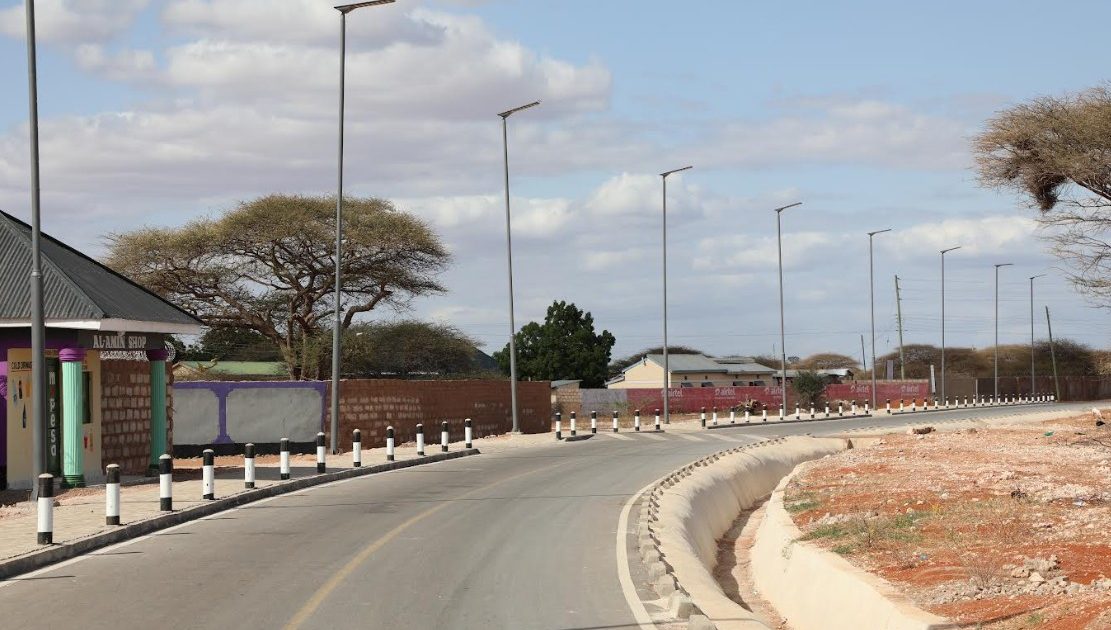
The improvements include modern roads, stormwater drainage systems, solar-powered street lighting and public infrastructure that have significantly improved living conditions while supporting inclusive urban development.
According to Wajir County KISIP Coordinator Mohamed Adow Abdi, the project has fundamentally changed the socio-economic outlook of the beneficiary settlements by making them more accessible, safer and attractive for investment.
“We have witnessed significant changes since the completion of the infrastructure works,” said Adow.
“Businesses now operate for longer hours because the settlements are well lit, while improved roads have reduced transport costs and made it easier for residents to access markets, schools and health facilities.”
He explained that before the project, poor roads and inadequate infrastructure made movement difficult, particularly during the rainy season, forcing residents to spend between Sh400 and Sh500 on transport to Wajir town.
“Today, many residents spend about Sh100 on the same journey because the improved roads have made transport more efficient and affordable. That reduction means households have more disposable income for food, education and other essential needs,” he said.
The infrastructure package delivered under KISIP II includes more than 8.4 kilometres of roads, nearly 10 kilometres of drainage channels, over 400 solar-powered streetlights and several high-mast floodlights strategically installed to improve mobility, security and access to services.
Project Engineer Blantom Gitau said the investments have addressed long-standing infrastructure gaps that had constrained economic development within the settlements for decades.
“For many years residents struggled with poor roads, flooding and inadequate lighting. These challenges limited business activities and made movement difficult,” said Gitau.
“The completed infrastructure has improved accessibility, enhanced security and created a better environment for business, investment and service delivery.”
Gitau noted that one of the project’s innovative features is the installation of vertical drainage systems specifically designed for Wajir’s flat terrain.
He explained that the system not only channels storm water away from roads and homes but also allows water to seep underground, helping recharge groundwater reserves in the arid region.
He attributed the successful implementation of the project to extensive community participation during planning and execution.
“The communities themselves identified roads, drainage and street lighting as their top priorities. Their involvement throughout implementation created ownership and contributed significantly to the successful delivery of the project,” he said.
For many small-scale traders, the new infrastructure has translated into increased business opportunities and higher incomes.
Fatuma Aliada, who operates a roadside food business in Borwaqo Settlement, said the installation of solar-powered streetlights has enabled her to keep her business open well into the evening.
“I used to close early because of insecurity and darkness,” she said.
“Now customers continue coming even after sunset because the area is well lit. My income has increased and I am better able to support my family.”
In Halane Settlement, vegetable trader Rukia Abdullai said improved roads have attracted more customers and eased the transportation of produce.
“The roads have brought more vehicles and more customers to our businesses,” she said.
“We are also able to continue trading during power outages because the solar-powered streetlights remain operational.”
The infrastructure has equally strengthened Wajir’s livestock economy, which remains one of the county’s key economic activities.
Daud Mohamed, Chairman of the Borwaqo Livestock Market, said improved road connectivity has enhanced access to the market for traders, buyers and transporters from within and outside the county.
“Movement of people and goods has improved because the roads remain accessible throughout the year, including during the rainy season,” he said.
“Livestock traders from neighbouring counties and across the border can now access the market more easily, increasing business activity and boosting incomes.”
He added that the improved environment has also encouraged more residents to use public spaces for recreation, with families and young people taking evening walks along the paved roads under the solar-powered streetlights.
The transport sector is among the biggest beneficiaries of the improved infrastructure.
Boda boda operator Jackson said smoother roads have reduced motorcycle maintenance costs while allowing riders to complete more trips every day.
“We spend less on repairs because the roads are in better condition, and we are able to reach customers much faster than before,” he said.
Community leaders say the improved infrastructure has renewed investor confidence in areas that had previously remained underdeveloped because of poor accessibility.
Shalatey Settlement Chairperson Mohamed Hussein said the upgraded roads, drainage systems and street lighting have significantly improved the attractiveness of the settlement for residential and commercial development.
“Accessibility has improved greatly, and more people are expressing interest in building homes and establishing businesses here,” he said.
“The value of land has also increased because the settlement is now served by quality infrastructure.”
Beyond physical infrastructure, KISIP II has also invested in social and economic empowerment programmes targeting local residents.
Nearly 500 young people have received technical and vocational skills training under the project’s socio-economic inclusion programme, equipping them with practical skills that enabled many to secure employment during construction activities while improving their future employability.
The project is also supporting land tenure regularisation across seven informal settlements, where verification of plot ownership is nearing completion ahead of the issuance of title deeds.
According to Adow, secure land ownership will provide residents with greater confidence to invest in permanent housing, commercial developments and other long-term projects.
“The title deeds will give residents security of tenure and encourage them to invest confidently in permanent developments that will improve the value of their properties and contribute to orderly urban growth,” he said.
Officials say the socio-economic gains already being witnessed in Wajir demonstrate the broader objectives of KISIP II, which seeks to improve access to basic services, stimulate local economies and enhance living standards through integrated urban development.
By Hamdi Buthul