A section of Lamu opinion leaders has welcomed the planned Sh2.2 trillion Dangote Oil Refinery project ahead of its launching by the Head of State and called for local youth to be prioritised in employment, business and other opportunities arising from the investment.
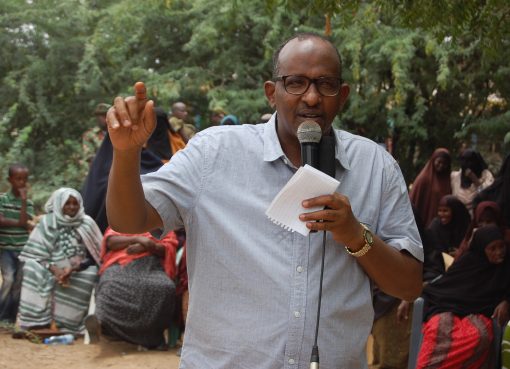
The leaders, led by former Lamu East MP Hashim Fumo, said the project would transform Lamu economically and position the county as a hub for capital-intensive investments. Fumo and other leaders also lauded Kenya Ports Authority (KPA) CEO Capt. William Ruto for improving the operationalisation of the Port of Lamu, saying this had helped attract foreign direct investment.
They want Capt. Ruto’s tenure extended to ensure continuity and sustain what they described as the port’s strong performance amid questions over Ruto’s tenure.
“It is important for the people who initiated the project to continue rather than incorporating new people, because the experience and know-how are very important. We cannot afford to bring new people,” Fumo stated.
Hashim Omar, an Opinion Leader, said they want inclusive participation in the project to safeguard the interests of residents. “We expect many jobs; about 70 per cent to be reserved for Lamu residents. Lamu has been marginalised for years. Leaders should be responsible,” he stated.
Nudhar Abdulrahaman, a Mechanical Engineering student, said local youth possess the requisite qualifications and should be considered before skilled workers are outsourced.
The proposed 700,000-barrel-per-day oil refinery is expected to anchor the county’s industrial growth.
The Sh2.2 trillion refinery project by Nigerian billionaire Aliko Dangote, planned for Lamu, is expected to guarantee a steady supply of refined petroleum products while reducing East Africa’s dependence on imported fuel. Once launched, the refinery will become the country’s largest private-sector investment and is projected to create about 60,000 jobs.
The refinery will be Dangote’s second after his 650,000-barrel-per-day facility in Lekki, Nigeria, which commenced operations in January 2024.
The investment, expected to break ground on September 30, 2026, comes at a time when Kenya and the wider region are grappling with rising fuel prices driven by the conflict in the Middle East and disruptions caused by the closure of the Strait of Hormuz.
The decision to locate the refinery in Lamu has drawn mixed reactions from residents and leaders. Once considered marginalised, the county is now emerging as a major beneficiary of government-led infrastructure projects and private-sector investments.
The Lamu archipelago, a UNESCO World Heritage Site, hosts the Lamu Port, the first component of the Lamu Port-South Sudan-Ethiopia Transport (LAPSSET) Corridor project. The port is planned to have 23 berths, with three already operational, featuring a draft of 17.5 metres and a turning basin of 500 metres.
According to the LAPSSET Corridor Development Authority, Phase Two of the port will include a liquid bulk terminal and an agri-bulk terminal to meet projected regional demand of 70 million tonnes of agricultural bulk cargo by 2045 and Kenya’s estimated refined petroleum demand of 16.3 million tonnes.
Once a sleepy coastal town, Lamu has become a hive of economic activity since the commissioning of the first berth in 2021. The port currently handles transshipment cargo destined for the United Arab Emirates, Mozambique, Tanzania, Zanzibar, Seychelles, Comoros and Madagascar, including containerized cargo, bulk goods and motor vehicles.
The government is also pursuing a landlord model for some port operations to enhance efficiency and competitiveness.
The Lamu Port Container Terminal berths and the Lamu Special Economic Zone are earmarked for development and operation through Public-Private Partnerships (PPPs).
By Sadik Hassan