Fourteen counties under the Lake Region Economic Bloc (LREB) have embarked on a five-day exercise to validate agricultural data collected between 2013 and 2025, to strengthen evidence-based planning and decision-making.
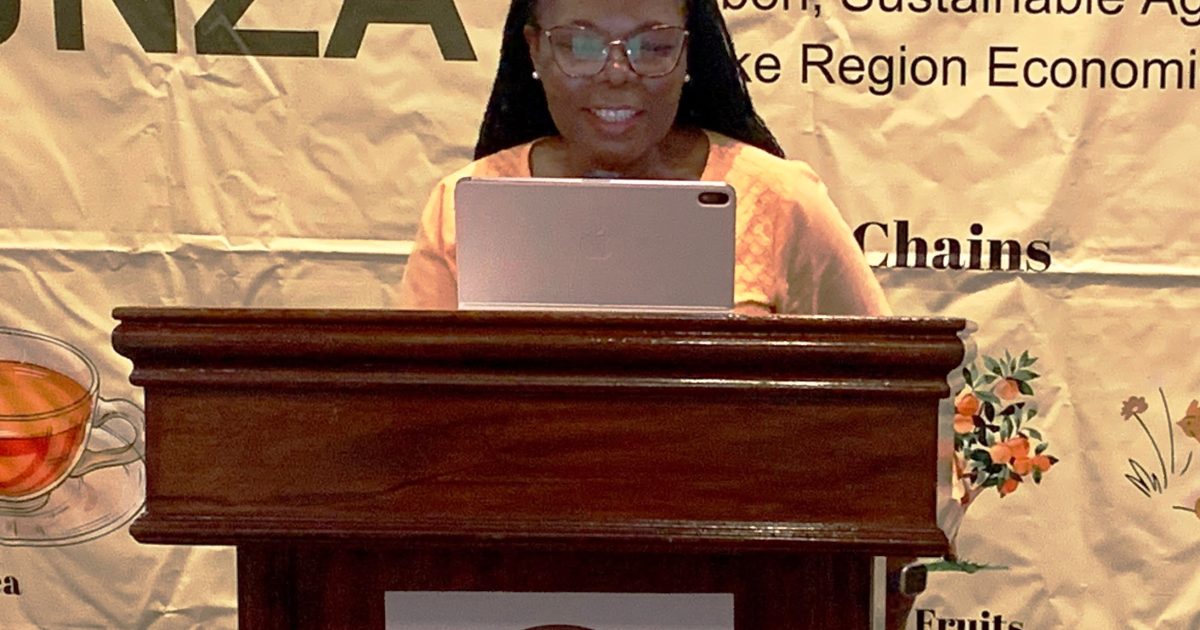
Speaking during the launch of the validation in Kisumu, Monday, Food and Agriculture Organization (FAO) Representative in Kenya, Farayi Constance Zimudzi, said the exercise once completed would provide a reference point against which future agricultural trends, targets and results would be measured.
Zimudzi said reliable data would enable counties to better target budgets, monitor agricultural programmes and provide evidence for investors and researchers.
The FAO representative. emphasised that maintaining the system would require sustained collaboration between KNBS, the Ministry of Agriculture and Livestock Development and County governments, supported by common data standards and designated data focal points.
Since the devolution of agriculture, much of the data generated by counties has remained in hard-copy reports, Sub-county returns and individual spreadsheets, making it difficult to establish complete historical datasets.
“When an Officer then retires or moves on to other opportunities, the data often goes with them. So no County began this exercise with a complete data set,” Zimudzi observed.
Zimudzi urged the teams to scrutinise unusual figures rather than automatically treating them as errors, stressing the importance of documenting every decision made during the validation process.
“An unusual figure is not a failure, it is a question,” she remarked, urging teams to record missing information accurately because “a blank is better than a false zero.”
The information will also support the TUNZA programme in tracking the transition of six agricultural value chains towards low-carbon and climate-resilient production.
The TUNZA Project (Transforming Livelihoods through Climate-Resilient, Low-Carbon Sustainable Agricultural Value Chains in the Lake Region Economic Bloc) is a Sh.6Billion six-year initiative in Kenya.
It`s funded by the Green Climate Fund (GCF) and implemented by the Food and Agriculture Organization (FAO), the Kenyan government, and Agriterra, it spans the 14 counties of the Lake Region Economic Bloc (LREB).
It targets 572,000 smallholder farmers, prioritizing women, across six value chains: dairy, poultry, coffee, tea, fruit trees, and African leafy vegetables.
Kenya National Bureau of Statistics (KNBS), Director General, Dr. Macdonald George Obudho, said the exercise would help address the challenge of agricultural data being held in different locations, often with varying definitions and formats.
Dr. Obudho noted that although data exists, some records are incomplete, poorly connected or difficult to compare, making it necessary to establish common definitions, concepts and methodologies for collecting and managing agricultural statistics.
He said the quality of statistics depended on clarity about their sources, completeness and methodology, noting that data could only be useful when its source and the methods used to generate it were clearly established.
Dr. Obudho said the exercise brings together experts in agriculture, livestock and statistics, as well as County officials who regularly interact with agricultural information, to establish a more comprehensive and coordinated data system.
He said gaps identified during the exercise would require different approaches to address them, including censuses, surveys, administrative data and citizen-generated information from civil society organisations and other non-state actors.
Obudho said the work undertaken in the Lake Region should subsequently be replicated in other parts of the country, to strengthen coordination and enable Kenya to plan as one block.
He cautioned that planning based on assumptions and perceptions rather than reliable data could result in scarce public resources being misdirected, undermining development efforts.
Obudho commended FAO for supporting the initiative and county governments for their cooperation in the exercise.
The exercise has also involved searching County archives and tracing retired officers to recover missing records from previous years.
The officials will review the extracted datasets for completeness and consistency, verify the information against administrative records and identify missing, duplicate, inconsistent or unusual data.
They will also assess the technical plausibility of crop and livestock data, seek explanations for significant changes and unusual trends, and identify differences in definitions, units, reporting periods and data collection practices.
The officials will identify datasets that may have been missed during the initial extraction and agree on how gaps and inconsistencies will be addressed before the information is structured according to the KIAMIS data dictionary and metadata requirements.
The exercise is supported by FAO through the GCF-funded TUNZA Project and the Sweden-funded Kenya Integrated Agriculture Management Information System (KIAMIS) Project.
The validation will feed into two digital systems being developed for counties, including the county open data platform supported through the TUNZA programme and the KIAMIS Routine Data Module dashboards.
The validated datasets will form the baseline for the Routine Data Module (RDM), a platform being deployed under KIAMIS in collaboration with KNBS and the Ministry of Agriculture and Livestock Development.
The RDM is intended to support continuous and harmonised routine agricultural data collection across the 14 LREB counties.
Only data that has been jointly reviewed and verified by KNBS, National and County agricultural officials will be accepted into the module.
The validated datasets will then be uploaded into the RDM, providing a consolidated historical agricultural database to support planning, monitoring and decision-making at county and national levels.
The partners further envision extending the model to other counties and eventually incorporating sectors such as fisheries and aquaculture, forestry and the environment.
The Lake Region Economic Bloc (LREB) is a regional cooperation framework bringing together 14 counties within the Lake Victoria Basin. It was established on March 26, 2018, following the adoption of Kenya’s devolved system of governance in 2013.
The member counties are Bomet, Bungoma, Busia, Homa Bay, Kakamega, Kericho, Kisii, Kisumu, Migori, Nandi, Nyamira, Siaya, Trans Nzoia and Vihiga.
The bloc seeks to promote socio-economic development by pooling resources, identifying shared opportunities and harmonizing policies and programmes across the region.
Its areas of focus include agriculture, trade and industrialisation, tourism, health, education, infrastructure, ICT, financial services, water, environment and climate change.
The exercise is supported by FAO through the GCF-funded TUNZA Project and the Sweden-funded Kenya Integrated Agriculture Management Information.
Lake Region Economic Bloc Chief Executive Officer, Dr. Victor Nyagaya, said reliable agricultural data was at the core of food security in Kenya, noting that agriculture remained central to the country’s economy.
Nyagaya said having accurate information on agricultural production and marketing would enable farmers, consumers and marketers to understand what was happening across different parts of the sector and make informed decisions.
He noted that the data would also be important in tracking issues affecting livestock and crop production, as well as strengthening interventions aimed at safeguarding food security.
Nyagaya further observed that agricultural challenges were not confined to national borders, citing livestock diseases that could spread from one country to another within the region.
He said strengthening agricultural data systems would therefore benefit not only Kenya but also neighbouring countries, given the interconnected nature of agricultural value chains and regional trade.
The LREB Chief Executive commended FAO and KNBS for supporting efforts to improve agricultural data production, saying the initiative could position Kenya as a benchmark for other countries in the region.
Thomas Mwaura Magothe from the State Department of Livestock, said reliable agricultural data was critical to government work as it provides factual and dependable information for policy development and implementation at both County and National levels.
Magothe said he was delighted with the initiative, noting that access to reliable data was important in guiding government programmes and activities.
He welcomed the agricultural data dashboard, saying it would make it easier for stakeholders to access the information they need for planning and decision-making.
Magothe thanked FAO for sponsoring the initiative and commended KNBS and County governments for their participation.
He called on stakeholders to maintain the spirit of collaboration to strengthen agricultural data systems and improve service delivery to Kenyans.
A data and digital agriculture specialist at the Food and Agriculture Organization (FAO) Michael Kigati, explained that he works on cross-cutting activities under the TUNZA and Kenya Integrated Agriculture Management Information System (KIAMIS) projects.
KIAMIS, he noted, is the government’s integrated agriculture platform used for programmes such as the fertiliser subsidy, livestock traceability and vaccination in the counties.
The current exercise started in June with an initial workshop that brought together the 14 LREB counties in Bomet, where a framework for the data collection exercise was developed with the Kenya National Bureau of Statistics (KNBS) taking the lead.
Kigati described the activity as KNBS-led, with the bureau working alongside county governments, agricultural officers, county crop directors, county livestock directors and their teams to collect and mine agricultural data within the counties.
The teams spent two weeks mining information from different sources and formats, including digital records, old handwritten records, strategic records, livestock and veterinary records and market records.
The extracted information will now undergo validation to establish whether there are errors in the datasets and determine whether the data is usable. The validated information will subsequently be used to create dashboards.
Covering the period from 2012 to 2025, the data is expected to provide a baseline for the agricultural sector and demonstrate progress made over the years.
Once validated, the information will be available to the 14 LREB counties and the national government to support planning and targeting of interventions, including fertiliser subsidy programmes, livestock vaccination, markets and pricing of agricultural products.
Kigati noted that KNBS normally undertakes the collection of such datasets periodically, but the current initiative seeks to scale up the process by making the information more digitised, accessible and current, while providing counties with tools to undertake the work.
The exercise mainly focuses on administrative data, while efforts are also being made to improve the type and quality of information generated by counties.
County staff had undergone training ahead of the exercise on data collection within their counties and the application of appropriate statistical methods.
The expectation, Kigati added, is that the process will eventually produce live datasets for the 14 counties, enabling various departments to undertake proper planning and policy development.
by Mabel Keya- Shikuku / Dorothy Pamella and Crispine Oduor