The Law Society of Kenya (LSK) has vowed to continue its campaign for judicial accountability, saying its targeted boycott of selected courts will remain in force until the Judicial Service Commission (JSC) addresses concerns over corruption, inefficiency and accountability within the Judiciary.
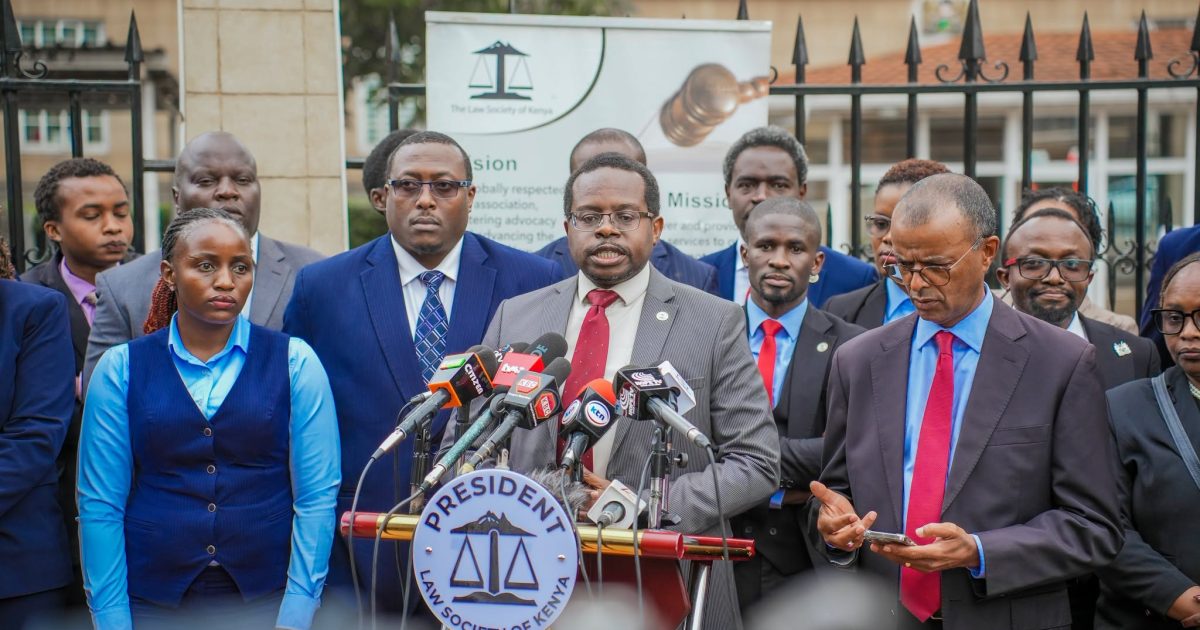
Addressing the media in Nairobi, Friday, after a meeting between the LSK Council, members of the Senior Bar and the JSC, LSK President, Senior Counsel, Charles Kanjama, said the Society had called on the Commission, to fully discharge its constitutional mandate by strengthening oversight and addressing challenges affecting the administration of justice.
“We have asked and demanded that the Judicial Service Commission take charge of its constitutional mandate, to secure accountability of the Judiciary and to stop persistent obstruction of its work,” Kanjama said.
He said the Society’s nationwide one-day court boycott held on July 22, had largely achieved its objective of drawing public attention to concerns surrounding judicial accountability.
According to Kanjama, the action generated widespread awareness among legal practitioners, justice sector stakeholders and the public, prompting engagement with the JSC.
The LSK President said the ongoing targeted boycott of specific courts and judicial officers would continue over the coming weeks as the Society presses for concrete reforms.
He noted that although the High Court, Court of Appeal and Supreme Court had begun their scheduled August recess, the campaign would continue in the magistrates’ courts, where some of the judicial officers affected by the boycott remain on duty.
Kanjama expressed optimism that the court recess would provide an opportunity for reflection by the JSC and other institutions involved in the administration of justice, allowing them to take meaningful steps towards addressing the issues raised by the legal profession.
He said discussions between the LSK Council, representatives of the Senior Bar and the JSC focused on allegations of corruption, delays in case determination, operational inefficiencies and other challenges that continue to undermine public confidence in the Judiciary and deny many Kenyans timely access to justice.
“We have also told them our concerns about the growing corruption menace in the Judiciary, the challenges of court inefficiencies and the problems many Kenyans face because of judicial inefficiencies,” he said, urging the Commission to implement reforms without delay.
Kanjama maintained that the Society’s actions were neither politically motivated nor intended to undermine the independence of the judiciary.
Instead, he said, they were informed by concerns consistently raised by advocates and members of the public regarding declining standards in the administration of justice.
“We are undertaking these actions not at the behest of any particular party, but because we have listened to the cry of Kenyans and our members,” he said.
While calling for greater accountability, the LSK President commended Judges, judicial officers and Judiciary staff who continue to discharge their duties with professionalism, integrity and commitment to the rule of law.
“There should not be a single judge, judicial officer or Judiciary staff member who engages in corruption or fails to serve Kenyans efficiently, because justice delayed is justice denied,” he added.
LSK Vice President, Teresia Wavinya, said the Society was not in conflict with the Judiciary, but was urging the JSC to effectively exercise its constitutional oversight mandate to safeguard the integrity of the justice system.
“We do not wish to seem as if we are fighting with the Judiciary because we are not. What we are asking for is accountability,” she said.
Wavinya observed that more than two decades after judicial reforms popularly known as the “radical surgery,” Kenyans should not still be grappling with longstanding concerns over accountability.
She cautioned against using judicial independence as a shield against scrutiny, saying independence and accountability must go hand in hand to preserve public trust.
“As much as we respect the tenet of judicial independence, we are asking that it goes hand in hand with ensuring that it does not erode the public trust bestowed upon the justice sector,” she said.
Responding to questions from journalists, Kanjama said the Society would consider additional constitutional measures should meaningful action fail to materialise after the court recess.
He cited constitutional provisions guaranteeing the rights to peaceful protest, industrial action and legal redress as options available to the Society.
“The Law Society of Kenya retains several weapons in our arsenal,” he said.
Kanjama added that the Society had already submitted a list of judicial officers affected by the targeted boycott and would closely monitor the Commission’s response, to ensure commitments made during the engagement translate into tangible action.
“We have received commitments from the Commission, but commitments alone are not enough. We need to see action,” he said.
By Nancy Omondi