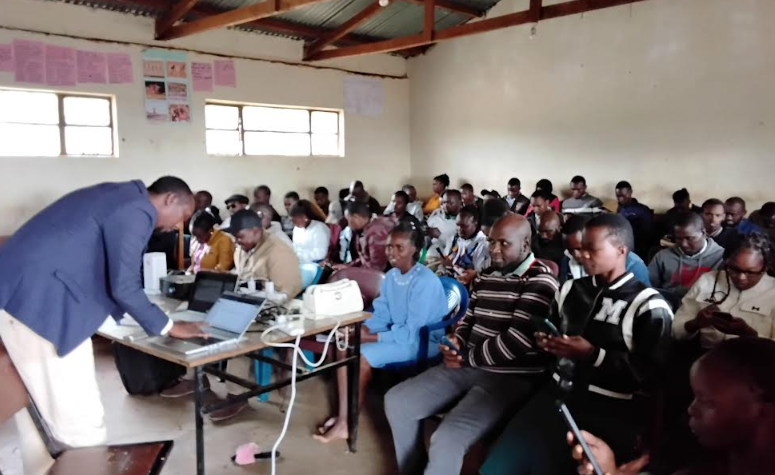
The government has launched a three-day Information and Communication Technology (ICT) integration training programme for 459 Junior Secondary School (JSS) teachers in Marsabit County as part of efforts to strengthen teachers’ digital competencies and improve the delivery of Competency-Based Education (CBE) in schools.
The training, being conducted in Marsabit Central, Moyale, and Sololo sub-counties, is expected to enhance teachers’ ability to integrate technology into classroom instruction and support the government’s digital learning agenda.
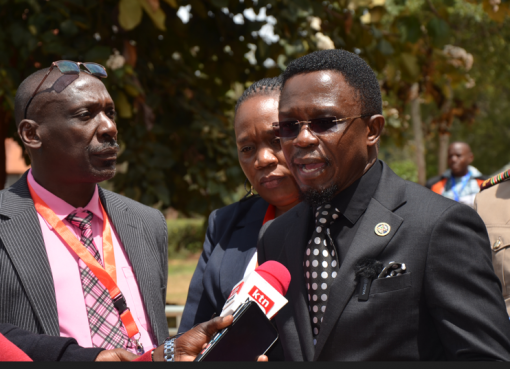
Speaking during the training, Teachers Service Commission (TSC) Marsabit County Director Ali Hussein Abdi said the programme has been designed to equip teachers with practical digital skills that will improve teaching and learning across the county.
He said the training covers digital content creation, online safety, lesson planning, and the use of digital learning platforms such as Google Classroom and Microsoft Teams.
“The training is intended to equip teachers with skills needed to integrate ICT into daily classroom instruction and effectively utilize digital learning resources to improve learning outcomes,” said Abdi.
He noted that the adoption of ICT and remote learning technology could help to address teacher shortages, particularly in remote and underserved areas, by enabling teachers to access, share, and utilize digital content more effectively.
Abdi also commended the government’s continued investment in the education sector, citing increased recruitment, promotion, and improved remuneration of teachers in recent years.
He urged teachers to remain committed to providing quality education and supporting government initiatives aimed at improving learning outcomes.
The TSC director further called for increased support for teacher career progression and continuous professional development through enhanced funding for training programmes.
According to Clackson Cheruiyot, an Assistant ICT officer at the ICT Authority (ICTA) and coordinator of the ICT integration programme in Marsabit County, teachers attending the Marsabit Central training center have been drawn from Marsabit North, North Horr, Chalbi, Dukana, Laisamis, and Loiyangani subcounties.
Cheruiyot said participants are being trained on the effective integration of ICT in teaching and learning using laptops and interactive smart boards.
“At the end of the training, we expect teachers to be able to develop and deliver ICT-integrated lessons and confidently use both laptops and interactive smart boards in classroom instruction.”
He revealed that the training is being funded by the Kenya Digital economy Acceleration Project (KDEAP), a World Bank-supported initiative aimed at promoting digital transformation and education and other sectors
Under the project, he said every junior school is expected to receive a laptop and an interactive smart board to support digital learning and improve access to educational technology.
Teachers attending the programme welcomed the initiative, saying it would enhance their ability to deliver lessons more effectively.
Cheruiyot noted that following an initial Training of Trainer (TOT) programme, facilitators were deployed to three training centers in Marsabit Central, Moyale, and Sololo, where they are collectively training the 459 teachers participating in the initiative.
Dennis Kilonzo, a mathematics and physics teacher at Chalbi Junior Secondary School in North Horr Sub-county, said the training had broadened his understanding of ICT tools and their application in classroom teaching.
“The knowledge and skills gained from this training will enable me to deliver lessons more effectively and create a better learning experience for my students,” he said.
Norman Kirema, a mathematics and science teacher at Turbi Junior Secondary School in Marsabit North Subcounty, described the training as timely and transformative.
He said ICT enables learners to connect theoretical concepts with real-life applications, making learning more interactive, practical, and engaging.
“ICT is a powerful tool that can transform education, especially under a competency-based education system. We hope more digital devices will be made available to schools, particularly in remote areas, to ensure all learners benefit from technology-enhanced learning,” said Kirema.
The initiative is expected to strengthen teachers’ digital skills, improve the integration of technology in teaching and learning, and enhance the delivery of competency-based education in schools across Marsabit County.
By Anthony Melly