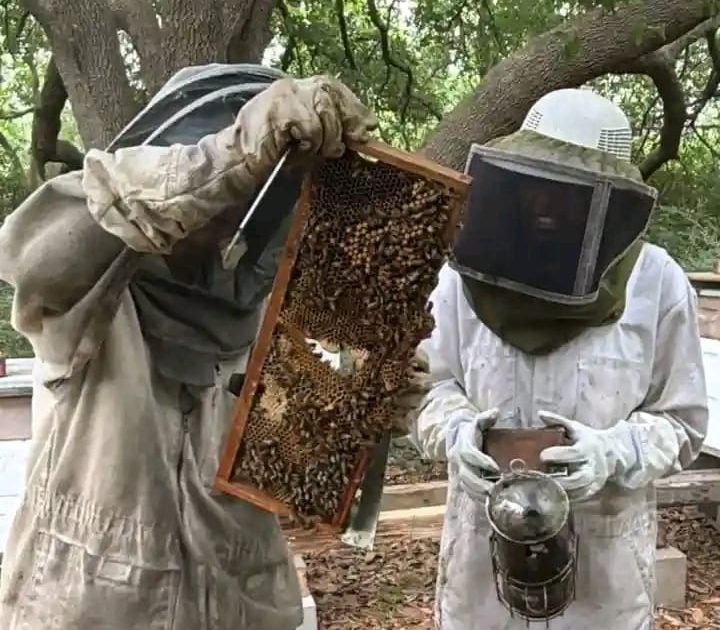
For generations, maize farming has been the backbone of livelihoods in Lugari Sub-County, Kakamega County.
But as climate change, declining soil fertility and rising production costs continue to erode profits, an increasing number of farmers are turning to modern beekeeping as a sustainable and lucrative alternative that is transforming household incomes while supporting environmental conservation.
Across the sub-county, modern apiaries are emerging alongside maize fields, with farmers embracing beekeeping as an additional source of income that requires relatively little land, minimal labour and relatively low production costs.
The enterprise is also helping to restore biodiversity, as farmers protect indigenous trees and plant flowering species that provide forage for bees.
Peter Wekesa, a farmer from Lumakanda Ward, ventured into beekeeping three years ago after attending a training programme organised by the County Government of Kakamega.
“I started with five Kenya Top Bar hives, and today I own 25 hives. During every harvesting season, I collect between 200 and 300 kilogrammes of honey, which I sell to local traders and processors. The income has enabled me to pay school fees for my children, improve my home and invest in other farming activities,” he said.
Honey currently fetches between Sh600 and Sh900 per kilogrammes depending on quality and market demand, making beekeeping one of the most profitable enterprises for many smallholder farmers in the area.
Unlike maize farming, which has become increasingly vulnerable to erratic rainfall and prolonged dry spells, beekeeping is relatively resilient to climate change. In addition to producing honey, bees play a vital role in pollinating crops such as avocados, beans, sunflower, pumpkins and indigenous vegetables, leading to improved yields and better-quality produce.
Mary Nanjala, another beekeeper from Chekalini Ward, said the enterprise has changed the way farmers view environmental conservation. “Before I started keeping bees, I rarely thought about protecting indigenous trees. Now I understand that healthy forests and flowering plants are essential for honey production. We have planted more trees and reduced unnecessary cutting because the bees depend on them,” she said.
According to the Lugari Sub-County Agricultural Officer Kakai Wekesa, modern beekeeping is gaining popularity as farmers diversify their income sources and embrace climate-smart agriculture.
“Beekeeping is creating employment, improving household incomes and enhancing crop pollination. It is also contributing to environmental conservation because farmers are protecting trees and reducing activities that destroy bee habitats,” the officer said.
To support the growing enterprise, the County Government of Kakamega, through the Department of Agriculture and Livestock Development, has intensified farmer training on modern hive management, colony establishment, honey harvesting, value addition and marketing.
The county has also distributed modern beehives, protective gear and honey harvesting equipment to organised farmer groups to improve production and reduce post-harvest losses.
County officials say the initiative is part of broader efforts to promote climate-smart agriculture, improve food security and diversify rural livelihoods by encouraging enterprises that are environmentally sustainable and economically viable.
Environmental experts note that healthy bee populations are critical for biodiversity conservation and food production, with nearly one-third of food crops depending on insect pollination.
They encouraged farmers to avoid indiscriminate use of harmful pesticides, conserve natural vegetation and plant nectar-rich trees to sustain bee colonies.
As demand for natural honey and other bee products such as beeswax and propolis continues to grow, many farmers in Lugari are optimistic that beekeeping will become one of the sub-county’s leading agricultural enterprises.
By Linet Wafula