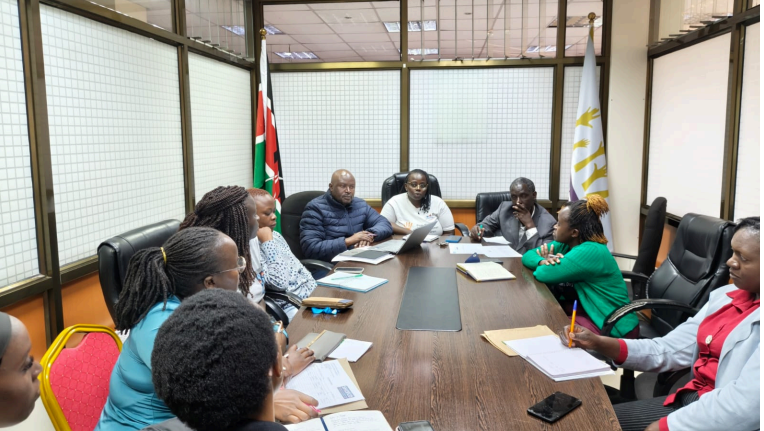
The County Government of Nakuru in collaboration with the Lithuanian Development Cooperation has launched a new initiative for collecting data on sexual and gender-based violence (SGBV).
The initiative, which also bring on board the Industry and Crafts of Lithuania, Humanitarian Aid Fund and Vilnius Chamber of Commerce, Industry and Crafts (Vilnius CCIC) is aimed at developing a SGBV management and information system to capture and integrate Gender Based Violence data from the National Police Service, the Judiciary, and the Office of Director of Public Persecution, and the Health and Education sectors.
According to County Chief Officer for Gender, Social Services and Inclusivity Ms Gladys Jemuge Kamuren, the platform is designed to strengthen reporting, referrals, monitoring and coordination among county departments and institutions involved in providing social services.
Ms Kamuren indicated that the system replaces fragmented approaches in which information was previously recorded on paper or stored in separate systems, making it difficult for officers to track cases and coordinate interventions.
The platform is designed with dual components, one dedicated to gender-based violence case management and another covering county services for persons with disabilities.
Speaking during its launch the Chief Officer indicated that the system aims to enhance response mechanisms and ensure justice for victims, including Persons Living with Disabilities (PWDs).
Vilnius CCIC is a network of Lithuanian business representatives and community that unites almost 500 Lithuanian companies from different business sectors.
Ms Kamuren said reported cases from the police department, treated cases of SGBV in hospitals and persecuted cases in the office of the director of public prosecution, among others, will provide the avenue for data collection.
SGBV Data collected from these key sectors will then inform policies and effectively evaluate the framework for the prevention of and response to gender-based violence in Nakuru.
Kenya is one of the most progressive countries in the region when it comes to legal and policy frameworks in the prevention and response to sexual and gender-based violence.
The 2010 Constitution contains expansive provisions regarding human rights, reinforced by the Sexual Offences Act 2006, the Children’s Act 2001 and the Prohibition of Female Genital Mutilation Act 2011.
Despite there being very few gaps concerning legal norms in protecting women and girls from violations, it remains difficult to effectively evaluate the impact of these laws and policies.
Ms Kamuren pointed out that through the gender-based violence module, cases can be reported by survivors, members of the public and professionals working in sectors such as health, education and social services.
“Through the platform, authorized officers can monitor reported cases, coordinate interventions with relevant agencies and follow up on the assistance provided to survivors. The second component enables residents to apply online or through mobile phones for services such as assistive devices, economic empowerment programmes and tax relief,” stated the Chief Officer.
She added “The system also allows county officers to track applications, generate reports and use information from the platform to support planning and delivery of social services. The system has strengthened cooperation among institutions involved in responding to gender-based violence.”
The Chief Officer noted that the platform enables responsible officers to act on reported cases while allowing the county to manage applications for services through an integrated system. She further said that 54 gender-based violence cases had been registered through the platform, while 216 applications had been submitted through the persons with disabilities component during the implementation period.
“The figures, however, do not necessarily represent an increase in incidents or demand for services, with the county attributing them partly to improved visibility and management of support services,” she pointed out.
Ms Kamuren said the system would give Kenyans more credible data, to help quantify and qualify problems, inform policies, and design programmes based on evidence.
SGBV remains a widespread issue in Kenya, affecting both men and women. Data shows 34 percent of women and 36 percent of men who have ever had an intimate partner have faced economic, psychological, physical or sexual violence.
In Nakuru County, 31 percent of married women have experienced physical, sexual or emotional abuse. Despite these figures, underreporting remains a challenge due to stigma, fear and limited access to support services.
Official records indicate that last year, Nakuru recorded 1,357 cases of sexual and gender-based violence, though experts warn the actual numbers are likely much higher. PWDs are particularly vulnerable, with global estimates indicating they are twice as likely to experience violence. In Kenya, 67 percent of women with disabilities have reported abuse, often from caregivers or intimate partners.
The Chief Officer pointed out that the new platform also provides a confidential reporting channel, allowing survivors to file cases anonymously, access medical and legal aid and track their progress through the justice system. It also features specialized accessibility tools for PWDs, including screen readers, sign language video guides and simplified reporting forms.
Ms Kamuren termed the system a game changer in the county’s fight against SGBV.
“This platform will strengthen data collection, improve coordination and ensure survivors receive the support and justice they deserve. GBV affects women, men and PWDs and our response must be inclusive,” she said.
Ms Kamuren noted that the initiative aligns with Kenya’s National Policy on Prevention and Response to GBV (2014) and the Sexual Offences Act (2006), which criminalizes all forms of sexual violence. It also supports Sustainable Development Goal 5 (SDG 5), which seeks to eliminate GBV and promote gender equality by 2030.
She stated that the system builds on existing county efforts, including the GBV Recovery Centre at Nakuru Level 5 Hospital, which has assisted over 3,000 survivors since 2021.
The Chief Officer disclosed that more than 500 law enforcement officers, healthcare workers and community leaders have been trained on SGBV response, while safe houses have been set up in high-risk areas such as Naivasha, Molo and Njoro.
The 2022 Kenya Demographic and Health Survey found that 34 per cent of women aged 15 to 49 had experienced physical violence at one time or more since age 15.
The survey further found that 13 per cent of women in the same age group had experienced sexual violence, while 41 per cent of women who had ever had an intimate partner had experienced economic, psychological, physical or sexual violence from their current or most recent partner.
Help-seeking remains a major challenge. The KDHS established that only 42 per cent of women who had experienced physical or sexual violence sought help to stop the violence, while another 42 per cent neither sought help nor told anyone.
The platform also seeks to improve access to county services for persons with disabilities, a population that continues to face barriers in accessing public services, employment and economic opportunities.
Ms Kamuren expressed regret that only 30 percent of GBV survivors seek help, with men even less likely to report abuse due to cultural stigma. Many PWDs he added struggle with inaccessible reporting structures, further widening the justice gap.
The framework also seeks to substantiate SGBV occurrences by adopting the United Nations General Assembly’s indicators that measure the extent, prevalence and incidence of SGBV and the county’s responses to SGBV, including policy changes.
Distinct ministries, agencies and departments at both levels of government collect and have data specific to their sectors, but the multi-sectoral nature of SGBV means that the data is uni-dimensional and therefore unable to capture gaps in response to SGBV and subsequently appropriate responses.
The digital system was preceded by an assessment of existing operations within the county’s Department of Gender, Sports, Social Services and Inclusivity.
Kenyan and Lithuanian experts reviewed existing workflows, identified gaps and developed a system based on the requirements of county officers and service users.
The project also included system testing, staff training and capacity building before the platform became operational.
Vaidas Velykis, Director of Erobotai, the Lithuanian company involved in developing the system, said the platform was designed in collaboration with its intended users.
Project Manager Jolanta Lapinskaitė-Vaitulionienė said the partnership demonstrated how digital transformation could improve public-sector coordination and access to services.
According to Kamuren, the platform will remain in use after the completion of the project, with trained officers continuing to manage cases and applications through the system.
Kamuren observed that beyond improving individual case management, the digital records are expected to provide the county with better information for planning, budgeting and monitoring social programmes.
She also noted that the system could also help identify gaps in referral services by showing where cases are concentrated and whether reported interventions are progressing.
“However, the effectiveness of the platform will depend on timely action by the agencies responsible for responding to cases after they are reported,” said Kamuren.
For survivors of gender-based violence, digital reporting must therefore be linked to functioning referral pathways, including health services, psychosocial support, legal assistance and security protection.
For persons with disabilities, improved digital access will similarly need to be matched with timely provision of assistive devices, empowerment support and other services for which applications are submitted.
The initiative forms part of broader efforts to use digital technology to improve public-sector service delivery in Kenya.
by Jane Ngugi and Jefther Afuyo