For decades, inadequate access to water, poor sanitation and limited livelihood opportunities have posed significant challenges in Masinga Sub-County, Machakos County.
Residents and students were often forced to travel long distances in search of clean water for farming and domestic use.
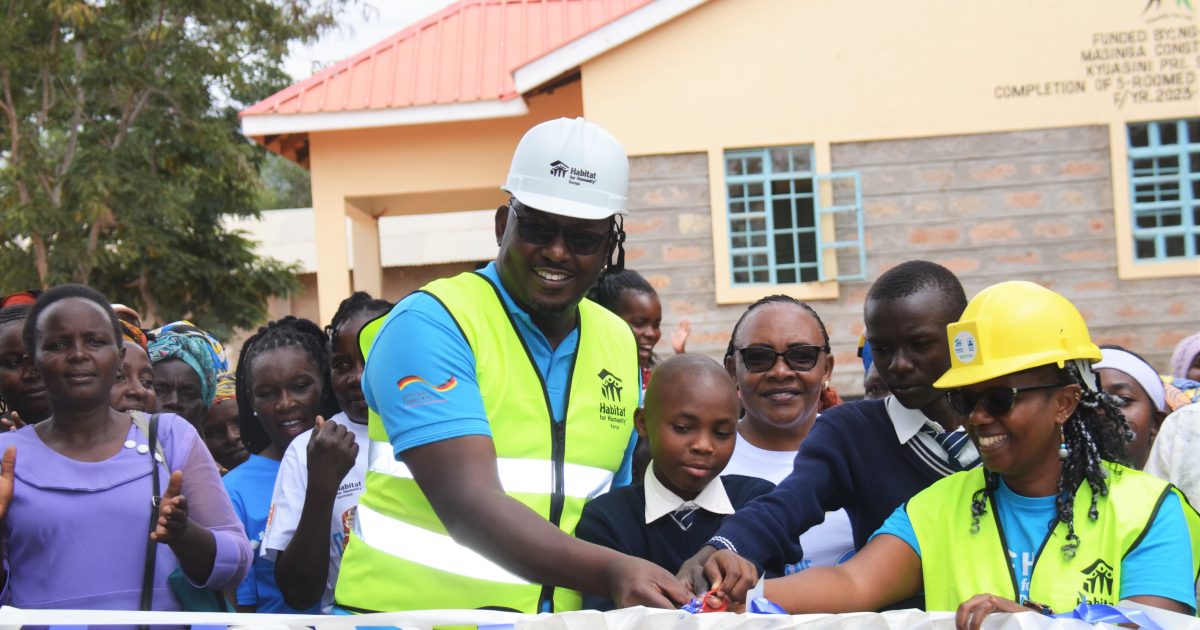
However, the recent commissioning of three boreholes has brought immense relief to the over 14,000 residents of Masinga Sub-County by significantly improving access to safe and reliable water.
The boreholes, located at Kyuasini Primary School, Mukusu Secondary School and Mukameni Primary School respectively were drilled by Habitat for Humanity Kenya in partnership with the Machakos County Government, INADES Formation Kenya and the Eastern Community Development Programme (ECDP).
According to Project Coordinator Stellamaris Mumbua of BMZ, who spoke during the commissioning, the partnership with Habitat for Humanity has led to several interventions aimed at addressing water scarcity beyond borehole drilling.

These include the implementation of the BMZ Machakos Integrated WASH and Livelihoods Project, which combines water, sanitation, and hygiene (WASH) interventions with climate-smart livelihood strategies to foster resilient and self-sustaining communities.
Mumbua said that 13 schools and surrounding communities in Masinga have been identified for the implementation of climate-smart farming initiatives.
Through these programs, residents are being trained on smart sustainable agricultural practices, including cattle rearing, beekeeping, and vegetable farming, to enhance their resilience and livelihoods during challenging climatic conditions.
She noted that a study conducted in 2024 informed the decision to focus interventions in Masinga, where women, men, and children were walking more than 10 kilometers in search of water.
“The research revealed that many students were missing school and struggling with hunger as they spent significant time fetching water for their households. It also highlighted poor hygiene conditions, which contributed to the spread of infectious diseases within the community,” noted Mumbua.
“The research assessed the distances residents travelled in search of water, their hygiene and sanitation conditions, farming challenges, and income-generating opportunities. Based on these findings, we implemented the borehole drilling intervention to improve livelihoods, climate smart agriculture, planting trees and enhance community resilience in Masinga,” she explained.
Steven Mutunga, Chief Executive Officer of ECDP, noted that inadequate access to water had contributed to numerous sanitation challenges in schools and communities across Masinga.
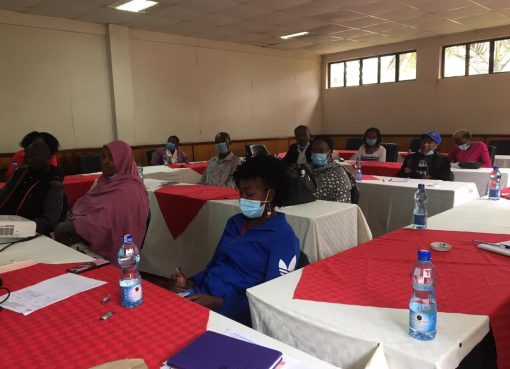
He said many residents lacked sufficient knowledge of proper sanitation practices, prompting the partners to implement training programmes targeting learners through school clubs, teachers, and community members.
“Access to water is critical in improving sanitation standards in schools and communities. This project is targeting more than 3,000 households in Masinga, where initial perceptions towards sanitation interventions were largely negative due to persistent water shortages,” added Mutunga.
However, he said with the commissioning of the boreholes, coupled with continuous training and sensitization efforts, community attitudes and perceptions have significantly improved.
Mutunga noted that the positive response underscores the importance of primary healthcare and sanitation initiatives in reducing the prevalence of preventable diseases within communities.
Juliana Mbithe, Principal of Kyuasini Comprehensive School, expressed her joy following the commissioning of the borehole, describing it as an answered prayer for both the school and the surrounding community. She said the project is set to bring transformation particularly in supporting agricultural activities through the school’s 4K Club.
She pointed out that girls and women have been disproportionately affected by the water shortage, as they are often expected to fetch water for their households.
The Principal further noted that many female students experience stress and embarrassment during their menstrual periods due to inadequate access to water and sanitation facilities, which makes it difficult for them to manage hygiene and change comfortably while at school.
Mbithe said the availability of water will enable the school to establish a model farm, which will enhance food production and strengthen the school feeding programme adding that improved access to balanced food and water is expected to boost student attendance and overall academic performance, while also benefiting the wider community.
“It has been extremely challenging to thrive in this area due to the persistent water shortage. Many students travel long distances carrying water for drinking and, in some cases, for irrigating their plants. The lack of readily available water has negatively affected learners’ academic performance, as they often arrive at school exhausted after walking more than five kilometers to fetch water,” she said.
0ne of the residents, Rose Kavata Kakoi, said the water challenge has persisted for more than 40 years, forcing community members to carry water on their backs for several kilometers each day.
She recounted how they would wake up early in the morning to search for water and return home in the afternoon exhausted and often on the verge of giving up. She described the commissioning of the borehole as a great relief and a long-awaited blessing for the community.
Francisca Kisili from Kyusioni village noted that women had often been forced to spend long hours searching for water, leaving them with limited time for farming, care-giving, and other productive activities.
Habitat for Humanity, together with its partners, have invested approximately KSh 120 million in the construction of boreholes, sanitation awareness campaigns, and training on climate-smart agriculture for residents and its implementation is expected to continue through October 2028.
The organizations are also planning to establish seven water kiosks by September 2026, depending on borehole yields, to support safe and sustainable last-mile water distribution in areas without piped water infrastructure.
by Anne Kangero