Thousands of Kenyans in Nakuru County are set to get easier access to eye screening and treatment through a new programme focused on early detection, referrals and follow-up on care for the eyes.
The initiative comes as Kenya faces a large yet unmet need for eye-health services, with about 30 per cent of the population estimated to require care to prevent or manage vision loss, according to the Ministry of Health.
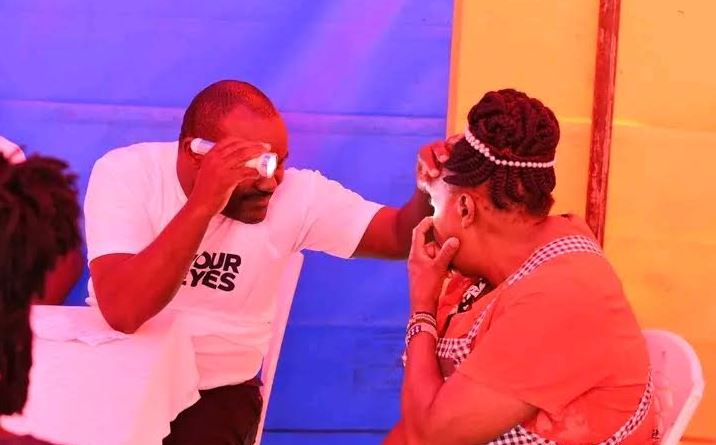
Already more than 600 drivers, conductors and travellers accessed free eye care services at Nakuru’s main matatu terminus on Friday during a county outreach aimed at improving early detection and treatment of eye conditions.
The new programme follows a signing of a Sh279 million four-year MoU between the County Government of Nakuru and the Christian Blind Mission (CBM) to improve ear and eye health services for approximately 640,257 people across the devolved unit.
The initiative that is supported by Africa Gospel Church (AGC) Tenwek Hospital aims at early detection, treatment and referral of sensory health conditions and further targets learners in 1,302 schools across the 11 sub-counties.
According to the Ministry of Health, Kenya has made progress in reducing blindness, with its prevalence falling from 0.7 per cent in 1990 to 0.37 per cent in 2023.
However, the Ministry says major gaps remain in access to cataract surgery, treatment of refractive errors, specialist eye-health workers and early diagnosis of chronic eye diseases.
Nakuru County Eye Health Coordinator John Gitahi indicated that cataracts remain a major cause of blindness in the country, while an estimated 9.6 million Kenyans live with refractive errors.
He noted that effective national cataract surgical coverage was about 27 per cent and refractive-error coverage about seven per cent.
It is against this background that the County Government, with support of its partners, has launched the initiative, aimed at expanding screening, referral, treatment and follow-up services among drivers, communities and schools.
Gitahi explained that the move will seek to bring specialised eye care closer to people who may face difficulties travelling to referral hospitals. It will also strengthen links between community-level screening and facilities where patients can receive further assessment and treatment.
He said stronger partnerships with counties and communities would be important in reducing avoidable blindness.
“Together, we can ensure more people have access to quality eye care services by 2030. Every shilling invested in eye health delivers significant economic and social returns, and we are committed to partnering with our partners and communities to end avoidable blindness,” Gitahi stated.
The programme is also using digital technology to support screening and referrals. Community health promoters will be able to use smartphones and tools to screen people, record their details, refer those requiring further care and send appointment reminders by SMS.
The approach is intended to detect eye problems before they result in permanent vision loss and to improve follow-up after referral.
Gitahi said the programme is supporting the integration of eye care into primary healthcare, schools and communities.
“Early detection is one of the most powerful tools we have to reduce lifelong disability, and we must move away from fragmented service delivery and embrace integrated care,” he added.
The devolved unit’s approach is also in line with the World Health Organization’s (WHO) push for integrated, people-centred eye care, which places greater emphasis on bringing basic eye services into primary healthcare and communities rather than relying only on specialist hospitals.
The inaugural outreach provided eye examinations, medication, spectacles where needed and referrals for patients requiring further assessment or specialised treatment.
Gitahi said the initiative would help identify eye conditions early and enable patients to receive timely intervention before their sight deteriorates.
According to Gitahi, the initial exercise also targeted public service vehicle drivers and conductors whose demanding work schedules can make routine hospital visits difficult.
“For drivers, clear vision is essential for recognising road signs, judging distances and responding to hazards,” he elaborated.
The coordinator further noted that the exercise coincided with World Sight Day, observed on October 8, which promotes public awareness and access to affordable eye care.
The Ministry of Health estimates that about 200,000 Kenyans are blind, while 1.5 million people live with significant visual impairment.
Gitahi indicated that the partnership between the County Government, Christian Blind Mission (CBM) and Africa Gospel Church (AGC) Tenwek Hospital will strengthen specialist services for ear and eye health while taking screening and early interventions closer to communities.
The Vision Impact Project Scale-Up 2026–2029, rolled out by CBM in collaboration with Africa Gospel Church (AGC) Tenwek Hospital, is being implemented in Nakuru, Kakamega and Mombasa counties.
According to Gitahi, the programme will support renovation and strengthening of eye, ear and hearing facilities, provision of equipment and development of healthcare workers’ technical capacity.
He indicated that the venture will also establish stronger links between health facilities, communities and schools to improve identification and referral of people with sensory impairments.
The official stated that Nakuru was strengthening the entire range of eye and ear health care, from community screening to specialist treatment.
“We are getting very serious about eye, ear and hearing care. We are strengthening specialist capability at our two referral hospitals while using our Primary Care Networks to take services downstream, including into schools,” he said.
Gitahi pointed out that Governor Susan Kihika’s administration’s objective was to promote early identification, early intervention and appropriate care closer to residents.
“It will support community screening, treatment outreaches, cataract surgery, referrals and improved infrastructure and equipment. The partnership builds on existing county investments, including a dedicated eye laboratory and audiology unit,” noted Gitahi.
He added that the partnership will also strengthen specialist services at Nakuru County Referral and Teaching Hospital and other facilities within the referral network.
The venture comes as Kenya continues to address gaps in access to specialised eye care.
At least 2.2 billion people worldwide have near or distance vision impairment, with at least one billion cases considered preventable or yet to be addressed.
Gitahi observed that vision and hearing care presents a significant public health challenge.
WHO’s regional status report estimates that 0.9 per cent of Kenya’s population lives with disabling hearing loss, while early-onset childhood hearing loss affects about three in every 1,000 people.
The report lists ototoxicity, meningitis and low birth weight among the leading causes of hearing loss in Kenya.
It also identifies gaps in newborn and infant screening and access to hearing aids and implants.
Across Africa, about 40 million people currently live with hearing loss, with the number projected to reach 54 million by 2030 without stronger interventions, according to WHO.
The organisation says hearing loss can affect language development, educational attainment, psychosocial wellbeing and economic independence, making early identification particularly important for children.
Gitahi observed that WHO has encouraged countries to integrate hearing screening into school and community health programmes and establish clear referral pathways.
This approach, he added, aligns with Nakuru’s plan to use primary care networks and schools to extend sensory health services beyond referral hospitals.
“For the county, the partnership is expected to strengthen the link between specialised care and community-level screening, reducing delays in diagnosis and referral. The investment will also build healthcare workers’ technical capacity while improving the infrastructure needed to provide sustained eye, ear and hearing services,” he stated.
According to Gitahi, planned interventions include community screening, treatment outreaches, cataract surgery, referrals and improvements to health facility equipment and infrastructure.
Gitahi acknowledged that partnership is expected to strengthen early diagnosis and reduce the need for residents to travel long distances to access specialised services.
It also aims to improve referral pathways so patients requiring advanced treatment can reach appropriate facilities.
Gitahi urged residents to undergo regular eye examinations and seek treatment promptly whenever they experience changes in vision.
He said early intervention can help protect sight, preserve livelihoods and reduce the risk of avoidable vision loss.
The outreach demonstrated how bringing services into busy public spaces can help reach people who might otherwise postpone routine medical checks because of work or other responsibilities.
By Jane Ngugi and Jefther Afuyo